

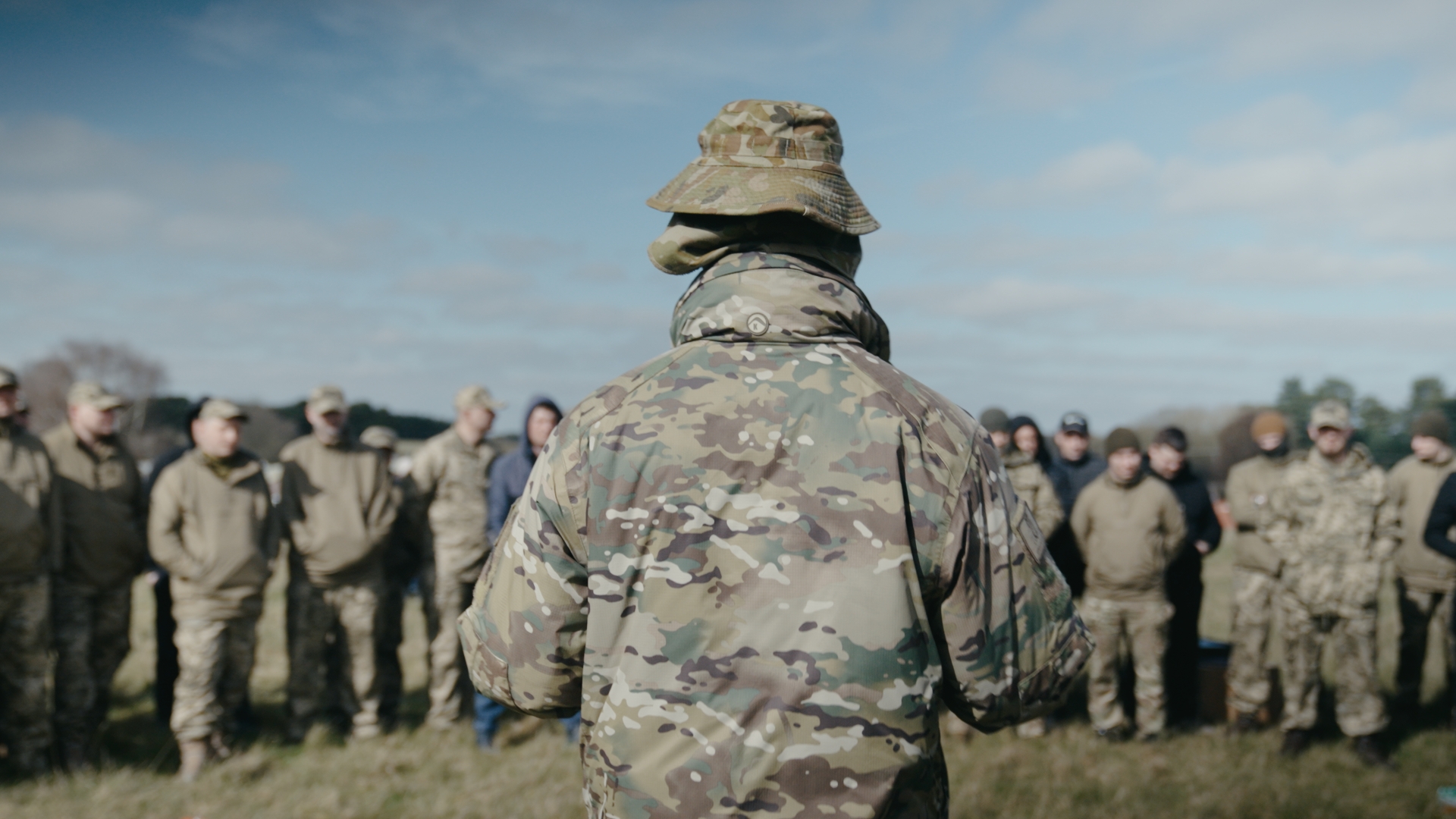
In recent years, sending Ukrainian troops to NATO countries for training has been just as much a symbol of support as the delivery of air defense systems or, for example, Leopard tanks. British instructors and German equipment at a training ground near Krakow—all of this has become an integral part of military cooperation.
And then, on March 20, a statement was made that sounds almost defiant. Yevhen Mezhivikin, Deputy Chief of the General Staff’s Main Directorate for Doctrine and Training, said: Ukraine is withdrawing from many training programs abroad. The reason: Western instructors are “out of touch with our realities and current combat operations.”
It is worth noting that these sentiments have long been brewing within military circles, though hearing them officially from the General Staff is a whole different matter. However, this is absolutely not about some kind of diplomatic move or an attempt to offend partners. It is a pragmatic decision by an army that, over more than four years of full-scale war, has gone through a process that would take decades in peacetime. Training at home, in this context, seems far more logical for a whole range of reasons.
What exactly are these reasons, and how should we interpret the statement from the Ukrainian General Staff? UA.News political analyst Mykyta Trachuk, together with experts, examined the issue.
“We can teach better than they can there”
The General Staff’s argument is a set of facts that are hard to dispute. First, it’s about experience. Today’s war in Ukraine involves a massive concentration of drones, robotic systems, electronic warfare, and counter-battery combat decided in seconds—along with assaults on fortress cities and trenches, the likes of which haven’t been seen since World War II. In this war, Ukrainian fighters have experienced what no NATO instructor has ever experienced.
“We study all the mistakes, everything that partner countries cannot change at their training sites,” explains Mezhivikin. And he adds a key point: if partners cannot adapt the program or simply do not understand modern processes, the Ukrainian Armed Forces refuse such training.
This isn’t about some abstract concepts. For example, infantry training: how to operate under constant drone surveillance, use FPV kamikaze drones as the primary firepower, evacuate the wounded under drone strikes... Western training centers simply won’t teach any of this because they haven’t encountered it (yet).
Second, there is indeed the economic and logistical factor. Sending troops to Poland or Germany isn’t just about buying tickets. It involves processing a pile of paperwork, crossing the border, acclimatization, and return. All this time, the personnel are out of the combat loop. And when the war changes almost daily, wasting weeks on movement is an unaffordable luxury.
So the General Staff’s public explanation seems logical. But in any decision like this, there are always other, unofficial reasons.
The first reason is the security of the training grounds themselves. When Kyiv sends troops to Europe, one of the main arguments is “it won’t reach us there.” But when we talk about moving training to Ukraine, the question arises: have our partners started to fear something? Perhaps there is intelligence suggesting that the risk of escalation on NATO territory is not as hypothetical as it previously seemed? Or maybe the Europeans have simply grown tired of explaining to their voters why troops from a country at war with a nuclear power are being trained on their soil. Or—and this is most likely—they have concluded that training Ukrainians is cheaper, faster, and safer in Ukraine itself, provided the right conditions are created there.
By the way, the General Staff provided an interesting detail: the first country to propose moving the training to Ukraine was the United Kingdom. In other words, the initiative did not even come from the Armed Forces of Ukraine in the first place. And this dispels many questions about whether the General Staff’s decision is driven by some political cooling-off between Ukraine and its partners—no, it certainly is not. Rather, it is a matter of purely technical, practical considerations.
The second reason is discipline. The problem of desertion and deserters in the Armed Forces of Ukraine is one of the most pressing issues today. When a soldier arrives at a training ground abroad, it is quite easy for him to simply leave. Moreover, it may even be easier than in Ukraine, since there are millions of Ukrainians in Europe—friends, relatives, and acquaintances of the soldier. There are transportation links, and there are countries that do not extradite even upon request, and so on. There are no official statistics on desertions during training abroad available to the public, but this problem is clearly no less significant there than in Ukraine.
Training abroad will continue regardless
It’s important not to exaggerate: the Armed Forces of Ukraine aren’t giving up on everything. The General Staff has made it clear that there are specialties that can still only be properly trained in the West. First and foremost—aviation. Training pilots on F-16s, for example, isn’t something that can be moved to Ukraine anytime soon. The infrastructure is too complex, flight safety requirements are high, and there is a great deal of know-how that is only available at Western training centers. The same applies to complex air defense systems—Patriot, SAMP/T, IRIS-T, and others. This is equipment that requires a level of training that Ukraine has not yet achieved.
But infantry, artillery, UAV operations, and electronic warfare—these are all things Ukraine is fully capable of doing on its own, and doing better than its partners. No training ground in Poland or Germany can provide the same experience as a regular Ukrainian instructor who, six months ago, personally led his own group out of the line of fire from Russian airstrikes or drones somewhere near Pokrovsk.
If we look at the bigger picture, the General Staff’s decision is not a “farewell” to partners, but a step toward a new level of relations. Previously, the Armed Forces of Ukraine went to them because they had almost nothing. Now, however, they have their own school, their own experience, and their own instructors who can teach even better. This is a much more mature approach than before.
It is also an acknowledgment that, over the years of war, Ukraine has become one of the West’s most experienced partners outside of NATO. And that sometimes it is better to learn about war from oneself—from those who fight every day—rather than from those with the finest uniforms and the latest equipment.
Expert Opinions
Political scientist and director of the “Third Sector” Center, Andriy Zolotaryov, notes: training Ukrainian Armed Forces personnel abroad was a trend for some time. This was regularly shown in the news: how our soldiers are trained at foreign training centers. But now it has become clear that, in fact, the military was being trained for a war that once was, for a war of the past. And now the war has changed.
“Now we are seeing a war where unmanned systems play a decisive role. And here our partners are almost helpless—in the sense that they lack the experience that the Ukrainian or Russian armies possess. Therefore, mass training of soldiers abroad now makes no sense, given that our instructors are perfectly capable of training infantrymen. And this is the part of the military that needs mobilization resources the most. That is where the greatest losses occur, and that is where combat brigades must be constantly replenished. But there are sensitive systems such as air defense, electronic warfare, equipment maintenance specialists, and so on. Most likely, they will continue to be trained abroad, as these are specialized experts who will always be needed, particularly given the technical specifics of, for example, Western air defense systems. Such specialists must be trained there, so they will continue to study abroad.
As for concerns about whether Europeans have become vulnerable to the threat of strikes on training centers—well, that hasn’t happened before, and it’s unlikely to happen now. There’s no need to look for a black cat in a dark room, especially when it isn’t there. I don’t think anything is going to strike a training ground in Germany or Britain right now. The Europeans hardly have such a fear. But there is the pragmatism of our General Staff, which understands perfectly well that there is no point right now in training infantry for combat units in countries that lack real experience in modern combat operations. But, I’ll say it again, air defense operators, pilots, and technical specialists—I’m sure they’ll continue to be trained abroad,” said Andriy Zolotaryov.
Political scientist and director of the Ukrainian Institute of Politics Ruslan Bortnik says: the General Staff’s statements certainly do not indicate any cooling of our relations with partners. There may be slightly different reasons here.
“Consider why the training of Ukrainian military personnel abroad was launched in the first place. Everyone remembers one goal—to improve their qualifications. But questions about the quality of this training abroad have always existed. Because foreign instructors—whether in France, Poland, or Britain—lack combat experience. And their competence in modern warfare is and always has been low. But still, for years we sent our soldiers there for training because there wasn’t enough space in our training centers. Let me repeat: there simply wasn’t enough space. I think that was the real reasoning,” Bortnik noted.
According to the expert, the current decision to stop this is not only due to the low competence of foreign instructors—that has been a constant problem for many years. It is also linked to several other factors.
“First of all, perhaps it’s because foreign partners were funding these training sessions. And so the reason we’re abandoning these training sessions is the cessation of funding for these training centers, the development of sufficient infrastructure for our own training centers, or the drop in utilization rates at these training centers due to mobilization issues. Also, of course, the competence of Ukrainian instructors is now significantly higher.
There were other serious issues during training abroad: informational and reputational challenges, such as relations with local military personnel, situations where Ukrainian soldiers abroad could become targets of provocation, information attacks, activities by foreign intelligence services, and so on. Therefore, there is a complex set of factors that need to be addressed. Among other things, by the way, there is clearly an effort to avoid information crises related to desertion by those servicemen who went abroad for training. Therefore, these questions must be posed to our soldiers and also to the military leadership. I am confident that we will then hear many interesting answers,” Ruslan Bortnik concluded.




