
Zaluzhny and Zelenskyy are nearly tied in the presidential poll
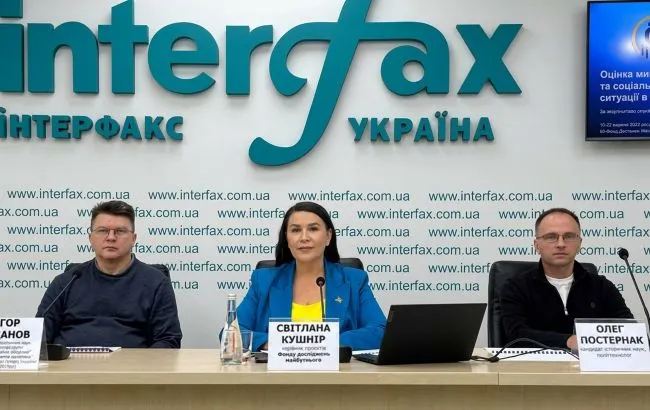
Valeriy Zaluzhny received the highest trust rating among politicians and military officials included in the new poll. At the same time, in a simulated presidential election, Volodymyr Zelenskyy received 23.6% of the vote among those who have made up their minds and plan to vote, while Zaluzhnyy received 22.7%. The survey also revealed a significant proportion of Ukrainians who have not yet decided on their political preferences.
The new results of the sociological survey highlighted a discrepancy between the level of trust in politicians and their potential support in the elections. Valery Zaluzhny ranked first in terms of trust among those featured in the survey. He is trusted by 53.9% of respondents, while 37.7% expressed distrust. Kirill Budanov ranks second in this category. He is trusted by 49.3% of respondents, while 42.8% expressed distrust.
Mykhailo Drapatii ranks third, with 48.6% trust and 31.3% distrust. Volodymyr Zelenskyy is trusted by 39.4% of respondents. At the same time, 53.6% of respondents said they do not trust the president.
What the presidential election simulation revealed
A different picture emerged when pollsters asked Ukrainians whom they would vote for in a hypothetical presidential election. Among those who have decided on a candidate and plan to vote, Volodymyr Zelenskyy received 23.6%. Valerii Zaluzhnyi received 22.7%. The difference between their shares is less than one percentage point.
Next in this hypothetical ranking are Mykhailo Fedorov with 8.5%, Kyrylo Budanov with 8.4%, and Petro Poroshenko with 7.3%. If we count not only those who have made up their minds and plan to vote, but all survey participants, the results are different. Zelenskyy received 17.2%, Zaluzhny—16.6%, Fedorov—6.2%, Budanov—6.1%, and Poroshenko—5.3%. In other words, the results of this poll show that a politician’s approval rating and their potential electoral support are not one and the same.
What were the results for the parliament?
Pollsters also simulated a hypothetical parliamentary election. Among those who had made up their minds, Valeriy Zaluzhny’s hypothetical party would receive 19% of the vote. Volodymyr Zelenskyy’s hypothetical political party would receive 13.6%. Next come the hypothetical parties of Mykhailo Fedorov—10.1%—and Kirill Budanov—9.1%. “European Solidarity” received 7.7% in this scenario.
Igor Terekhov’s hypothetical political project—7.2%—and “Third Storm”—5.6%—would also have garnered more than 5%. Another hypothetical party, “Smart Politics,” received 4.9% and came close to the 5% threshold. Other results included 3.7% for Denys Prokopenko’s “Azov” party, 3% for “Batkivshchyna,” 2.4% for Oleg Lyashko’s Radical Party, 1.9% for “Svoboda,” 1.8% for the “Christian Corps,” and 1.5% for the “August 24” party.
At the same time, 16.4% of all respondents were undecided. Another 8.6% said they do not plan to vote. Political strategist Oleg Posternak noted during the presentation of the study that the electoral landscape remains, for now, not yet fully formed. “The electoral sentiments of Ukrainians demonstrate high dynamism and, at the same time, significant uncertainty. At present, the electoral landscape remains far from fully formed,” he said.
What Ukrainians Think About Negotiations with Russia
A separate section of the survey focused on potential peace negotiations. 72.2% of respondents said they generally support holding negotiations with Russia. 20.8% of respondents opposed this. At the same time, attitudes toward the possible conditions for ending the war were more varied. 48.5% of those surveyed chose the option of compromises and negotiations for a ceasefire. This option includes, in particular, the possibility of territorial or political concessions.
Another 24.6% supported a scenario of a temporary cessation of hostilities along the current front line without officially recognizing the loss of Ukrainian territories. The option of continuing the war to the 1991 borders without compromises was supported by 18.6% of respondents. Separately, pollsters asked about possible territorial compromises to end the war. Overall, 51.7% of respondents are open to such concessions. Of these, 29.4% said they were willing to make such concessions if it would lead to an end to the war, and another 22.3% chose the answer “somewhat yes.”
41.3% of respondents opposed territorial compromises. At the same time, the majority of respondents are not prepared to agree to a reduction or limitation of the size of the Armed Forces of Ukraine at the request of the other side, even if security guarantees are provided. 76.3% of respondents called this option unacceptable.
How the Survey Was Conducted
The study was conducted by the Future Research Foundation. The survey took place from September 19 to 22, 2026. Respondents were interviewed by telephone using the CATI method. A total of 1,203 people aged 18 and older participated.
The survey covered 23 regions of Ukraine and Kyiv in areas controlled by the Ukrainian government and where Ukrainian mobile networks operate. The Luhansk region was not included in the final sample. The stated maximum theoretical margin of error does not exceed ±2.9% with a 95% confidence level.
Therefore, the figures presented should be viewed specifically as the results of this survey at the time it was conducted, rather than as a forecast for future elections. Furthermore, elections are not held in Ukraine during martial law, so the figures presented are a simulation of respondents’ answers to a hypothetical scenario. This is evident from the results of a sociological study conducted by the Foundation for Future Studies.
Russian state-run and pro-government media have received guidelines on how to cover the 2027 draft budget. Journalists are advised to focus on pensions, social benefits, schools, and kindergartens, but to avoid reporting on the sharp increase in defense spending and cuts to funding for a number of civilian sectors.




