
The Ukrainian Armed Forces have carried out about 800 strikes against Russian logistics since May
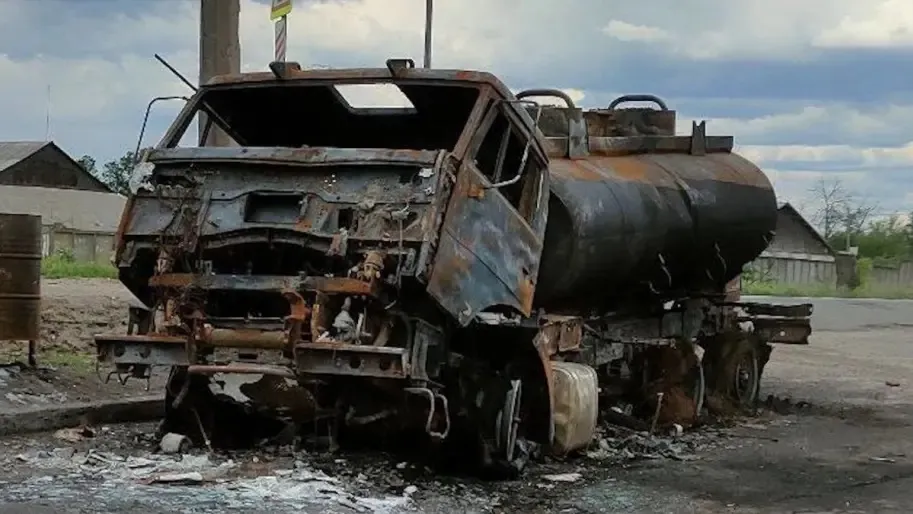
Since early May, nearly 800 strikes by Ukrainian drones on Russian logistics convoys deep behind enemy lines have been recorded, significantly complicating the supply of Russian troops in the occupied territories.
OSINT researcher Clément Molen reports that these figures represent only cases confirmed by video footage, so the actual number of strikes may be higher. According to his data, the most active contributors to the publication of materials on these strikes are the Unmanned Systems Forces, units of the National Guard’s “Azov” Brigade, the 3rd Special Operations Regiment, the 475th Assault Regiment, the “Spartan” Brigade, the 3rd Army Corps, as well as the Security Service of Ukraine (SBU) and the Main Intelligence Directorate (GUR).
The analyst notes that Ukrainian strikes are systematically disrupting Russian logistics, particularly after the destruction of bridges, forcing Russian troops to use pontoon crossings and secondary routes, especially for supplying Crimea.
The M-14 (R-280) highway remains particularly vulnerable, where, according to his assessment, Russia has limited alternatives for resupply. There has also been an increase in attacks in the occupied Kherson region due to the rerouting of convoys through Chaplynka, as well as along the Donetsk–Mariupol and Donetsk–Luhansk routes.
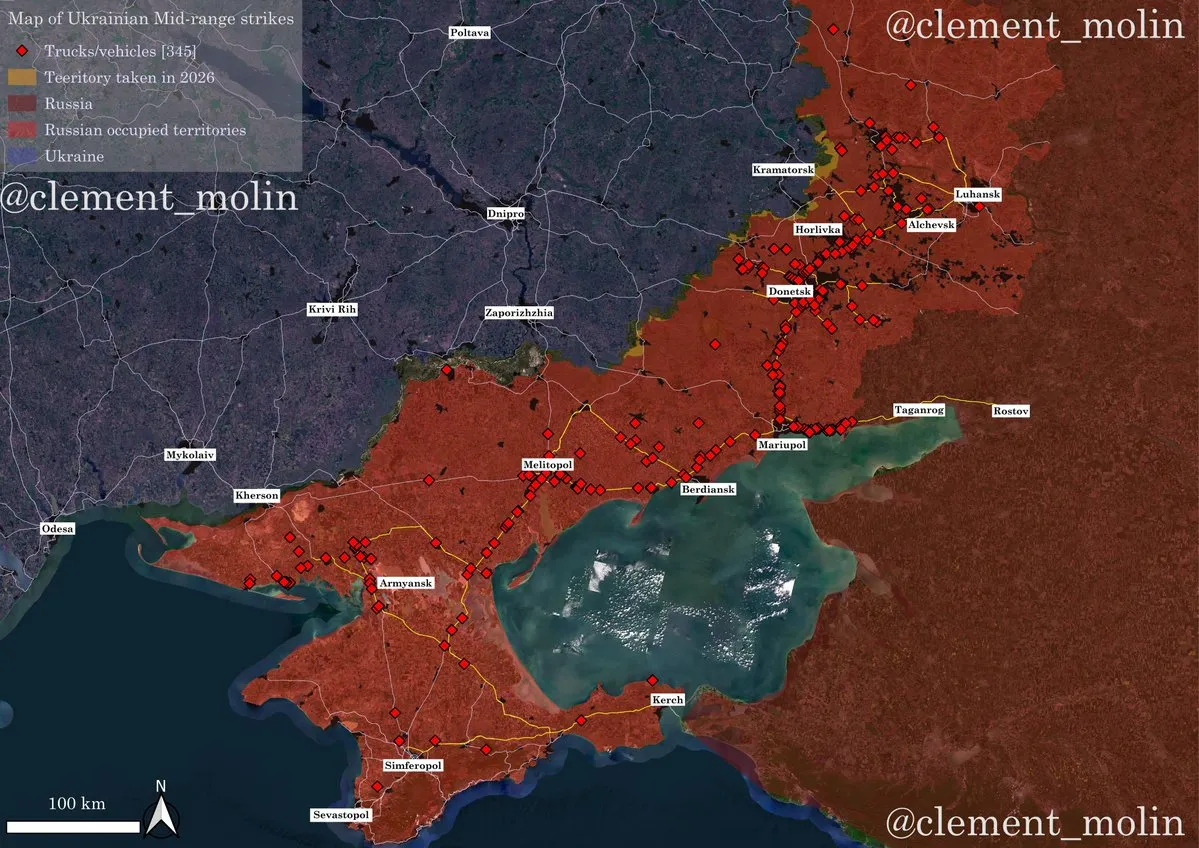
Molen emphasizes that Russian measures to protect convoys using mobile fire groups are not highly effective, and the interception of Ukrainian UAVs by Russian interceptor drones remains limited. According to his conclusions, Russia is lagging behind in adapting to new threats, which is already affecting the supply of its troops and creating opportunities for Ukraine to seize the initiative locally on the front lines.
Ukrainian President Volodymyr Zelenskyy confirmed successful strikes by Ukrainian defenders on major Russian energy infrastructure facilities.
The sharp intensification of Ukrainian strikes deep into Russian territory has led to a fuel crisis, a sharp drop in the stock market, and growing panic among the Russian elite.


