
Economic crisis and rising mortality in Russia trigger boom in cardboard coffins
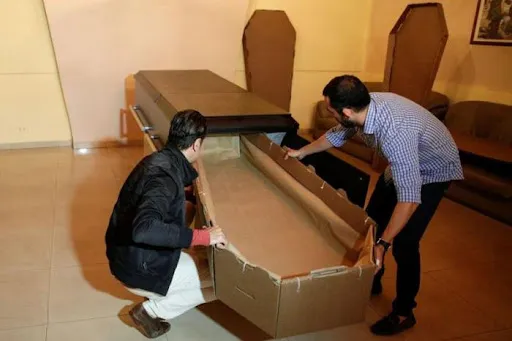
Russia’s funeral industry is showing steady growth amid record mortality, which reached 916,000 in the first half of 2025. Due to widespread impoverishment and the ongoing flow of casualties from the war in Ukraine, families are increasingly choosing the most budget-friendly burial options, according to The Insider.
A major trend in the market is cardboard coffins, priced between 1,200 and 4,000 rubles, with demand sometimes exceeding supply. Manufacturers offer “Economy” and “Standard” models, noting that these coffins are purchased not only by private individuals but also by municipalities for burying unclaimed bodies.
In addition to cheap materials, many Russians are switching to cremation for practical reasons, as it allows urns to be placed in existing graves without erecting a new monument. In Rostov-on-Don, crematoriums are reportedly operating like industrial warehouses without funeral halls, with bodies delivered in multi-casket hearses to minimize costs. Funeral service providers note a total loss of traditional burial culture: hearses no longer wait for relatives after ceremonies and immediately proceed to the next body to save on vehicle operation costs.
The situation is exacerbated by rising mortality among younger people, with deaths increasingly not linked to illness. Patriotic-themed funeral products, popular during the first year of the full-scale invasion, have lost demand due to widespread cost-cutting. Companies are forced to offer minimal service packages, as demand for expensive headstones and quality wood has been falling steadily over the past five years.
Meanwhile, since the end of 2024, Russia’s annual economic growth has dropped from around 5% to zero. Analysts cite inflation, military spending, and falling oil prices amid Donald Trump’s trade measures as contributing factors. After three years of unexpected growth, Russia is now facing a sudden slowdown — war expenditures, inflation, and declining oil revenues are straining an economy that until recently seemed resilient to sanctions.


