
Ignat outlines targets and results of Russia’s overnight attack
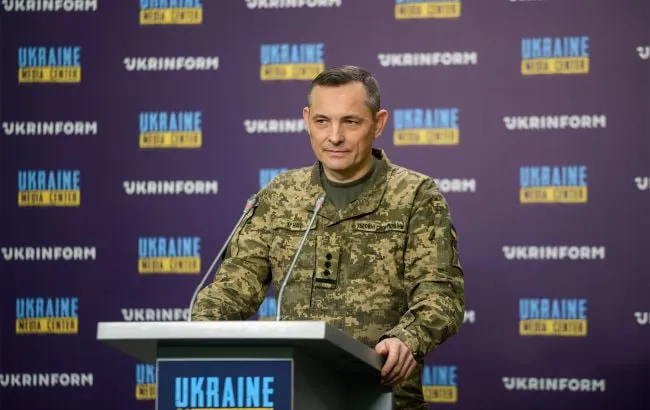
Ukrainian forces successfully repelled a large-scale Russian overnight attack, intercepting enemy drones and missiles, according to Yurii Ihnat, head of communications for the Air Force Command of the Armed Forces of Ukraine. He made the statement during a national television broadcast.
According to Ihnat, Russia launched a total of 426 aerial attack weapons, 390 of which were shot down by Ukraine’s air defence systems.
“These included Kh-101 cruise missiles, Iskander-K missiles, guided Kh-59 and Kh-69 missiles, as well as Kh-31P anti-radar missiles,” he said.
He added that ballistic missiles were also used, targeting the Poltava and Zaporizhzhia regions. Zaporizhzhia suffered significant damage from ballistic strikes.
Ihnat noted that a large number of drones were detected, most of which were destroyed. He emphasised that all cruise missiles were intercepted — including 18 Kh-101 and 5 Iskander-K missiles.
He stressed that this marks the second consecutive time Ukraine’s air defences have managed to shoot down all cruise missiles, largely thanks to coordinated efforts, including the use of Western-supplied fighter jets such as F-16s and Mirage aircraft.
However, he described the situation with ballistic missiles as “disappointing,” noting that strikes were concentrated on frontline regions such as Zaporizhzhia and Poltava. He added that systems like the Patriot air defense system are essential for countering such threats and need to be expanded.
It is still being determined how many of the missiles used were Iskander-M ballistic missiles and how many were S-300 or S-400 surface-to-air missiles repurposed for ground attacks, which have smaller warheads but can follow ballistic trajectories.
Targets of the attack
“As always, the targets are energy facilities, critical infrastructure, and possibly industrial enterprises that are important for Ukraine,” Ihnat said.
He added that Russian forces act in line with directives from their leadership, using missiles and drones to strike across Ukraine.
Features of the overnight strike
According to Ihnat, Russia deployed large numbers of drones from up to eight different directions, using established routes to exploit potential weaknesses in Ukraine’s air defences.
He said that after each attack, Ukrainian forces conduct detailed analyses to improve future responses.
“The enemy uses dozens of different types of UAVs. Of course, the main problem for our defence forces remains the Shahed drones, which are particularly dangerous due to their control systems,” he concluded.
Ukrainian air defences shot down all cruise missiles during the massive attack, Ihnat confirmed.
In the Kyiv region, the number of casualties has risen to four dead and 15 injured following the strike.
On the night of 14 March, Russian forces launched a large-scale drone and missile attack on the Kyiv region, hitting civilian settlements and causing casualties.
Earlier, Russian troops struck the Hlukhiv community with guided aerial bombs, injuring three residents and damaging homes and vehicles. Emergency services confirmed that no one was trapped under the rubble.
Meanwhile, dozens of clashes have already been recorded along the frontline since the start of the day, with the heaviest fighting near Kostiantynivka.


