
Russian local authorities are concealing the scale of attacks on their territory – intelligence
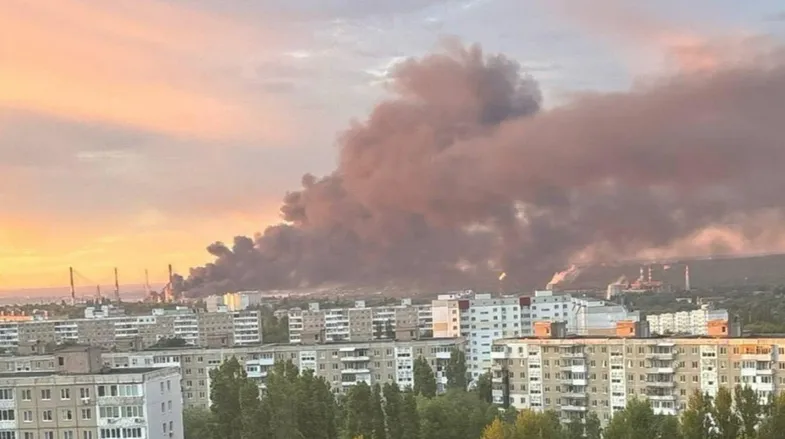
Regional authorities in the Russian Federation are refusing en masse to sound sirens during missile or drone attacks, attempting at all costs to maintain the illusion of calm and conceal the true scale of the airstrikes.
This refusal to provide the public with honest information has been documented in many frontline and rear regions of the aggressor country, as well as in the temporarily occupied Ukrainian territories.
According to intelligence reports, in the temporarily occupied Crimea, the invaders do not sound the alarm for every drone overflight, as otherwise the sirens would be blaring 22 hours a day, while in Yaroslavl, Moscow, and the Moscow region, officials openly state that they are concealing the danger to avoid panic and chaos. In Rostov, the lack of alerts is cynically justified by the claim that people allegedly run out into the streets, thereby doubling their risk of becoming victims; in Krasnodar, the “drone threat” has been legally separated from civil defense, and the head of Bashkortostan, Radii Khabirov, has linked the refusal to sound sirens to the rise in antidepressant use among Russians. Ukraine’s Foreign Intelligence Service emphasizes that concealing the truth is a matter of political survival for the Kremlin regime, as daily attacks are undermining the psychological well-being of the population and the perception of a war that supposedly does not affect ordinary Russian citizens.
This was reported by the Foreign Intelligence Service of Ukraine, according to UNN.
On the night of June 21, the Ukrainian Armed Forces’ unmanned aerial vehicle units struck a number of Russian occupation forces’ targets in the temporarily occupied Crimea, as well as in the occupied territories of the Zaporizhzhia and Donetsk regions.
On June 20, Ukrainian defense forces struck the Tyumen Oil Refinery (“Antipinsky”) in Russia, located more than 2,000 km from the Ukrainian border.
Ukrainian drones attacked the Russian ferry “Panagia,” which, according to Russian sources, was being used to transport military cargo from the Krasnodar Krai to the temporarily occupied Crimea.
On the night of Saturday, June 21, drones attacked the port in Kerch in the temporarily occupied Crimea and the “Kavkaz” port in the Krasnodar Krai of the Russian Federation, resulting in fires at the facilities.
In the Dnipro direction, particularly on the temporarily occupied left bank of the Kherson region, Russian troops are increasingly facing supply and logistics challenges. Ukrainian defense forces have intensified pressure on key supply routes, further complicating the movement and delivery of resources to the occupying forces.
A Ukrainian drone attack on targets in the Moscow region on Thursday served as yet another example that, according to CNN, confirms the effectiveness of Ukraine’s strategy of overwhelming Russian air defense systems through the massive use of drones.


