
Russia has put more than 200 locomotives out of service in Ukraine over the past year
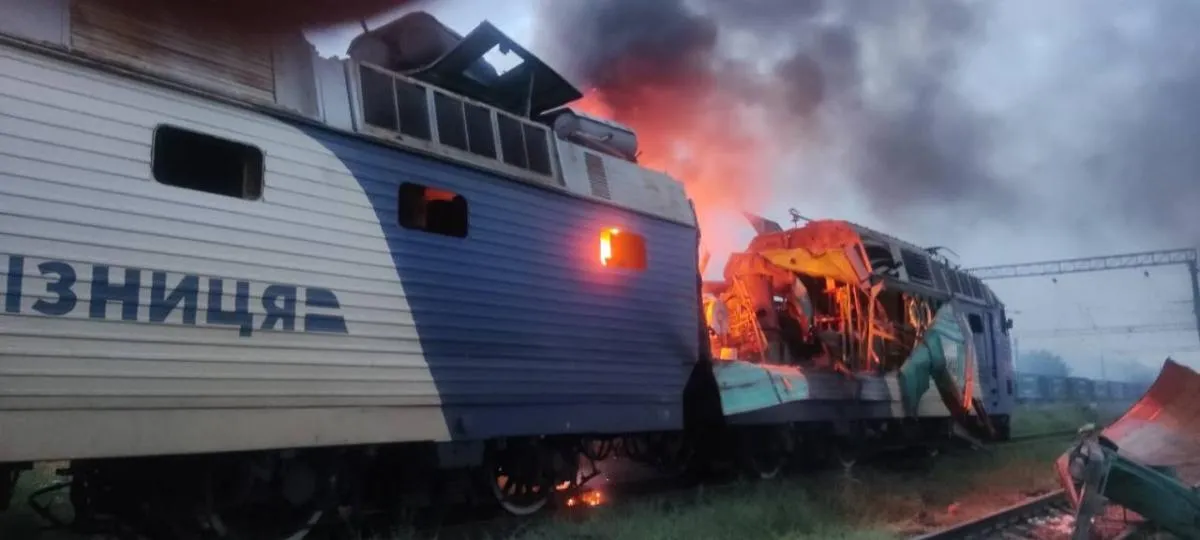
Since the beginning of the year, Russian attacks have destroyed and damaged more than 200 locomotives in Ukraine, causing significant damage to the railway infrastructure. Despite this, the railway continues to operate and provide transportation between regions. The latest strike on the Dnipropetrovsk region was yet another episode in a series of systematic attacks on the country’s transportation system.
Since the beginning of the year alone, Russian shelling and drone attacks have put more than 200 locomotives out of service in Ukraine, significantly complicating the operation of the railway system and placing an additional burden on repair infrastructure. This was reported by Oleksiy Kuleba, Ukraine’s Minister of Community and Territorial Development, while commenting on the latest attack on the railway in the Dnipropetrovsk region.
According to him, during the latest attack on the evening of July 3, Russian drones once again struck railway infrastructure, damaging two locomotives. At the same time, there were no casualties or injuries, as the locomotive crews had taken shelter in time following the air raid alert. “The most important thing is that we managed to save the locomotive crews. During the drone threat, the workers were in shelters, so there were no casualties or injuries,” Kuleba noted.
He emphasized that each such attack not only destroys equipment but also creates additional financial and organizational difficulties, as the scope of repairs is constantly increasing. Despite this, Ukrainian Railways continues to operate under extremely difficult conditions, restoring damaged infrastructure and maintaining connections between regions even under shelling. This was reported by Oleksiy Kuleba, Ukraine’s Minister of Community and Territorial Development.
On Saturday, July 4, Russian troops struck the Dnipropetrovsk region, attacking a private enterprise in the Dniprovskyi district. Information regarding possible casualties is currently being verified.
On the morning of July 4, Russian troops attacked one of the Naftogaz Group’s gas production facilities in the Poltava region with drones. The strike caused a fire at the facility, and its operations were temporarily suspended.
On the morning of July 4, Russian forces carried out a drone attack on one of the industrial enterprises in the Poltava region. The strike occurred in the Poltava district.
In addition, Russian forces attacked Sumy with guided aerial bombs, injuring an elderly woman. Damage to civilian infrastructure has been reported in the city, and emergency services are assessing the extent of the damage caused by the strike.
As a result of a massive Russian strike on the capital, a leased humanitarian warehouse belonging to the Ukrainian Red Cross was completely destroyed; it had stored over 320,000 items of cargo and equipment with a total value of more than 79 million hryvnias.
As a result of Russian shelling and a fire at one of the capital’s enterprises, fuel and lubricants flowed into Kyrylivskyi Lake in Kyiv through the storm sewer system.


