
Russian assault forces changed their tactics after suffering heavy losses near Pokrovsk
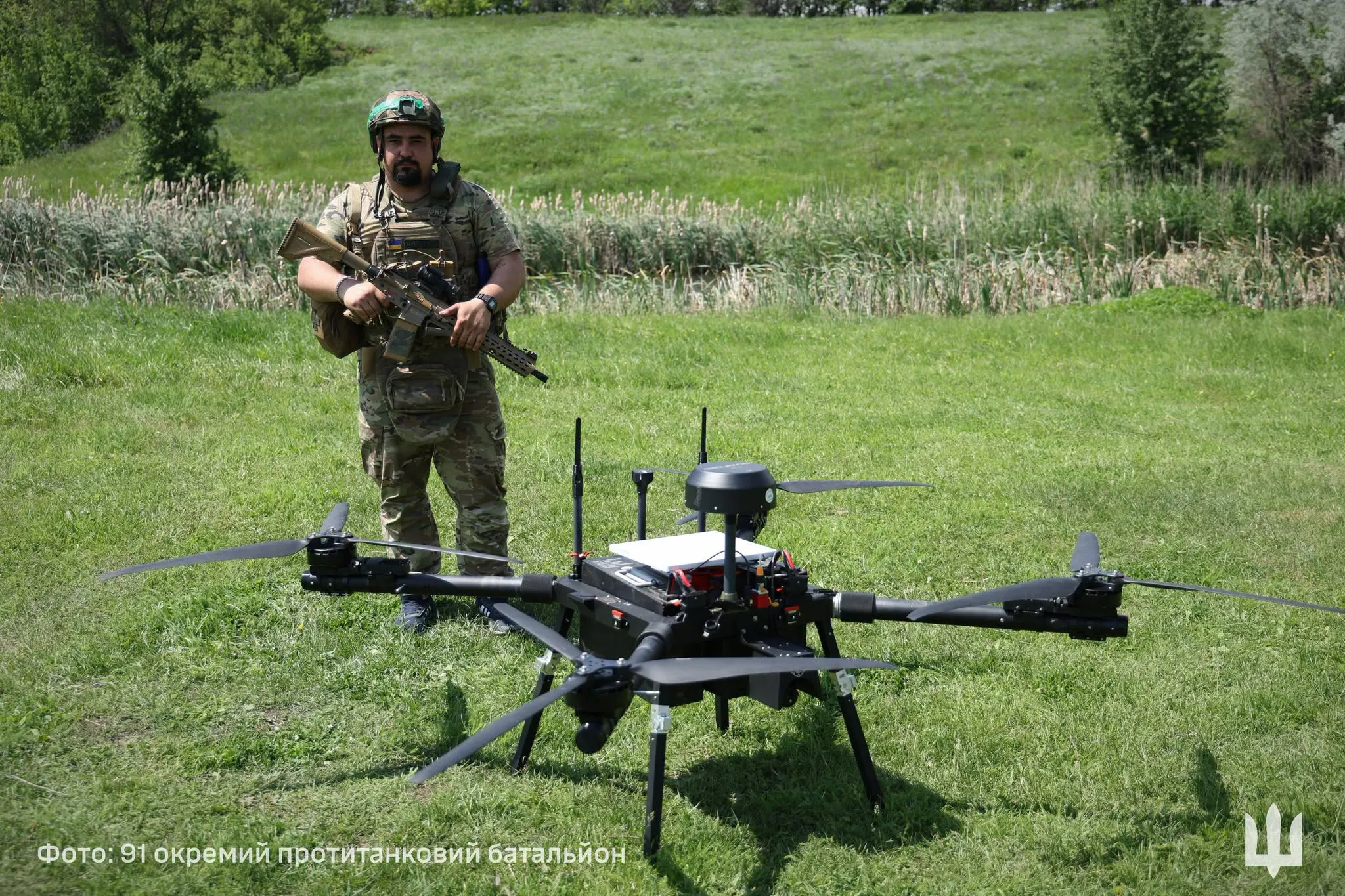
In the Pokrovsk sector, Russian forces have drastically changed their tactics following heavy losses in armored vehicles and infantry. Ukrainian units report that they are now quickly detecting and destroying the enemy almost as soon as they appear. At the same time, according to Ukrainian military officials, one of the Russian divisions has suffered such significant losses that it has had to be reinforced several times.
In the Pokrovsk direction, Russian troops are no longer launching large-scale attacks with columns of armored vehicles or infantry groups, as previous attempts resulted in heavy losses for them, and now the enemy is forced to change its approach, hiding in the darkness and trying to infiltrate through the so-called gray zone.
Nazariy Kishak, commander of the 91st Separate Anti-Tank Battalion, spoke about this during a televised marathon, describing what operations currently look like on this section of the front and why conventional assaults have effectively disappeared. According to him, Russian units can no longer afford to launch large-scale offensives, as any concentration of troops immediately becomes a target for attack. “They no longer have columns; they no longer have groups of 15–20 men,” he noted, explaining that the situation on the battlefield has changed significantly.
Instead of open attacks, the enemy now tries to operate covertly: it uses nighttime, anti-drone measures, and attempts to avoid detection, but this does not give it a significant advantage.
According to Kishak, Ukrainian units have established a rapid-response system, the key to which is to quickly detect the enemy and strike before it has time to entrench itself or disperse. “If the enemy is detected, it will be destroyed within 10 minutes. This is already evident from our systematic, consistent practice,” the commander said.
He emphasized that coordination among various units—including artillery and unmanned aerial vehicles—plays a key role in this, as it allows for rapid engagement of targets and denies the enemy any opportunity to maneuver. Separately, the commander highlighted the development of Ukrainian drone technology, which has significantly expanded the strike range and allows for engaging targets at much greater distances than before.
According to him, the situation for Russian forces is complicated by the fact that even small groups do not go unnoticed and quickly come under fire. Kishak also stated that the Russian Army’s 90th Tank Division is operating in this sector of the front, having already suffered such heavy losses that it has been withdrawn multiple times for replenishment. “I can’t reveal all the secrets, but this division is practically down to zero from the very start. And we’re working every day to ensure that every enemy unit from this division that’s detected is simply destroyed,” he added.
Ukrainian military officials emphasize that despite changes in the enemy’s tactics, the intensity of combat operations in the area remains high, and the main struggle centers on the speed of target detection and the accuracy of strikes. Nazariy Kishak, commander of the 91st Separate Anti-Tank Battalion, spoke about this during a national telethon.
Additional details have emerged regarding the incident involving a drone attack on a Belarusian bus in the Bryansk region, which is yet another provocation by Russian special services against Ukraine.
The SBU intercepted a Russian document refuting the claim that the Ukrainian Armed Forces attacked the Belarusian bus.
Belarus has claimed that the Ukrainian Armed Forces were involved in the attack on the bus in the Bryansk region.


