
Strikes on Russian terminals in the Baltic Sea have caused massive damage — FT
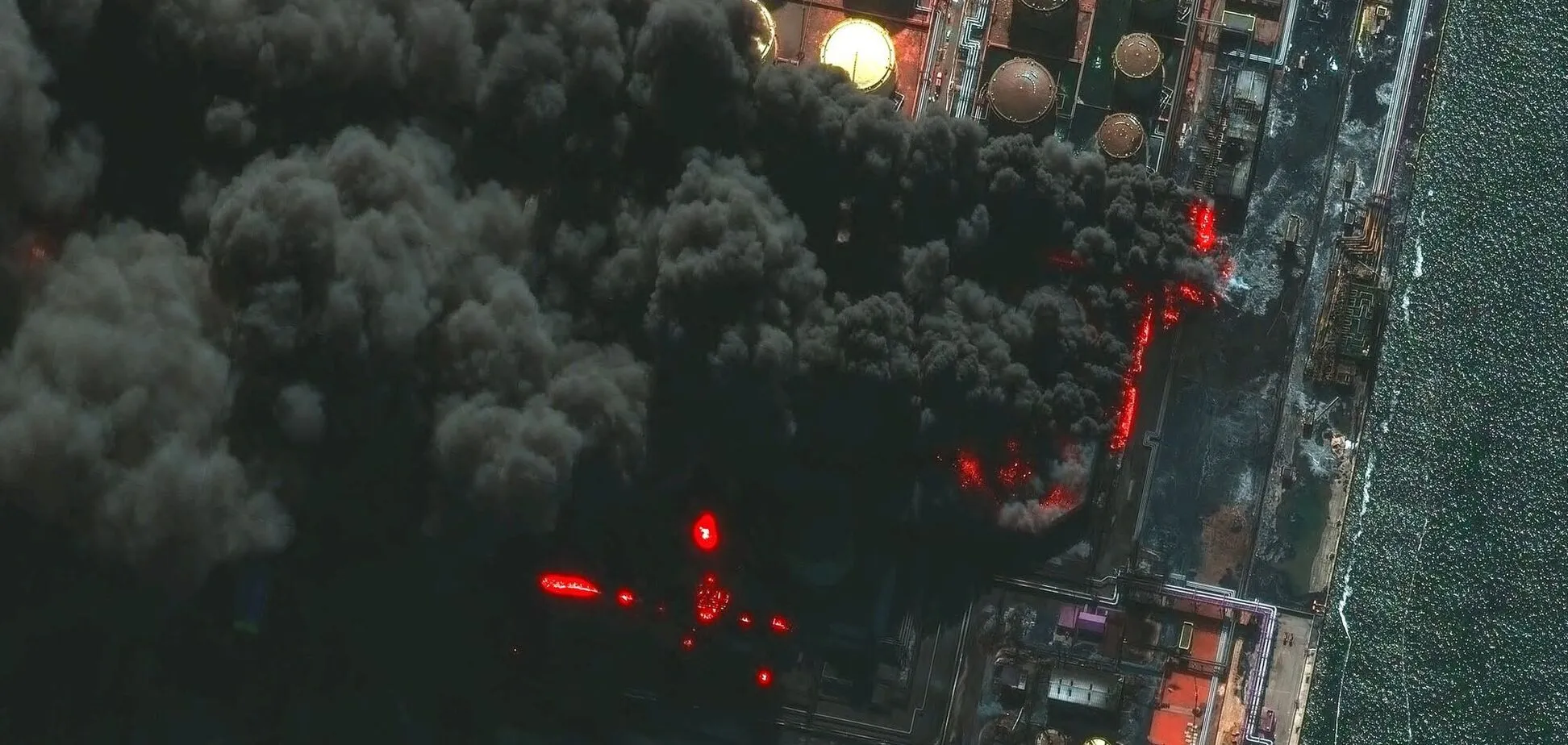
A series of successful attacks on key Russian oil terminals in the Baltic Sea has caused massive financial losses for the aggressor’s budget.
This is reported by the FT.
The occupying country’s direct lost export revenue alone has already approached the one-billion-dollar mark.
The strikes targeted the strategic ports of Primorsk and Ust-Luga, through which more than 40% of all Russian oil exports pass.
In particular, a massive fire in Primorsk destroyed raw materials worth about $200 million, dealing a significant blow to logistics.
In addition to the terminals, a Lukoil oil refinery in the Nizhny Novgorod region and a number of chemical industry enterprises came under fire.
The products of these plants were directly used to meet the occupying forces’ needs for fuel and components for weapons manufacturing.
Despite the occupiers’ attempts to quickly resume oil shipments, the full operation of the damaged facilities remains blocked for an extended period.
Repairs to the production lines in Ust-Luga will take at least a month, and restoring the destroyed storage tanks will require months of intensive work.
The Kremlin has effectively acknowledged its inability to fully protect its energy infrastructure from Ukrainian drones.
Russian Presidential Spokesperson Dmitry Peskov officially stated that Russia cannot provide “100% protection” for its own energy facilities due to the scale of the attacks.
Due to the ineffectiveness of state air defense, Russian businesses are forced to independently fund protective measures, spending millions of dollars on electronic warfare systems.
As a reminder, the Russian port of Ust-Luga has resumed oil shipments following drone attacks.
An oil loading terminal at the Russian port of Ust-Luga was damaged following a UAV attack.
Drones also attacked the port of Ust-Luga in the Leningrad Oblast of the Russian Federation again.


