
Ukraine Has Almost Exhausted Its Stock of Patriot Missiles — CNN
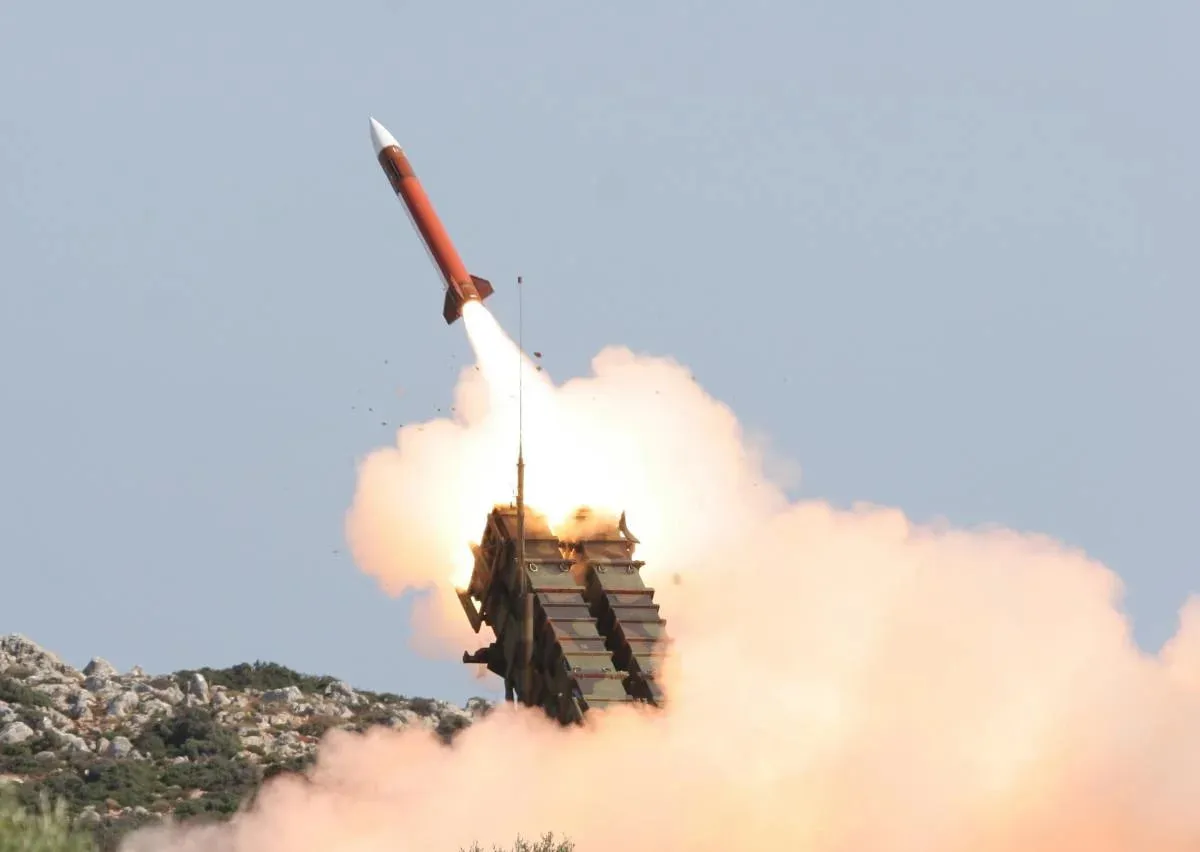
Ukraine is facing a severe shortage of interceptor missiles for its American Patriot systems. According to CNN, ammunition stocks for these systems have nearly run out amid constant Russian attacks.
The Patriot is one of the few systems capable of intercepting ballistic missiles. Facing nearly daily Russian strikes, Ukraine needs a significant replenishment of these missiles.
The report notes that President Volodymyr Zelenskyy has spoken of the need to obtain about 5% of U.S. interceptor stockpiles by winter, whereas Ukraine currently has only about 1%.
The 16 launch tubes of the system seen by the media show signs of regular use, but its chief engineer in Ukraine, Dmytro, stated that he had not seen the Patriot launcher fire for six weeks. Ukraine is reluctant to specify exactly how many interceptors it has left, if any: Ukrainian President Volodymyr Zelenskyy says the country needs 5% of the U.S. stockpile to get through the winter, but currently has only 1%.
“It’s truly a heart-wrenching sight when you have the equipment but can’t intercept a single missile,” the expert noted, visibly agitated. “Ballistic missiles are flying right over your head, and there’s nothing you can do about it, while the civilian population is right behind you.”
The first time he had no interceptors to fire was in December 2025. “It’s hard to describe—it’s a strong and unpleasant feeling,” he emphasized. “It’s as if you know how to walk, but you can’t walk. You know how to breathe, but you can’t breathe.”
The launcher itself is part of a complex system of radars and control centers, and it’s operated remotely: the crew’s drivers are far from the launcher when it fires. Another crew member, Georgiy, who works in the command center, said that the decision about which missile to intercept “comes with experience” and is made by the unit commander.
“It’s hard because you see targets flying toward the civilian population, critical infrastructure, as well as the families of my comrades and my own family,” he noted. He described the feeling of launching an interceptor as “something magical.”
The problem with the Patriot didn’t arise out of nowhere
The global crisis in Patriot interceptor supplies was triggered by their heavy use in the Persian Gulf in March and April—often to repel relatively inexpensive attacks by Iranian drones, the article states.
It is believed that the wealthy Gulf states used dozens of interceptors, and Dmytro stated that he knew the conflict in the Middle East would eventually affect Ukraine. “We anticipated that we would find ourselves in a bind. We were very shocked by how many missiles they were launching at once. The very same missiles we could have used against Russian ballistic missiles,” he added.
Coalition forces used an average of 225 interceptors per day during the first four days of the war with Iran, according to the Institute for Foreign Policy Research. The institute noted that manufacturer Lockheed Martin produced 620 interceptors in 2025—or 1.7 per day—resulting in a 132-to-1 gap between usage and production.
In January, the Pentagon signed a seven-year contract under which Lockheed Martin is to produce 2,000 units per year through 2030—by which time the war in Ukraine will have been ongoing for eight years.
The number of missiles is a very important issue
It is unclear how many interceptors the United States has promised Ukraine and what the size of the U.S. stockpile is—of which, according to Zelenskyy, he has 1%, media reports say. In an interview with CNN, Zelenskyy raised the complex issue of Ukraine building its own interceptors under license from the U.S. and its manufacturers, noting that he had offered Raytheon and Lockheed Martin ownership and control over anyinterceptor production plant they would allow to be opened in Ukraine.
“It will be your company,” he recalled saying to the American manufacturers. “It will be our brains, our hands, our engineers. And I will do everything possible to build a great company for them. Because I don’t need to sell [the interceptors] to anyone else—I need them for my country.” He stated that his focus is on production volume and that manufacturers can set the price.
Zelenskyy also added that, after nearly five years of war, he had become an expert on who possesses what capabilities: “I know about the production capacity, military capabilities, and stockpiles of nearly all European countries, including the United States. Not everything, but a great deal.”
What Is Known About the Transfer of Licenses to Ukraine
On the sidelines of the NATO summit in Ankara in June, Trump offered Ukraine licenses to begin producing interceptors. Raytheon and Lockheed Martin traveled to Kyiv for a meeting with Zelenskyy, and shortly thereafter, Trump expressed doubts that the licensing would go through.
“I want to get this,” Zelenskyy said. “I think his word is the word of the President of the United States. And I hope I’ll get it.”
Shortly thereafter, a White House spokesperson stated that no decisions had yet been made and no guarantees regarding the production of Patriot interceptors had been provided, adding that the security of U.S. technology is of the utmost importance.
CNN agreed not to disclose details about the Patriot model or its location.
Poland’s former defense minister spoke out against transferring Patriot missiles to Ukraine.
Patriot launchers in Kyiv remained empty in the face of Russian attacks, according to the Financial Times.


