
The enemy has stepped up its activity near Kozacha Lopana with small assault groups
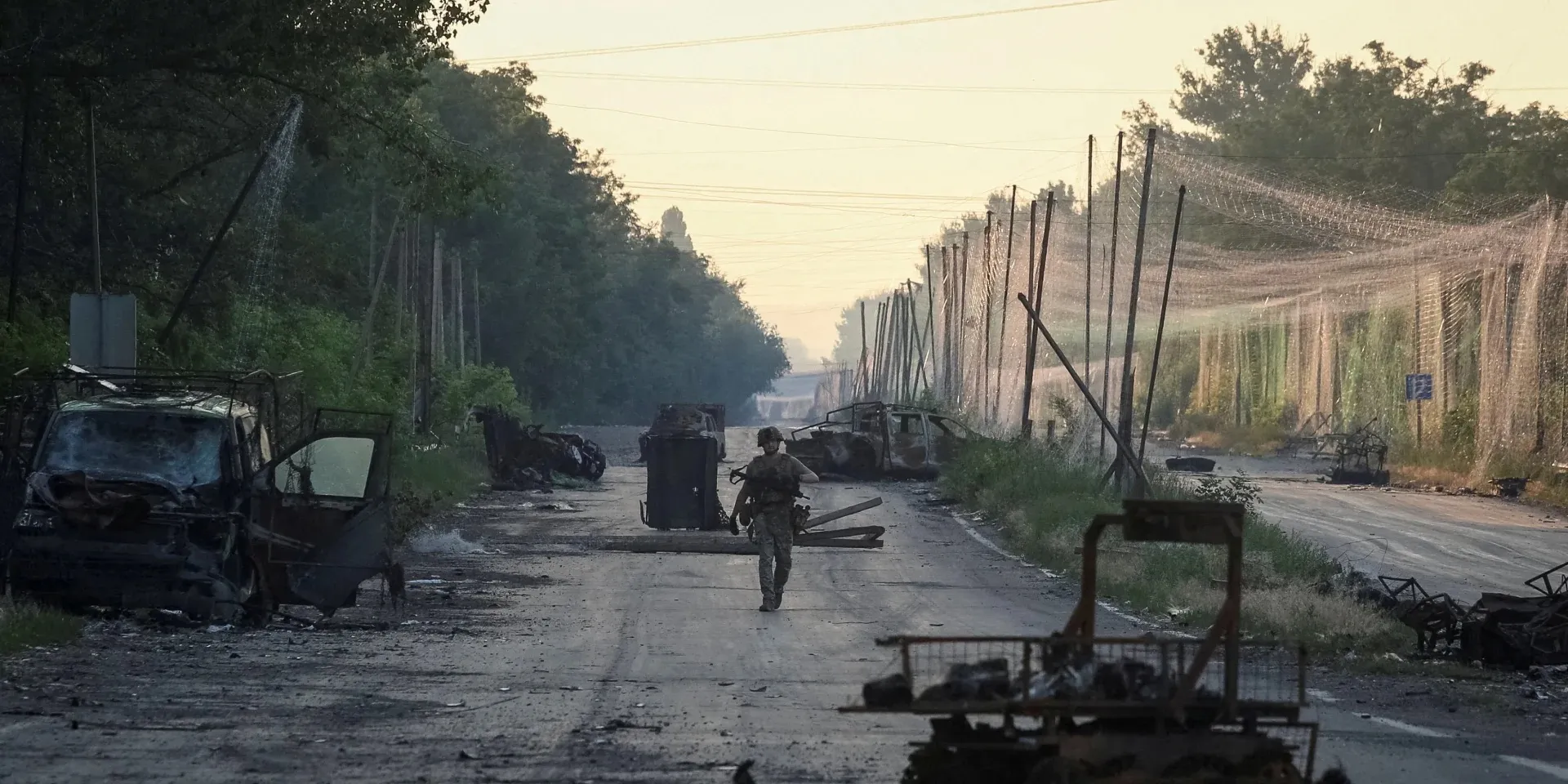
Over the past 10 days, Russian troops have been attempting to infiltrate the area around Kozacha Lopan, Dehtiarne, and Vovchansk in small infantry groups. This was reported by a spokesperson for the Joint Forces Operation, who noted that the enemy had already been pushed back but may attempt to attack again.
Lieutenant Colonel Viktor Tregubov, a spokesperson for the Joint Forces Operation, spoke about this during a live stream on Army TV.
According to him, there had been no signs of increased activity in the Horanova and Kozacha Lopan areas for quite some time, but now the occupiers are trying to establish a foothold there.
“It’s very difficult to determine when an attack turns into an infiltration attempt. When the enemy tries to gain a foothold on the outskirts of a settlement, it’s hard to say whether they’re already there or not. They’re trying to get in.
They’ve been driven out now, but they may try again tomorrow morning. Until the situation stabilizes, it’s very difficult to speak of any clear front line, because it effectively doesn’t exist,” Tregubov explained.
He noted that the escalation is not limited to the Kharkiv region.
“Over the past ten days, fighting has intensified in the Lyman, Kupiansk, Southern Slobozhanshchyna, and Sumy sectors,” the spokesperson said.
According to Tregubov, in the Southern Slobozhanshchyna sector, the Russians do not have a single clearly defined main thrust but are making numerous attempts to penetrate at various points.
“Kozacha Lopan, Dehtiarne, and the outskirts of Vovchansk—they are trying to break through in several places at once,” he noted.
Commenting on the situation in Kozacha Lopan, the spokesperson emphasized that it is currently inaccurate to speak of the enemy’s complete expulsion, as the situation is changing rapidly.
“As of now, they are not there. But that doesn’t mean that tomorrow some occupier won’t show up with a flag. That is precisely why I am not making a definitive statement until at least a roughly clear line is established,” Tregubov explained.
Separately, the spokesperson reported that the Ukrainian military is observing signs of a fuel shortage in the Russian army. According to him, the problem is being observed in certain areas and may be linked to both a general shortage of resources and strikes on supply depots.
“In the Northern Slobozhanshchyna sector, we have observed some Russian regiments implementing rather strict fuel rationing, even for generator fuel,” he noted.
At the same time, the spokesperson emphasized that the fuel shortage does not yet have a critical impact on the occupiers’ operations, as they primarily rely on tactics involving small infantry groups rather than the large-scale use of armored vehicles.
“Sooner or later, this will become a major problem for them. We are waiting for the moment when this becomes evident along the entire front line, not just in isolated areas,” the spokesperson said.
According to him, Russian logistics during assaults have also changed.
“Now, a backpack containing the necessary equipment is simply slung over the shoulder of one of the assault team members. He walks, and a Russian drone follows him, ensuring that he doesn’t stray from the route or do anything ‘unauthorized’—neither to himself nor to the backpack,” Tregubov explained.
At the same time, the intensity of combat operations has significantly increased in the Joint Forces Group’s area of responsibility.
“Whereas there used to be about 20–25 clashes per day, now the number has reached 40. At the same time, Russian daily casualties, which previously stood at 150–200, once reached nearly 300,” the spokesperson said.
Earlier, the General Staff reported how many occupiers the Ukrainian Armed Forces had eliminated in a single day
Syrskyi commented on rumors of a conflict with Defense Minister Fedorov


