
Since early May, Ukrainian drones have attacked Russian logistics infrastructure more than 1,350 times — OSINT analyst
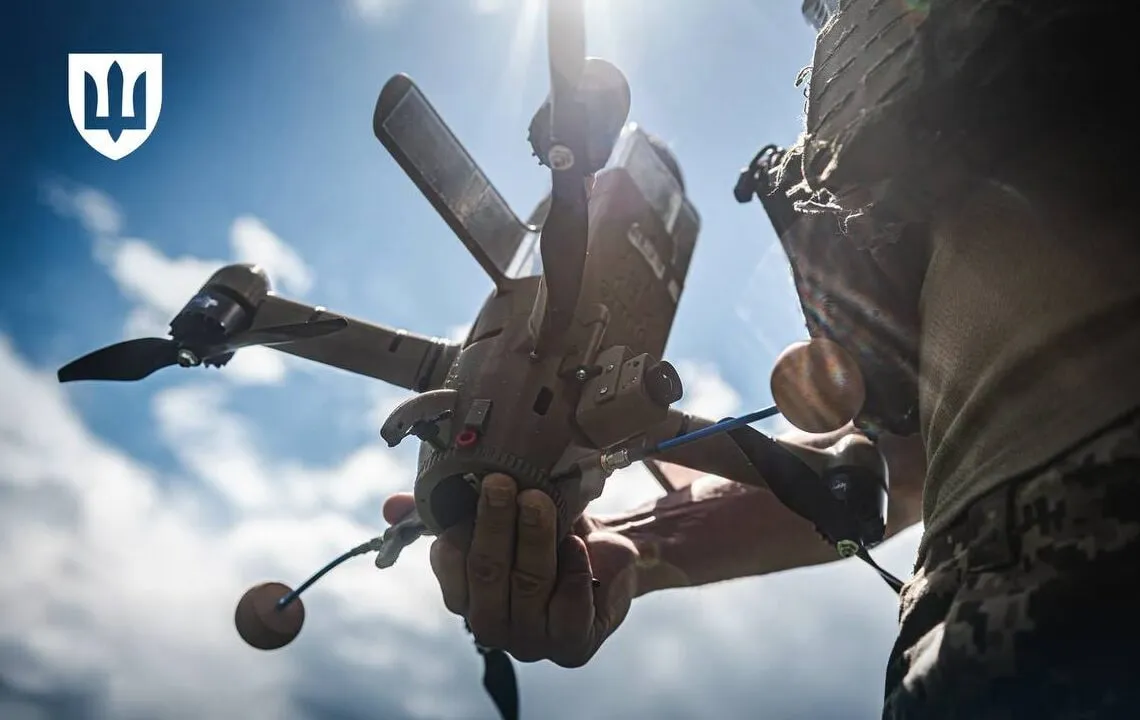
Since early May, the Ukrainian Defense Forces have carried out at least 1,350 drone strikes against Russian logistics facilities in the operational rear of the temporarily occupied territories. The pace of these attacks shows no sign of slowing, and July’s figures may exceed those of the previous month.
This was reported by OSINT researcher Clément Molen. According to his data, more than 25 different Ukrainian units have been involved in the strikes on logistics facilities.
Molen notes that fuel tankers remain a priority target for Ukrainian drones. In July alone, according to his estimates, at least 42 such vehicles were struck.
According to the researcher, the main losses for the Russian army are linked not so much to the destruction of the trucks themselves—which can be replaced—as to the cargo that was never delivered to the front lines. This, he estimates, significantly slows the advance of Russian troops.
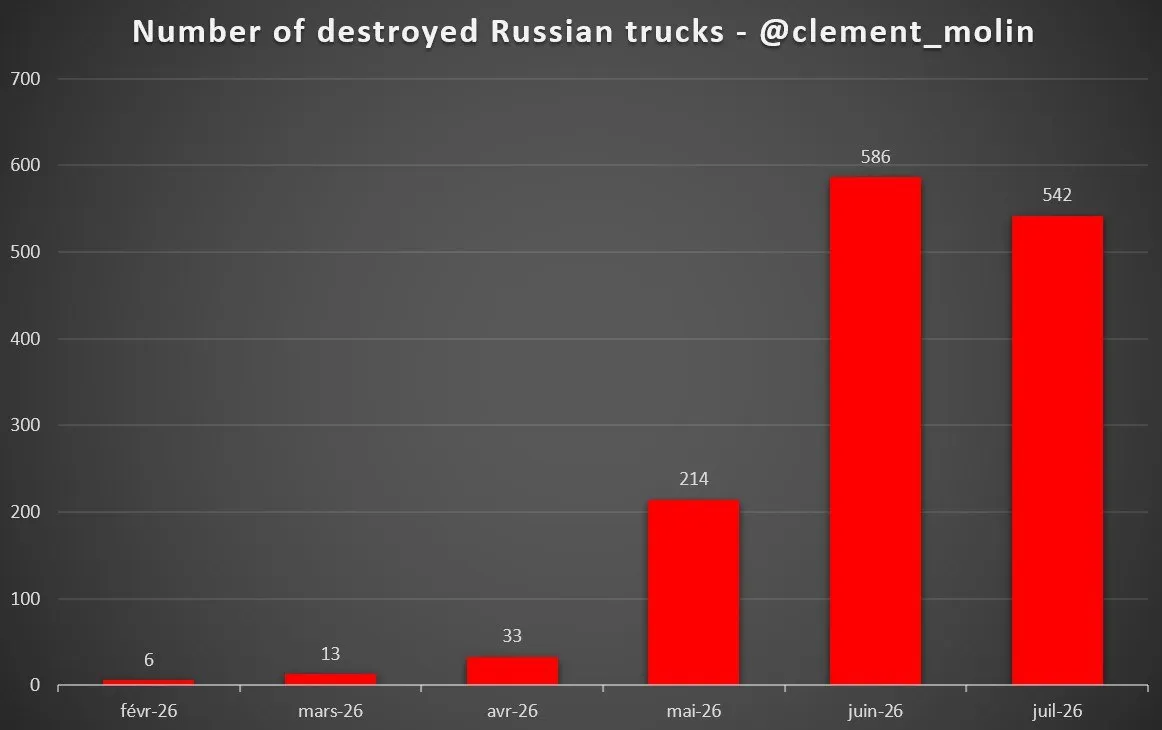
In total, since the beginning of July, Molen has recorded the loss of 542 vehicles. He also drew attention to numerous videos showing roads littered with burned-out vehicles, which, in his view, indicates significant cargo losses even before the cargo reached the front lines.
At the same time, the researcher notes that it is currently difficult to assess the full impact of these strikes. He predicts that their effects may become most noticeable in the fall.
According to Molen’s assessment, the disruption to logistics will have the greatest impact on Russian forces in the Zaporizhzhia and Kupiansk sectors. In contrast, in the Donetsk region, supplying the occupying forces is less of a challenge due to a denser network of settlements, between which it is easier to organize transportation.
The researcher also considers Russian mobile fire groups to be ineffective, noting that there are significantly more publicly available videos of them being destroyed than of successful interceptions by Ukrainian drones.
In his view, electronic warfare systems and interceptor drones are more effective countermeasures, though there are no signs of their large-scale deployment yet.
Separately, Molen drew attention to Ukraine’s announced plans to produce 100,000 FP-1 and FP-2 drones per year. He estimates that this would double the annual production of Russian Shahed-type strike drones.
Molen reported this on July 23 on the social media platform X.
As a reminder, drones from the Unmanned Systems Forces have struck another 19 power substations in occupied Crimea and the temporarily occupied part of Donetsk Oblast over the past two days.


