Tectonic processes on a massive scale do not always begin with devastating earthquakes or powerful volcanic eruptions.
The formation of new tectonic plate boundaries is usually accompanied by noticeable geological changes. Plate rifts trigger earthquakes and volcanic activity and gradually shape new landscapes that can even be tracked on geological maps.
However, the clearest sign of such a rift forming in central Zambia was detected not by a seismometer, but in the water of a hot spring, writes Earth. The gas escaping along with the bubbles came from depths that should not easily connect to the surface.
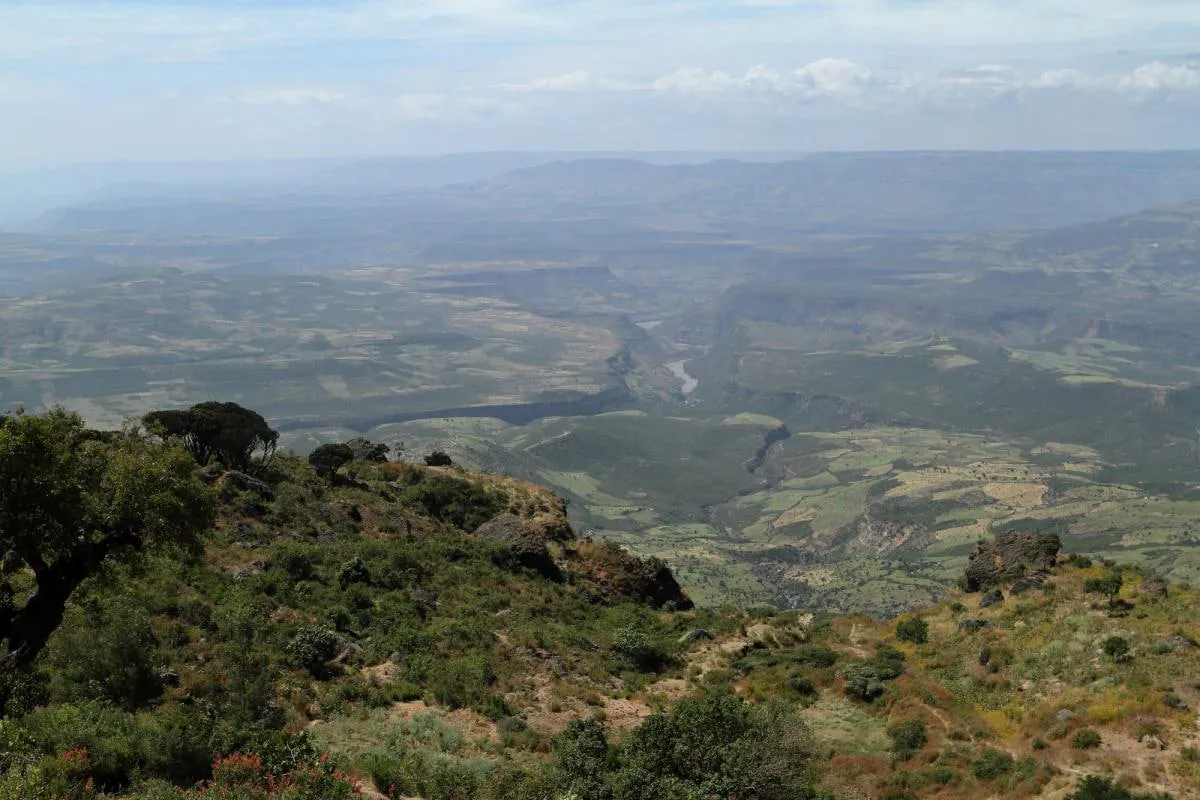
The springs are located along the Kafue Rift—a long crack in the Earth’s crust that runs through Zambia. Researchers had long suspected that the rift might still be active. Before this study, no one could prove it.
Mike Daly, a professor of Earth sciences at the University of Oxford, led the team that set out to find the answer in the roughest waters. His group took gas samples from eight geothermal wells and springs throughout the region. Six were located within the presumed rift zone. Two were located in stable terrain outside the zone.
Sampling from the sources
At each site, the team collected gas freely bubbling up from the water and sealed it in copper tubes. Back in Oxford, they analyzed each sample for traces of helium isotopes and other elements.
Isotopes are different versions of the same element, chemically identical but slightly different in mass. The proportions of certain isotopes in the gas reveal where it came from. The crust and the mantle leave completely different signatures.
The Helium Clue
The Earth’s mantle—a layer of molten rock beneath the crust—contains a form of helium that is extremely rare at the surface. Crustal rocks generate a different form as a result of slow radioactive decay. The ratio between them reveals where any given gas sample originated.
Previous work in Yellowstone used this measurement to identify connections with deep magma. Here, the signatures point to gases rising from rocks at depths of approximately 40 to 160 kilometers below the surface.
Gas from six sources within the Kafue Rift showed a distinct mantle component that was not detected in two sources outside the rift. The contrast was sharp enough to rule out atmospheric contamination or ordinary crustal noise.
"Hot springs along the Kafue Rift in Zambia have helium isotope signatures that indicate the springs have a direct connection to the Earth’s mantle," explained Daily.
Another African Rift
The readings from the Kafue Rift fell within the same range as samples from the East African Rift System—an ancient fissure in the north that has been opening up for millions of years.
This made the comparison useful. The East African Rift has progressed further, with active volcanoes and deepening valleys dating back millions of years. The samples from Zambia corresponded to an earlier stage of the same process. The rift is just beginning to reach the hot rock. Mantle fluids are finding their way upward. There are no volcanoes yet.
A continent breaking apart
If the Kafue Rift is indeed breaking through the Earth’s solid outer shell, it is part of something much larger. The rift zone stretches about 2,500 kilometers—from Tanzania down through Botswana and into Namibia.
Researchers call it the Southwest African Rift, and if it continues to develop, it could split Africa in half along a new plate boundary.
For decades, scientists have assumed that East Africa would one day separate from the continent along the Great Rift Valley. Perhaps that will happen. But this rifting is progressing slowly, and the geometry around Africa is resisting it.
The southwestern route may prove to be faster. The underlying geology there aligns more favorably with the oceanic ridges on both sides of the continent, facilitating a complete breakaway.
“A rift can become a plate boundary, but rift activity usually ceases before the lithosphere breaks apart and a plate boundary forms,” Daly emphasized.
Rifts can generate energy
The discovery has practical implications. Rifts in their early stages can generate geothermal heat, as well as pockets of helium and hydrogen that have not yet been diluted by volcanic gases.
Zambia is already conducting geothermal research along the Kafue Rift in hopes of generating electricity locally. New evidence of a mantle connection makes these prospects much more promising.
Global helium reserves are limited, yet it is in demand for medical scanners, microchips, and rocket fuel. Hydrogen, which is increasingly sought after as a clean fuel, may also accumulate in early-stage rifts.
Recent work in similar settings has identified early-stage rifts as among the most promising places to search for these resources. Kafue has joined this short list.
Broader Implications of the Study
Prior to this study, no one had directly confirmed that the Kafue Rift cuts through the Earth’s mantle. Geochemistry now fills that gap. The boundary faults are active, the crust is cracking, and gas from deep within has already reached the surface—at least along the surveyed section.
Daley is cautious in his assessment of how far this can be applied.
“However, this study is based on helium analysis in a single general area of the Southwest African Rift System, which stretches for thousands of kilometers,” he said.
Additional fieldwork along the rest of the rift, including segments in Botswana and Namibia, is already underway, with results expected later this year.
What is changing is the discussion about the possible breakup of Africa. East Africa has long been the focus of attention. Now Zambia is emerging as a serious candidate for the location where the next true boundary between Africa’s tectonic plates might form.