
Americans Want Peace with Iran, but Criticize Trump's Deal — CNN
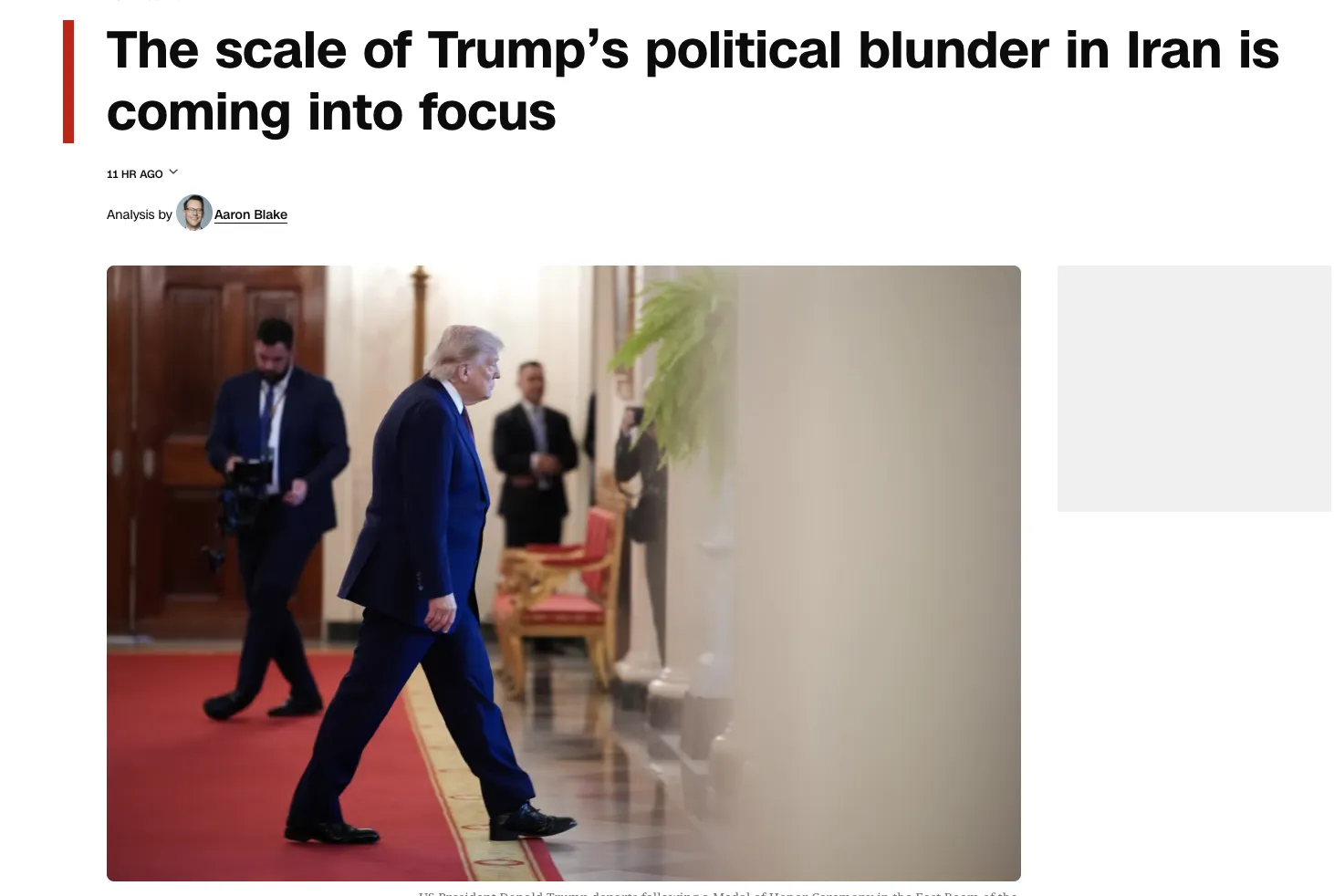
A CBS News and YouGov poll revealed mixed feelings among Americans regarding the Donald Trump administration’s agreements with Iran: while the majority supports ending the war, some citizens view the deal as a strategic defeat.
On the one hand, the overwhelming majority of Americans (78%) agree that Trump should end the war now rather than insist on further concessions from Tehran (only 22% support the latter). However, a detailed analysis shows that this position stems not from support for the terms of the agreement, but from war fatigue, as the public views the war as a failure and counterproductive.
Despite attempts by Trump’s political advisers to interpret these figures as a victory, the general mood among the public remains pessimistic. Only 22% of those surveyed believe the agreement is more beneficial for the U.S., while 37% are convinced that it favors Iran more (another 41% described the terms as equal). Moreover, even among Republicans, only 39% view the signed document as a success for the American side. In addition, 45% of citizens stated outright that the four-month military campaign did not bring the United States strategic success.
The key issue of Tehran’s nuclear program—which was the U.S. administration’s primary objective—has sparked the most skepticism. A CBS poll shows that 69% of Americans (including 45% of Republicans) do not believe this agreement will halt Iran’s nuclear development. This echoes a similar Fox News survey, in which 64% of voters expressed doubt about the peace plan’s ability to curb Tehran’s nuclear ambitions. The public is also convinced that the agreement will not prevent Iran from threatening other countries (68%), will not make its leaders pro-American (79%), and will not guarantee the security and freedom of the Iranian people (74%).
The public is increasingly inclined to believe that the war has been counterproductive: 57% of respondents believe it “created more problems than it solved,” and only 21% believe the opposite. Although Trump claims the enemy has been significantly weakened, only 37% of citizens see Iran as weaker than it was before the conflict began. More than six in ten respondents are convinced that Iran has retained its former strength (38%) or has even become stronger (25%), demonstrating its ability to block the Strait of Hormuz and threaten the global economy.
Finally, most Americans believe the White House underestimated the consequences of the campaign. 64% of those surveyed (including 51% of Republicans) are certain that the war’s impact on the global economy has been more significant than the current administration anticipated. Since the White House’s initial projections predicted the conflict would last 4–6 weeks, and the war has dragged on for nearly four months, the public simply wants it to end. Two-thirds of Americans concluded that Trump agreed to this deal not because he had achieved his stated goals, but simply because he wanted to end the conflict as quickly as possible, according to CNN.
Participants in the four-party talks in Switzerland agreed on a roadmap intended to lead the United States and Iran to a final agreement within 60 days.
Talks between the U.S. and Iran on the nuclear program and the security situation in the Middle East have begun in Switzerland. The U.S. side has already announced the first positive results of the meeting.
U.S. President Donald Trump reacted harshly to statements by Iranian President Masoud Pezeshkian regarding the continuation of uranium enrichment and threatened Tehran with serious consequences.


