
The Netherlands has already set up a camp for prisoners of war in case of war with Russia
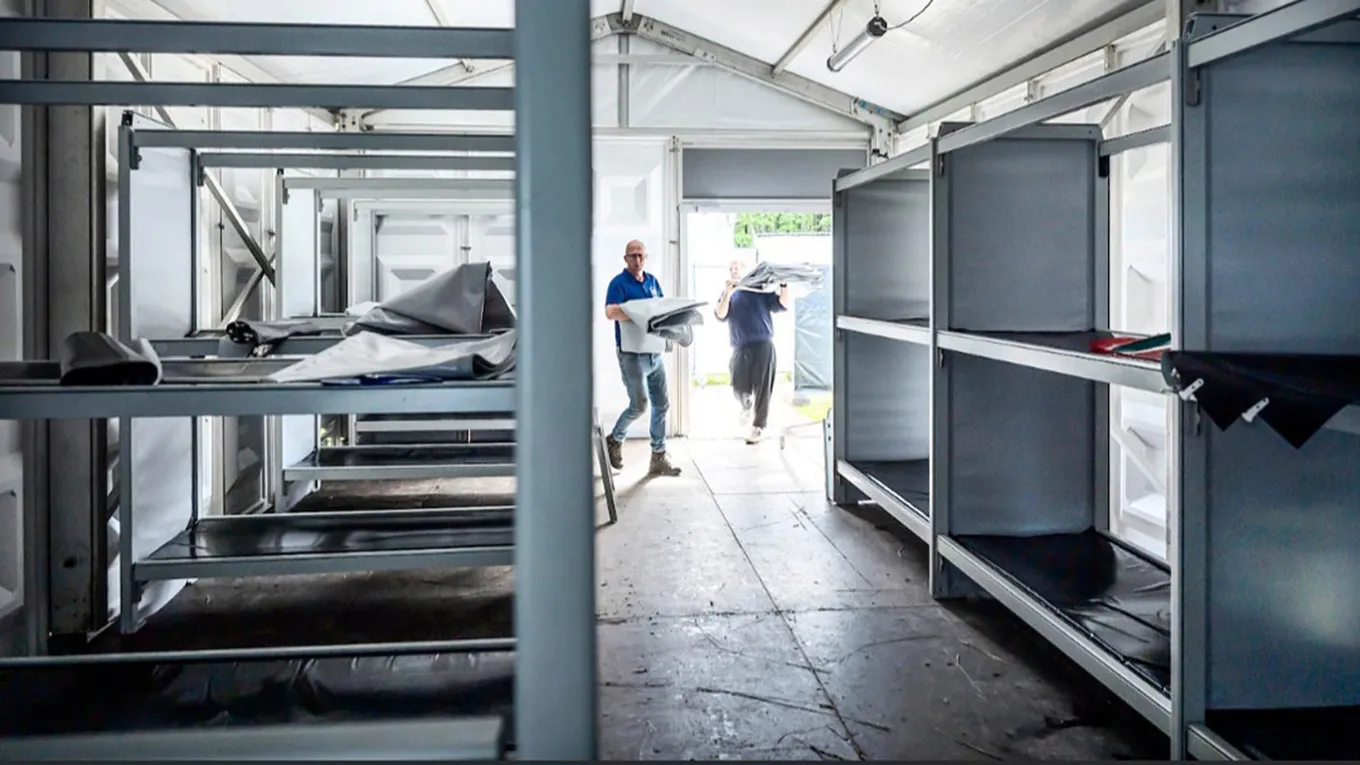
For the first time in over thirty years, the Royal Netherlands Army is conducting large-scale exercises to practice the mass detention of prisoners of war.
At the largest military training ground, Marneheizen, located in the province of Groningen, the military has set up and tested a temporary camp project.
The special complex is designed to safely accommodate up to 2,000 captured enemy soldiers.
According to European media reports, these exercises are directly linked to NATO countries’ defense preparations for a potential armed conflict with the Russian Federation.
The unique mobile camp project is designed so that it can be fully assembled and prepared to receive people in just one week.
In the event of a real threat, the plan is to involve not only military units but also specialized civilian contractors in deploying this infrastructure.
These are companies that typically handle the rapid construction of large-scale structures and utilities for Europe’s largest music festivals.
The main difference in the new concept is the rejection of the outdated camps of the last century with traditional barbed-wire fences and tall watchtowers.
Instead, the facility’s security perimeter will be fully controlled using the latest digital technologies and artificial intelligence.
Instead of soldiers in watchtowers, the developers have installed tall masts equipped with smart surveillance cameras capable of instantly reacting to suspicious sounds and movements.
Reconnaissance drones will provide an additional layer of protection against intruders.
They will patrol the airspace above the facility around the clock and transmit a real-time video feed directly to the central security command post.
Conditions inside the complex will be as humane as possible and fully comply with international law.
Captured servicemen are planned to be housed in small white modular barracks equipped with comfortable bunk beds.
At the same time, the developers decided not to separate officers from enlisted personnel—they will live together in mixed groups of no more than 20 people in a single room.
Each such group will have its own private courtyard, as well as shared shower rooms, a large dining hall, and a modern medical facility.
Upon check-in at the camp, all mobile phones, tablets, and other personal electronic devices will be confiscated from the prisoners to prevent the transmission of information.
However, according to the rules, they will be allowed to maintain contact with the outside world by sending regular paper letters to their relatives.
The country’s Army leadership emphasizes that the Netherlands strictly adheres to the Geneva Conventions and strives to demonstrate high standards of humanity.
Over the past decades of overseas missions, the army has become accustomed to detaining only isolated militants, so reviving the logistics skills required for mass captivity is critically important.
The Netherlands is modernizing its siren system for military threats and emergencies
The Netherlands is withdrawing from the Interflex training program for Ukrainian military personnel


