
Commentary authors warn that livestock grazing threatens Nepal’s Limi Valley
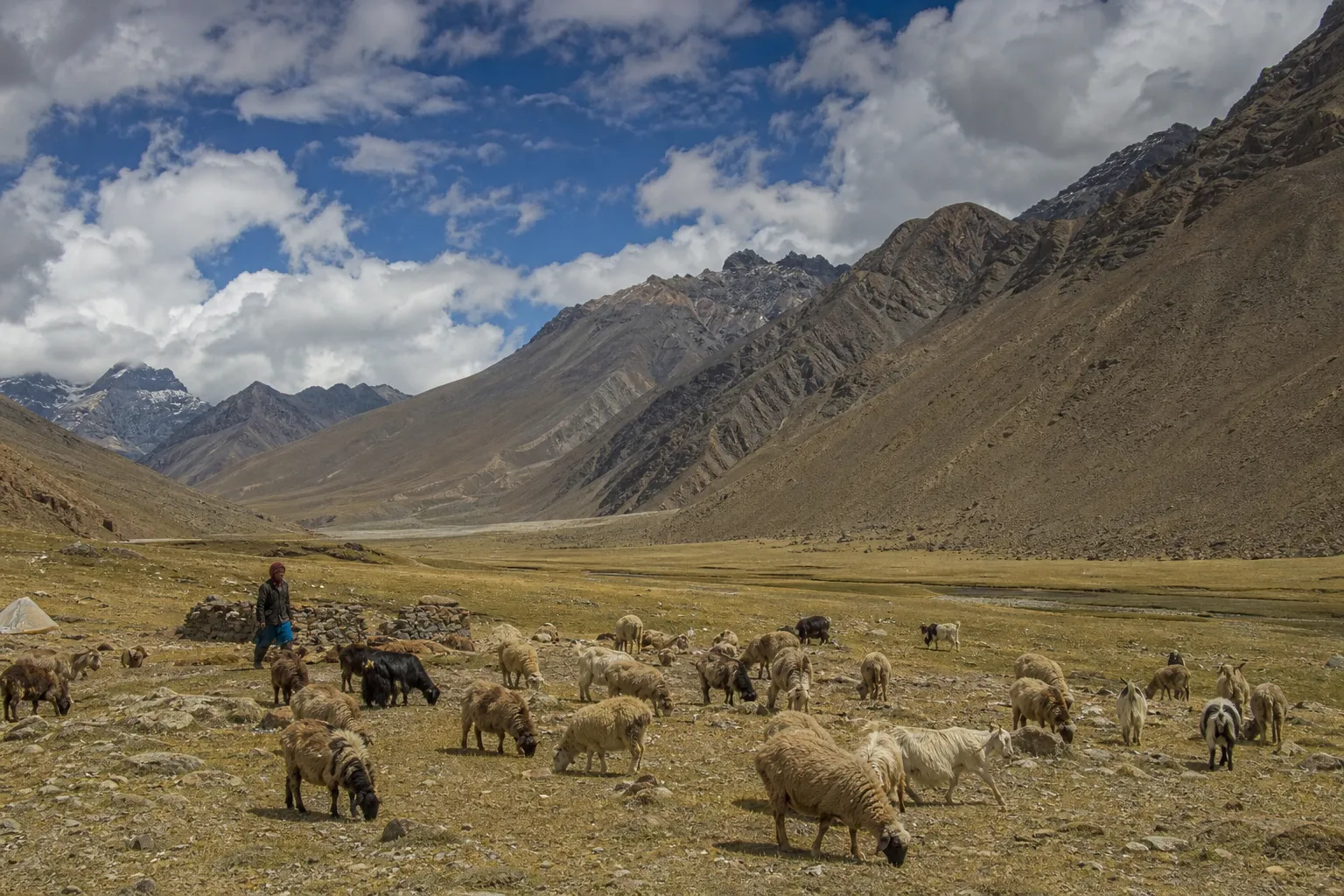
The high-altitude Limi Valley in Upper Humla in northwestern Nepal is facing increasing pressure from grazing by introduced sheep and goats, according to the authors of a commentary published by Mongabay. They say that thousands of domestic animals and unattended herding dogs are displacing wildlife from high-altitude pastures.
Limi Valley is part of a transboundary ecological corridor linking Nepal with the Tibetan Plateau. Researchers have documented wild yaks, Himalayan wolves, snow leopards, Eurasian lynxes, Tibetan brown bears, Pallas’s cats and kiangs — the world’s largest wild asses — here. The authors note that the kiang population in the area has declined sharply over the past decade.
Grazing and disease risk
This year, in the upper valleys beyond the Pulgaon Pass, the authors counted between eight and 10 shepherd camps grazing sheep and goats. According to their data, each camp had approximately 400–500 animals and three to six dogs. Dozens more camps were located in lower Limi, bringing the total number of livestock to many thousands and the number of dogs to hundreds.
In the authors’ view, intensive grazing by sheep and goats harms grasses, shrubs and other fragile high-altitude vegetation more than the traditional local practice of raising yaks and dzoppas — yak-cow hybrids. They also point to the risk of the spread of peste des petits ruminants, a contagious viral disease that can affect domestic and wild ruminants using the same pastures.
More current news is available on the UA.News Telegram channel Telegram.
Dogs and ecosystem protection
The authors report that most of the dogs they observed were unattended, underfed and ranged up to 10 kilometers from the camps, hunting marmots, hares and pikas and chasing wild ungulates. In one case, as they describe it, a pack of dogs approached an active wolf den, and the wolf pack drove it away about 500 meters from two wolf pups.
An increase in the number of small livestock may also intensify conflicts with predators, as sheep and goats are more vulnerable to attacks than yaks. Among the threats to wolves and snow leopards, the authors list retaliatory killings over livestock losses, poaching and poisoning. They also claim that some incoming herders may be involved in the illegal killing of wild animals and trade in their body parts.
The commentary’s authors urge the Nepalese government to grant the Upper Limi ecosystem official legal protection while preserving opportunities for local communities to make a living. In their view, designated pastures under sustainable management could allow livestock grazing without further disturbing key wildlife habitats.


