
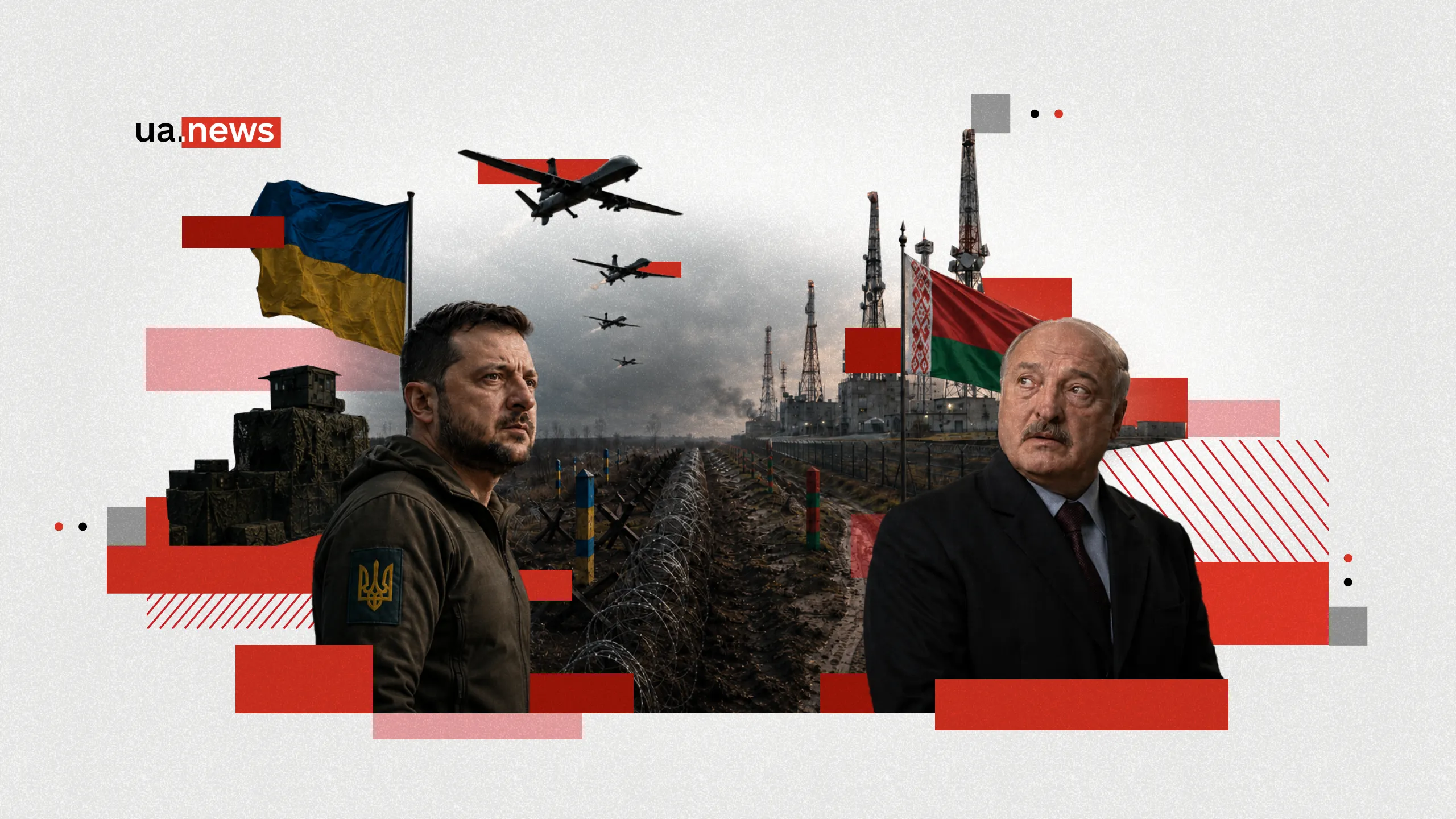
Last Friday, June 19, a statement shook the media landscape—one that, without exaggeration, has the potential to radically alter the entire course of the war. President Zelenskyy issued a direct ultimatum to Minsk. The reason cited was the alleged presence on Belarusian territory (reportedly along the Ukrainian border) of mysterious relay stations on towers, which, according to statements from Kyiv, are helping the Russian army to target strikes against Ukraine. Zelenskyy gave Alexander Lukashenko one week to dismantle this equipment. If the Belarusian dictator does not remove the hostile equipment himself, the Armed Forces of Ukraine will do so, the Ukrainian president assured.
In effect, this amounts to a public declaration of the right to launch a military strike against the territory of a neighboring country. The harshness and uncompromising nature of this statement contrasts with the usual rhetoric, as Kyiv had previously issued warnings—of a completely opposite nature—about preparations for an offensive from Belarus. But now, the initiative appears to be shifting to Ukraine.
The situation is further escalating against the backdrop of a bloody incident in the Bryansk region, where an unidentified UAV attacked a bus carrying Belarusian children a few days ago. A female coach was killed in the attack. Minsk and Moscow have unequivocally blamed Ukraine for the attack, but Kyiv categorically denies any guilt, calling the tragedy a provocation. It was against this backdrop that the ultimatum was issued, presenting Lukashenko with a very difficult choice.
A logical question arises: Will a direct war break out between Ukraine and Belarus, or are we witnessing a major diplomatic game teetering on the edge of a foul? UA.News, together with experts, examined the issue.
Relay stations as a pretext: the real goals behind the pressure on Minsk
The first thing that stands out when analyzing Zelenskyy’s statements is the vagueness of the wording regarding the repeaters themselves. There are no specifics regarding their exact location, technical specifications, or operating principles. This leaves ample room for interpretation: ranging from the actual existence of classified enemy systems to the use of this argument solely as a pretext to legitimize further actions.
We should also not overlook the fact that, along with the demand to remove the equipment, Zelenskyy clearly expressed dissatisfaction with the supply of Belarusian fuel to Russia. And here we arrive at what seems to be a much clearer and more pragmatic level.
Belarusian oil refineries, particularly those in Mozyr and Novopolotsk, are a critically important part of the supply of fuel and lubricants for the Russian army. Unlike the not entirely clear-cut issue of relay stations, this fact is common knowledge and has long been a source of irritation for the Ukrainian side. The logic here may run much deeper than simply countering enemy missiles and UAVs. It is quite likely that Kyiv’s true—albeit unstated—goal is precisely to cut off the Belarusian economic fuel artery that feeds the Russian war machine. This is particularly relevant in the context of Ukraine’s systematic strikes aimed at crippling the entire Russian oil industry.
Moreover, Belarus has long been supplying Russia not only with fuel but also with defense industry products: chassis for missile systems, optics, electronics, and so on. The ultimatum regarding the relay stations may be merely the tip of the iceberg—a tool to coerce Lukashenko into severing critically important trade and economic ties with Moscow.
In other words, Kyiv could declare victory without firing a single shot if Minsk—even without acknowledging the existence of the relay stations—were to make concessions in an area that truly hurts the Ukrainian leadership. In that case, we are not dealing with preparations for war, but with a classic diplomatic ploy of “calling the bluff,” where what is at stake is not so much military facilities as the very model of Minsk’s economic alliance with Moscow.

A Trap for Lukashenko: Between the Kremlin and Kyiv
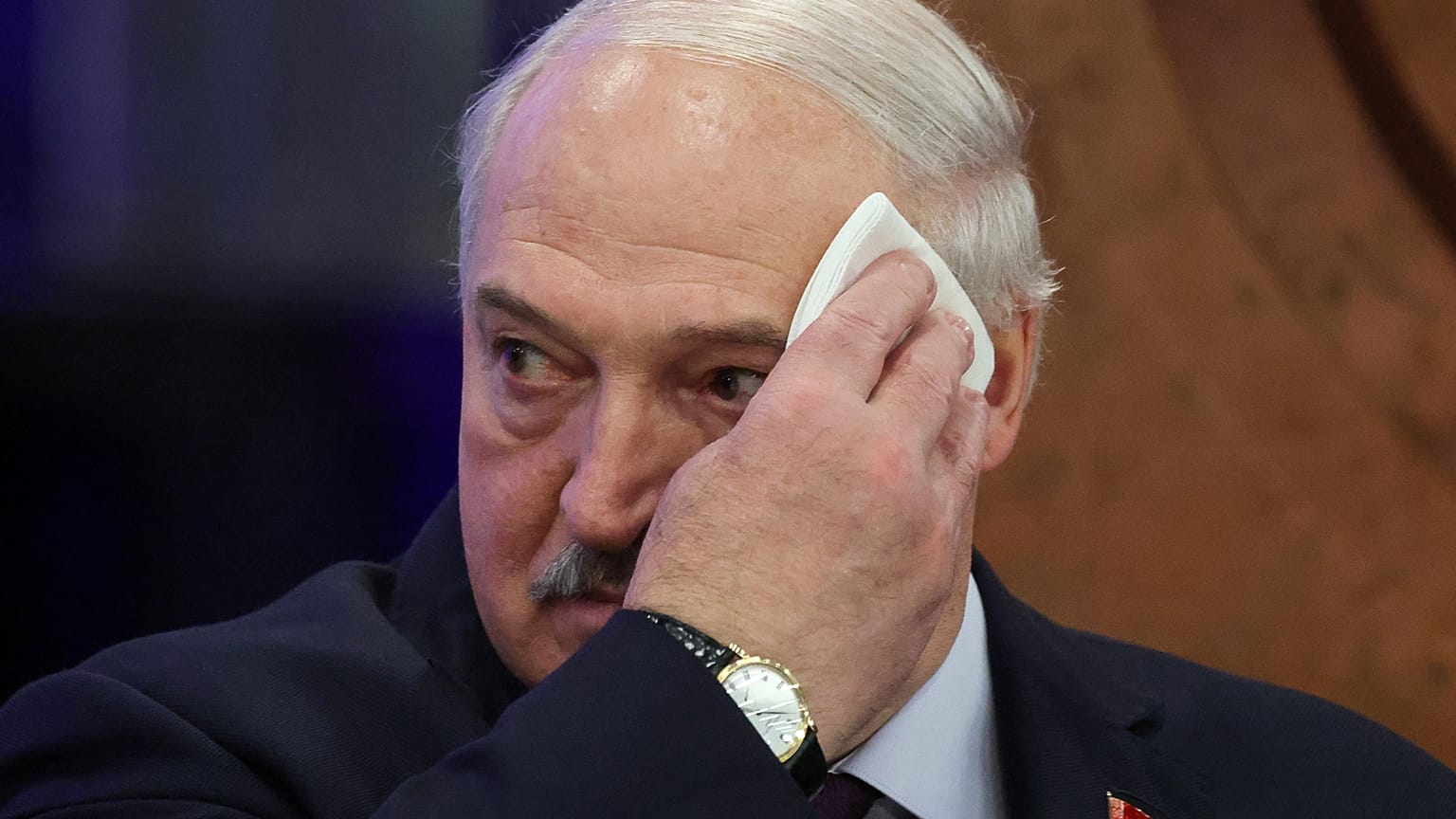
Alexander Lukashenko finds himself in a situation that, without exaggeration, can be called an existential crisis for his regime. Throughout the entire period of full-scale war, he has deliberately played the role of “Belarus’s defender against the conflict.” His political legitimacy within the country since 2020 has largely rested on the promise not to drag Belarusians into direct military confrontations. Zelenskyy’s ultimatum is undermining this foundation. Lukashenko is effectively being demanded to capitulate to Kyiv and, even worse for him, to sever allied relations with Russia.
Complying with Kyiv’s demands is de facto impossible given the Belarusian economy’s deep dependence on Russia. First, the oil refineries operate on Russian raw materials. Refusing to sell fuel to Moscow would mean an immediate halt to production and the collapse of one of the main sources of foreign currency for the budget. Second, Belarus’s economic system is so tightly integrated with Russia’s that any attempt to abruptly sever those ties would lead to a catastrophic crisis—and Belarusians are already living, to put it mildly, in modest circumstances. Third, acceding to Zelenskyy’s demands would mean a loss of political capital for “Batska” as a figure with the image of a formidable, strong, and tough leader.
On the other hand, a direct military conflict with Ukraine is the embodiment of the Belarusian leadership’s greatest fear. For years, propaganda has built up the image of a “haven of peace,” and now they will have to explain to the people the necessity of fighting or enduring shelling. Moreover, the state of the Belarusian army, its combat readiness, and—most importantly—the low level of motivation among its personnel to fight against Ukrainians are well known.
Lukashenko is effectively caught between a rock and a hard place. Accepting the ultimatum means signing his own death warrant as a sovereign leader and incurring Putin’s wrath. Failure to comply risks opening a front for which the country is unprepared, both militarily and psychologically.
Air War or a Full-Scale Second Front: Risks for Ukraine
Opening a second front for the Ukrainian Armed Forces, which are already under enormous pressure in the east and south, essentially looks like military and political suicide. Stretching scarce reserves across more than 1,000 km of additional border would be a fatal mistake. Most likely, the Presidential Office understands this perfectly well.
However, the scenario being considered in Kyiv does not necessarily involve a classic ground invasion. A much more likely scenario is some form of “air war”—that is, the use of drones and missiles. This would involve preemptive strikes on specific infrastructure targets, logistics hubs, oil depots, and factories that serve the Russian military-industrial complex. This approach does not require a large-scale deployment of ground troops and allows for avoiding grueling territorial battles.
The psychological state of the Ukrainian leadership—which, following a series of successful strikes on Russian oil refineries, ports, and military facilities in Crimea, is clearly riding a wave of confidence—should not be underestimated either. The media has already begun spreading the narrative that Lukashenko is afraid and ready to apologize, creating a misleading impression of the enemy’s weakness. This fuels a sense of adventurism.
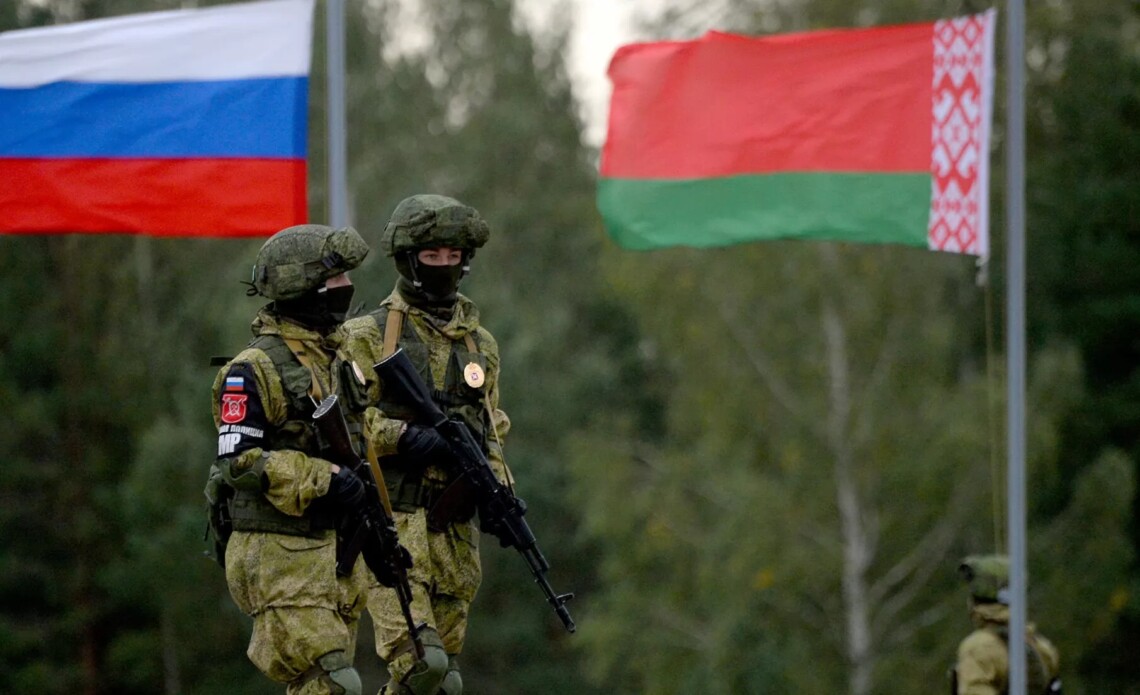
However, such a calculation could prove to be extremely dangerous. If Kyiv hopes that the small size of the Belarusian army will prevent Minsk from mounting a significant response, it may be seriously mistaken. Even without launching a large-scale ground operation, Belarus is capable of creating serious problems for Ukraine in response to aggression. First and foremost, this involves the possibility of deploying additional Russian strike systems on its territory. The flight time for missiles and drones from Belarusian territory to Kyiv or Ukraine’s western regions would be minimal, which would drastically reduce the effectiveness of air defense systems (which already face objective challenges). Key logistics routes would be under constant threat, particularly the strategic Kyiv–Kovel highway, as well as border crossings on the western border, through which the bulk of weapons supplies pass.
Furthermore, one cannot completely rule out a hypothetical agreement by Lukashenko to bring additional forces from Russia or even North Korea into Belarus, which would completely shift the balance of power on the northern front. That is precisely why a potential strike against Belarus is not a “walk in the park,” but an extremely risky game in which the stakes could prove to be disproportionately high.
Expert Opinion
Political scientist and director of the Ukrainian Institute of Politics Ruslan Bortnik notes that the risk of strikes against Belarus today slightly outweighs the likelihood that this will not happen.
“Obviously, Ukraine believes that Belarus is in a weak position today. In addition, Belarus is trying to position itself as a negotiating platform between Russia and the West—Ukraine is also trying to use this move by Belarus to pull Minsk as far away from Moscow as possible, ideally to remove Belarus from Russia’s sphere of influence. Of course, this is difficult to achieve, but Ukraine is trying to use this situation at least to secure two key things from Belarus. The first is the cessation of oil product, gasoline, and diesel shipments to Russia, as Ukraine has carried out effective strikes against Russian oil refineries, leading to fuel shortages in the European part of Russia and in occupied Crimea. Furthermore, given the short supply chain for this oil, it plays a significant role in stabilizing the petroleum products market in Moscow and in the European part of Russia. Therefore, Ukraine wants Belarus to stop supplying these petroleum products to Russia, thereby exacerbating the fuel crisis there.
Second, Ukraine wants Belarus to stop allowing its territory to be used for reconnaissance and to guide Russian drones and missiles toward Ukrainian territory. Given these factors, I believe Ukraine may launch strikes against Belarusian oil refineries. Especially since, at one point, the Russian army invaded Ukrainian territory from Belarusian territory, among other places; thus, formally, Ukraine considers itself to be at war with Belarus, despite the fact that the Ukrainian embassy continues to operate in Minsk. All of this could exacerbate the fuel crisis in Russia, but it could also lead to a direct military clash between the Ukrainian and Belarusian armies. There is a high probability that the Belarusian armed forces will respond with strikes on Ukrainian territory, targeting key road and rail routes leading to northern and western Ukraine. At the same time, however, a full-scale ground campaign is unlikely to begin. Neither country currently has sufficient ground forces for large-scale campaigns—at most, they could handle some border skirmishes. Therefore, unfortunately, an exchange of strikes is now likely. Everything is in the hands of the negotiators,” Ruslan Bortnik is convinced.

In summary, Zelenskyy’s ultimatum has taken the overall confrontation between Kyiv and Minsk to a fundamentally new level. Despite the demonstrative resolve, the nature of this statement remains ambiguous. On the one hand, it could be a bluff designed to force the Belarusian dictator to cease—or at least partially scale back—economic support for the Russian army under some formal pretext. On the other hand, preparations for a military scenario—which Kyiv views as an opportunity to “take out” the Kremlin’s key ally through airstrikes—are also a very real possibility.
A direct, full-scale war between Ukraine and Belarus does not currently seem entirely inevitable, as both sides stand to lose far more than they would gain in such a scenario. For Ukraine, this poses the risk of a catastrophic stretching of the front lines and strikes against vital logistics in the west and north. For Lukashenko, it would mean the collapse of his image as the “defender of the nation” and being dragged into a war that threatens his power far more than any protests by liberal-minded Belarusians.
However, the danger of the current moment lies in the fact that the logic of escalation often trumps rational calculation. Information pressure and the opacity of the decision-making process create a situation where a single careless move—a real strike on a Belarusian target or a tit-for-tat provocation at the border—could set off an uncontrollable chain of events. How this will all end and what choice Lukashenko will ultimately make will become clear in just a few days.


