
British intelligence has explained a strange problem facing the Russian air force
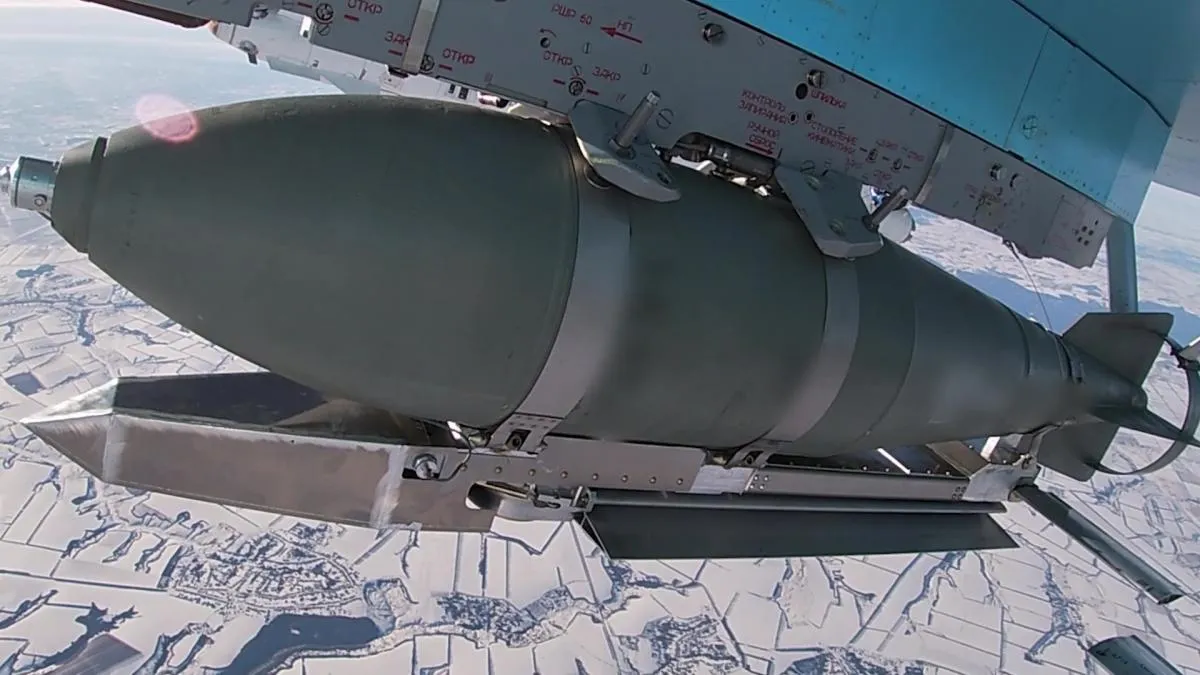
The Russian military is increasingly facing situations where its guided bombs are falling on its own territory or on occupied areas of Ukraine. British intelligence believes the cause may lie in crew errors, training issues, and personnel overload.
Russia continues to actively use guided airstrikes against Ukraine. However, the number of instances where these munitions land in territories controlled by Russia itself is also rising. The UK Ministry of Defence drew attention to the issue after analysing data collected by the Russian independent project ASTRA. British analysts concluded that such incidents no longer appear to be isolated errors.
According to ASTRA, from the beginning of 2026 through June alone, at least 25 cases were recorded of Russian guided aerial bombs falling on territory controlled by Russia itself or by the occupying authorities. By comparison, there were about 143 such incidents in 2025. In 2024, 165 similar cases were recorded. These figures indicate that the problem has been ongoing for several years.
Guided aerial bombs became one of the main tools of Russian attacks as early as 2023. Since then, the scale of their use has only grown. The British Ministry of Defense notes that Russian aircraft are currently conducting over 200 combat sorties per day.
During these operations, they may drop between 180 and 250 guided aerial bombs per day. It is precisely because of such high volumes of use that any systemic problems become particularly noticeable.
British intelligence believes there may be several causes. These include both technical issues and human error. Analysts suggest that some of the incidents are linked to mistakes made while preparing weapons for combat sorties.
Another cause is errors made by the crews themselves while carrying out missions. The report also highlights the fatigue of military personnel. “The frequency of these incidents likely indicates a certain degree of fatigue among flight and ground personnel in the Russian armed forces, as well as inadequate military training,” the UK Ministry of Defense noted.
Guided aerial bombs, or KABs, are conventional aerial bombs equipped with guidance systems. This allows aircraft to drop them at a significant distance from the target without entering the operational zone of Ukrainian air defense. This is precisely why Russia is actively using such munitions on the front lines and to strike Ukrainian cities. However, even high-precision weapons do not guarantee success if errors occur during their use.
Experts note that the increase in such incidents may indicate systemic difficulties within the Russian military. This concerns not only the technical condition of the weapons but also the level of training of the personnel. When military personnel operate under conditions of constant, intensive combat sorties, the risk of errors naturally increases.
This is especially true for complex, high-precision weapons. That is why incidents of Russian precision-guided munitions falling on Russian territory are increasingly drawing the attention of both independent journalists and international analysts. As Russia increases its use of such bombs, the problem of friendly fire does not seem to be going away. On the contrary—statistics show that it remains significant even several years after the start of the widespread use of precision-guided munitions.
As a reminder, Poland scrambled its fighter jets in response to a large-scale Russian airstrike on Ukraine.
The Russian attack damaged energy and oil and gas infrastructure, and there are casualties.


