
Due to the escalation in the Middle East, traffic in the Strait of Hormuz has been cut in half – Reuters
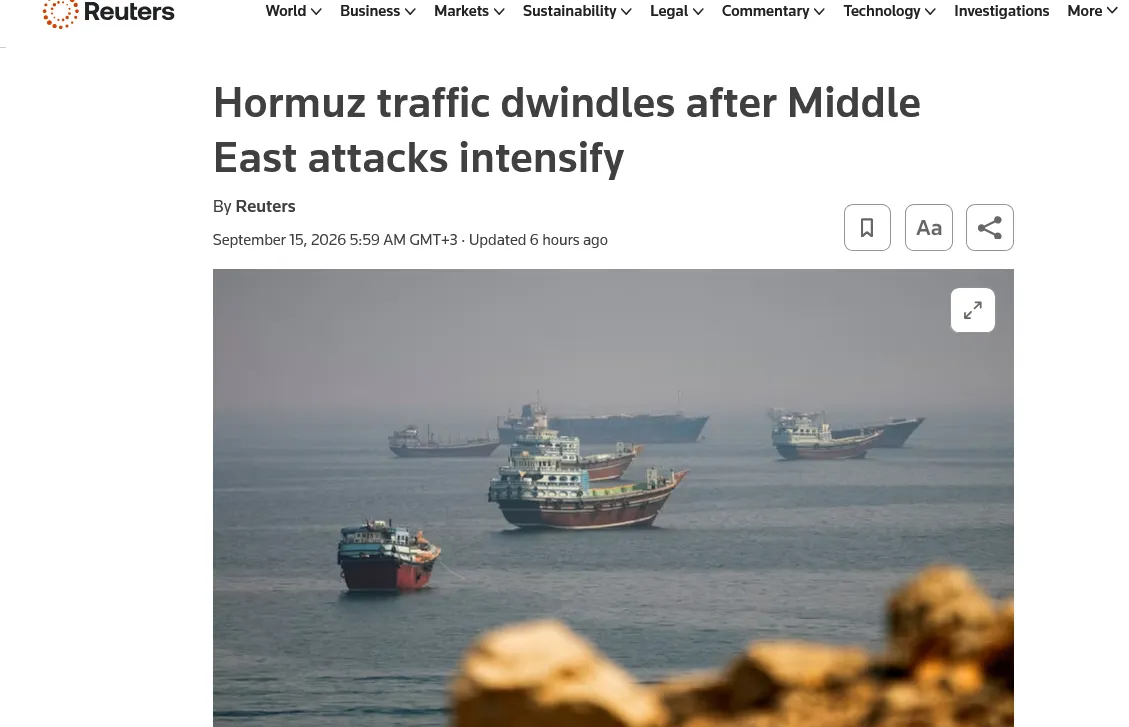
Shipping traffic in the Strait of Hormuz has dropped sharply from 10 to 4 vessels per day due to the latest escalation of the conflict in the Middle East.
According to monitoring data, only four commercial vessels passed through the strait on Monday, including two dry cargo ships and two oil tankers. These statistics do not include ships that crossed the Strait of Hormuz with their Automatic Identification System (AIS) transponders turned off to conceal their route.
The situation in the region was further exacerbated by reports from the Iranian news agency Fars of an explosion and fire on an oil tanker following a collision with mines, as well as by the decision of the Arab Gulf states to postpone planned talks with Iran.
A decline in shipping activity was also recorded in the Bab el-Mandeb Strait, where the daily count fell from 28 to 21 vessels. Before active hostilities began in the Middle East, approximately 125 large commercial vessels passed through the Strait of Hormuz daily, transporting roughly 20 percent of the world’s oil and liquefied natural gas.
Reuters reports this, citing data from the vessel-tracking service Kpler.
In Iran, the radical wing of the government obstructed negotiations with the U.S. and pushed for a decision to escalate the conflict. According to the NYT, the situation is complicated by the fact that Iran’s Supreme Leader Mojtaba Khamenei has not made any public appearances since his appointment in March.
Trump stated that the U.S. could strike Mount Pikax and urged Iran to be cautious. During a speech on Wednesday at the Republican convention focused on the midterm elections, he said that Washington had detected some activity there and warned Tehran of possible tough U.S. measures.


