

Humans first set foot on the Moon in July 1969, and by December 1972, American astronauts had carried out six successful manned landings. The Apollo program became one of the most ambitious technological achievements of the 20th century and proved that humans are capable not only of reaching another celestial body, but also of working on its surface and returning to Earth. However, after the program ended, crewed lunar expeditions ceased for decades.
Now NASA is preparing to change that. The agency has confirmed its plan to return American astronauts to the Moon in 2028, but the current program involves a much more complex infrastructure than that used during the Apollo missions. The goal is not only to repeat this historic achievement but also to create the conditions for regular expeditions and a longer-term human presence on the Moon.
Why did humanity abandon crewed flights to the lunar surface after the success of 1969? Where did the “Apollo” technologies go, and what is preventing NASA from sending astronauts back right now?
UA.News explains how the goals of space programs have changed, why lunar missions remain extremely expensive, and what needs to happen before the next landing.
How Humans First Landed on the Moon
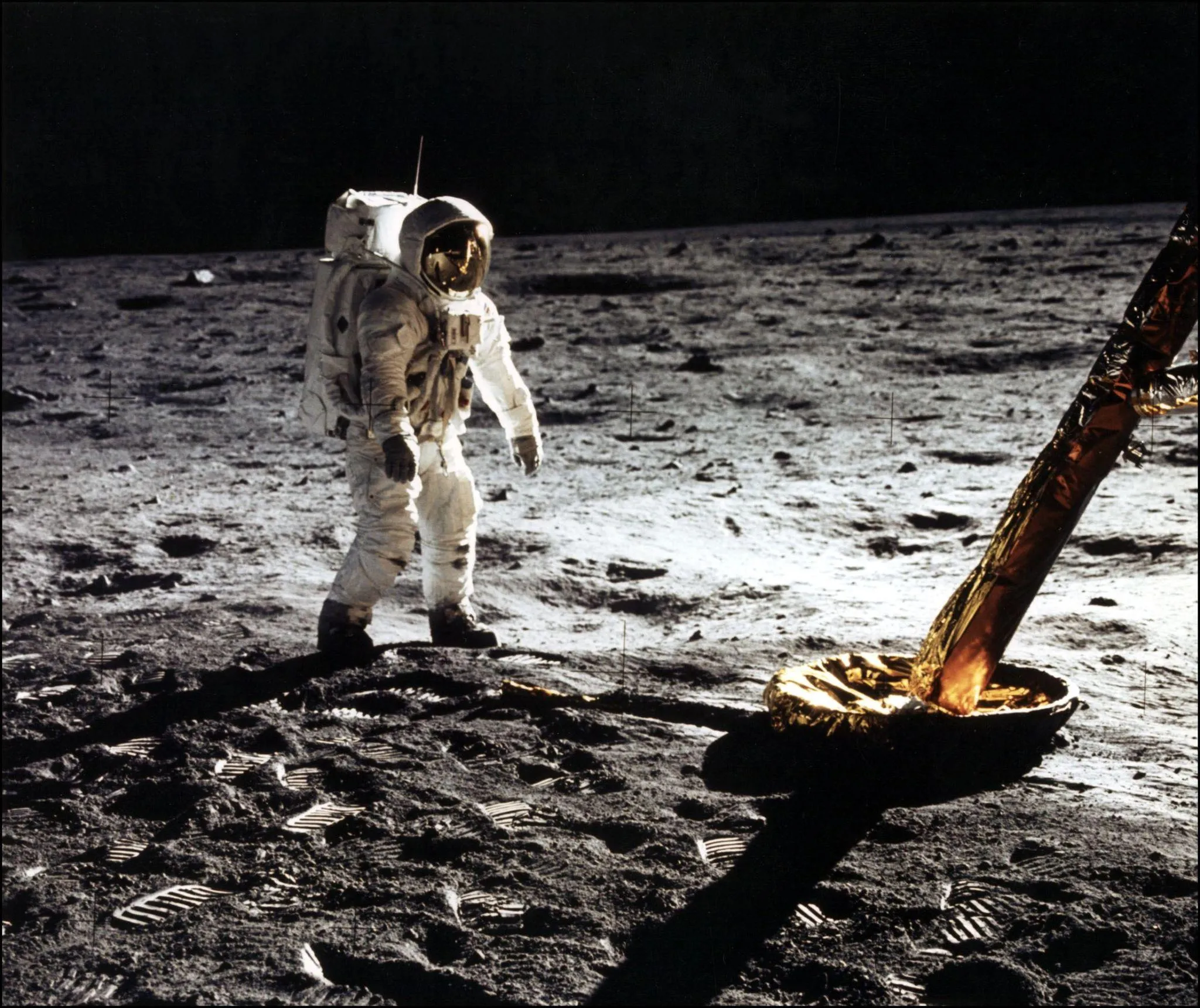
On July 20, 1969, the American Apollo 11 mission achieved its primary objective. Astronauts Neil Armstrong and Buzz Aldrin descended to the lunar surface in the Eagle lunar module, while the third crew member, Michael Collins, remained in lunar orbit in the command module.
This event was the result of many years of work by NASA, massive government investment, and competition between the United States and the Soviet Union. The space race was part of a broader geopolitical confrontation during the Cold War. Following the launch of the Soviet satellite in 1957 and Yuri Gagarin’s flight in 1961, U.S. leaders sought to demonstrate the country’s technological superiority.
In May 1961, U.S. President John F. Kennedy set a goal for the country to land a man on the Moon and return him safely to Earth before the end of the decade. Significant resources were allocated to this task: rockets, spacecraft, navigation systems, communication equipment, and gear for operating in environments that humans had never directly explored before were developed.
To carry out the missions, it was necessary to create an entire system of interconnected technologies. The Saturn V launch vehicle placed the spacecraft on a flight path to the Moon, the command and service module supported the crew’s stay in space, while a separate lunar module allowed two astronauts to descend to the surface and later return to orbit.
Following the success of “Apollo 11,” the U.S. carried out five more manned landings. In total, 12 astronauts visited the Moon. Each subsequent expedition expanded the scope of exploration: crews spent more time on the surface, collected soil samples, installed scientific instruments, and used a lunar rover to travel between research sites.
The last mission was “Apollo 17,” whose crew returned to Earth in December 1972. Since then, no human has set foot on the Moon’s surface.
Why the U.S. Stopped Moon Missions After “Apollo”
The end of the lunar expeditions was not the result of a technological failure. The U.S. had already demonstrated the ability to carry out such flights, and subsequent missions were planned. The main reasons for ending the program were shifting political priorities, funding cuts, and the high cost of further expeditions.
Initially, NASA had envisioned a much more ambitious plan for exploring the Moon. After the first successful landings, the agency hoped to continue the expeditions, refine the equipment, and gather more scientific data. However, maintaining such a program at its previous level proved increasingly difficult.
As explained by the National Museum of Aviation and Astronautics in the United States, as early as 1970, NASA began canceling planned lunar missions. First, “Apollo 20” was scrapped, and later other expeditions were scaled back as well. As a result, the “Apollo 17” mission became the last one, although initial plans had called for the flights to continue.
Economics played a significant role. The program required substantial government spending on rocket development, spacecraft production, the operation of mission control centers, and astronaut training. Once the main political goal—beating the USSR in landing a human on the Moon—had been achieved, it became harder to justify maintaining the same level of funding to Congress and the public.

The objectives of the U.S. space program also changed. NASA began preparing to develop the reusable Space Shuttle system and later focused a significant portion of its resources on flights to low Earth orbit, the operation of space stations, and scientific research.
Furthermore, every landing remained dangerous. Despite the successes of the “Apollo” program, spaceflight was accompanied by serious risks. The Apollo 1 disaster in 1967, in which three astronauts died on Earth during a spacecraft test, demonstrated the cost of mistakes in such programs. Subsequent expeditions required not only money but also a willingness to take risks for the sake of a result that no longer held the same political significance as the first landing.
Thus, the U.S. did not lose the ability to fly to the Moon because of any one specific technical problem. The country decided that, given the costs and political conditions at the time, further expeditions were less important than other areas of space exploration.
Has Humanity Really Lost the Technology to Fly to the Moon?
The claim that humanity has “forgotten how to fly to the Moon” is often used to describe the long hiatus between the Apollo missions and NASA’s current plans. However, it is not entirely accurate. The physical principles of flight, mathematical models, and basic knowledge of space navigation have not disappeared. The problem is that the ability to repeat such an expedition depends on more than just scientific knowledge.

In the 1960s, the United States created a large-scale, purpose-built industrial system. It included rocket engine manufacturers, materials suppliers, electronics manufacturers, engineering teams, test sites, and crew training centers. After the Apollo program ended, many of these production processes ceased or were redirected toward other tasks.
The Saturn V rocket is no longer in production. The production lines, equipment, and supply chains that supported the program were not preserved as a ready-to-use system. Some of the engineers who worked directly on the Apollo program have retired, and a new generation of specialists has had to rebuild practical experience based on documentation, testing, and modern engineering methods.
Even if the blueprints for the old rocket are available, that doesn’t mean it can simply be reassembled. Materials with specific characteristics, manufacturing capabilities, qualified suppliers, component testing, and confirmation that the entire system meets safety requirements are all necessary. Furthermore, electronics, software, certification standards, and available technologies have changed significantly.
Today’s NASA is not attempting to literally recreate “Apollo.” The agency is creating a new flight architecture featuring the Orion spacecraft, the Space Launch System rocket, and commercial landing systems. This allows for the use of new technologies but simultaneously requires the development, testing, and integration of a large number of components.
So, humanity has not lost its knowledge of flying to the Moon. It has lost the former industrial system that supported such expeditions, and is now building a new one—with different technical solutions, manufacturers, and safety requirements.
Why a modern moon landing has proven so challenging
At first glance, flying to the Moon today should be easier than it was in 1969. Computers have become more powerful, navigation has become more precise, and engineers have decades of additional experience in spaceflight. However, a modern lunar expedition is not simply a repeat of the “Apollo” mission with newer equipment.
First, NASA aims not only to land a crew on the surface but also to lay the groundwork for regular missions. This involves more complex logistics, new landing systems, modern spacesuits, scientific equipment, and the ability to work longer in the lunar environment.
Second, some of the key systems are being developed by private companies. NASA is collaborating with SpaceX and Blue Origin, which are building landers to transport astronauts between lunar orbit and the surface. These systems must undergo testing, including uncrewed demonstration flights, before the agency authorizes their use for crewed landings.
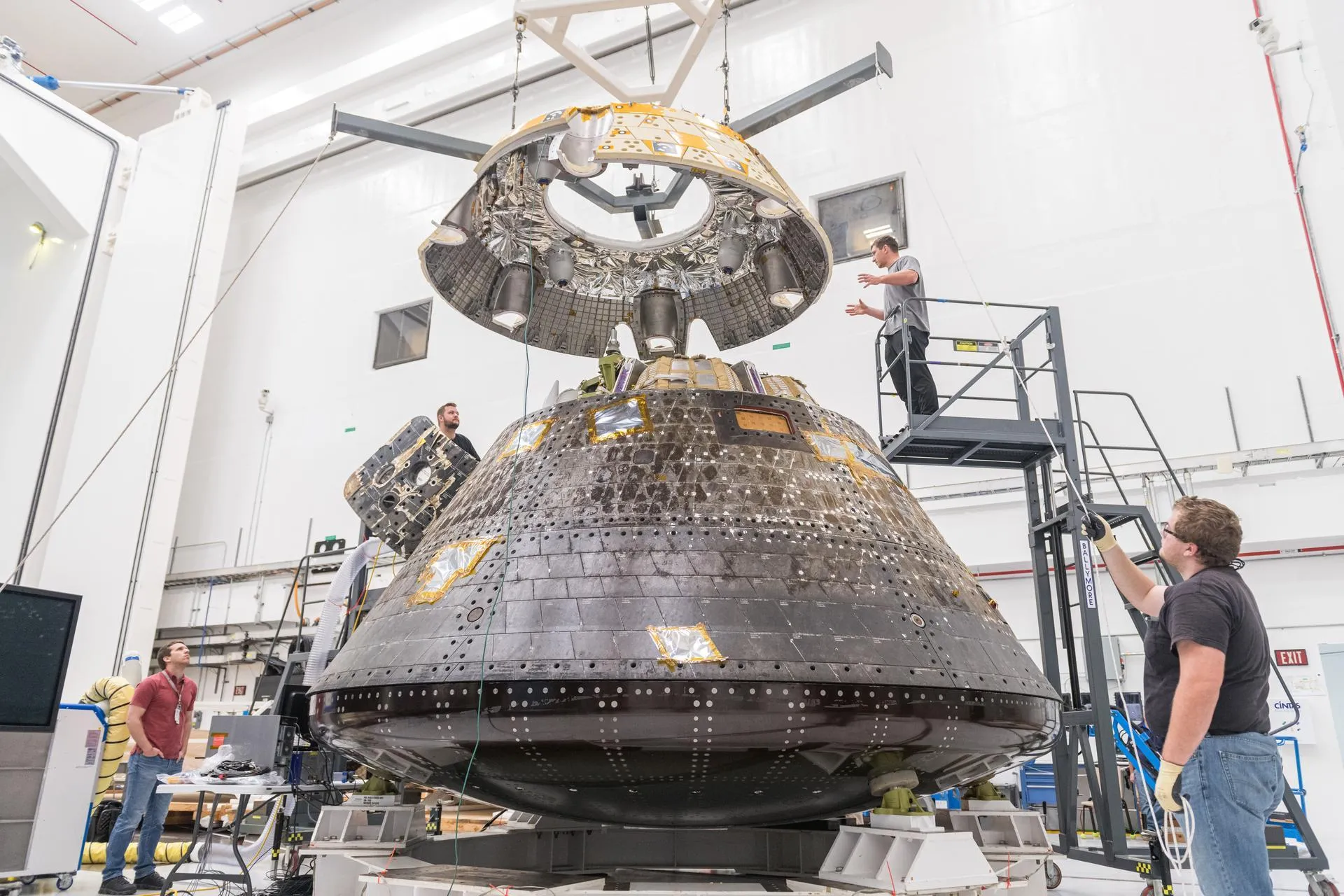
Third, each phase of the mission depends on the success of the previous one. The spacecraft must safely deliver the crew to the Moon; the lander must receive the astronauts, perform the descent, and ensure liftoff from the surface; and the life support systems must function throughout the entire flight. A failure or delay in any of these key elements could jeopardize the entire mission.
A prime example is the development of spacesuits. They must protect astronauts from the vacuum, temperature fluctuations, lunar dust, and the radiation environment, while also allowing them to move, collect samples, and operate equipment. This is a full-fledged life support system, not just protective clothing.
In reports by the U.S. Government Accountability Office on the Artemis program, delays in the development of the landing module and spacesuits, as well as the significant amount of work that needs to be completed before a crewed landing, were cited as major challenges. These challenges illustrate why having a powerful rocket and a spacecraft is not enough to carry out the entire expedition.
Another distinctive feature of the current program is the focus on exploring the region around the Moon’s south pole. This region is of great scientific interest, particularly due to the potential presence of water ice in permanently shadowed craters. At the same time, the terrain, lighting, and challenging navigation conditions place additional demands on the selection of a landing site and the operation of equipment.
All of this makes the current landing no less challenging than it was during the “Apollo” era, although the reasons for the complexity are partly different today. NASA must not only replicate the historic flight but also ensure the crew’s safety and establish a technological foundation for future expeditions.
What the Artemis program has changed and why the landing was postponed to 2028
NASA’s current program to return humans to the Moon is called Artemis. Its goal is to resume crewed lunar expeditions, expand scientific research, and gradually lay the groundwork for a longer-term human presence on the Moon’s surface.
The program involves the use of the Space Launch System rocket, the Orion spacecraft, and landing systems being developed by private companies. Unlike the “Apollo” program, NASA aims to establish a model in which various elements of the mission can be developed in parallel, and landing modules and other systems will eventually be reused in subsequent expeditions.
However, the initial Artemis plans have been revised multiple times. The development of landers, spacesuits, and other components took longer than expected. As a result, NASA revised the sequence of missions and decided to conduct additional testing of key systems before astronauts return to the lunar surface.
On October 23, 2026, the agency released an updated plan to accelerate lunar missions. According to the plan, the Artemis III mission is scheduled to take place in 2027 and will involve testing critical systems and procedures for the approach and docking of landers with the Orion spacecraft in low Earth orbit. This will allow for verification of system compatibility before the crew heads to the lunar surface.

NASA plans to carry out the first crewed landing under the updated sequence during Artemis IV in early 2028. However, the specific readiness of the lander will remain a determining factor for the final schedule.
As NASA reported regarding the acceleration of landing system development, the agency is working with two companies simultaneously—SpaceX and Blue Origin. Both must prepare their landers for testing and demonstrate their ability to perform the necessary operations. NASA will determine which system is ready to safely deliver astronauts to the surface and return them to Orion.
According to the agency’s plan, the crew will launch from Earth aboard the Orion spacecraft and then transfer to the lander. Two astronauts will descend to the Moon’s surface, while the other crew members will remain in orbit. After completing their research, the astronauts will return to orbit, reboard Orion, and head home.
This plan requires the coordinated operation of several space systems, as well as confirmation of their reliability during testing. That is why the postponement of the landing cannot be explained solely by the delay of a single launch: it is a matter of the readiness of the entire mission architecture.
Why NASA Wants to Return Right Now
Returning to the Moon has more than just symbolic significance for the United States. Over the past half-century, scientific objectives, technological capabilities, and the geopolitical context of space exploration have all changed. Now the goal is not only to be the first to reach the surface, but also to ensure regular flights and a longer-term human presence beyond Earth.
One of the main scientific priorities is the exploration of the Moon’s south pole. Permanently shadowed craters may contain reserves of water ice, which could potentially be used in the future to produce water, oxygen, or rocket fuel components. However, to make practical use of these resources, their location, quantity, composition, and accessibility must first be determined.
Equally important is the experience of long-term operations on another celestial body. Astronauts must test equipment, movement procedures, life support systems, and technologies that may be needed for future expeditions to Mars. The Moon is located much closer to Earth, so it can serve as a testing ground for solutions that will later be used in more distant space missions.
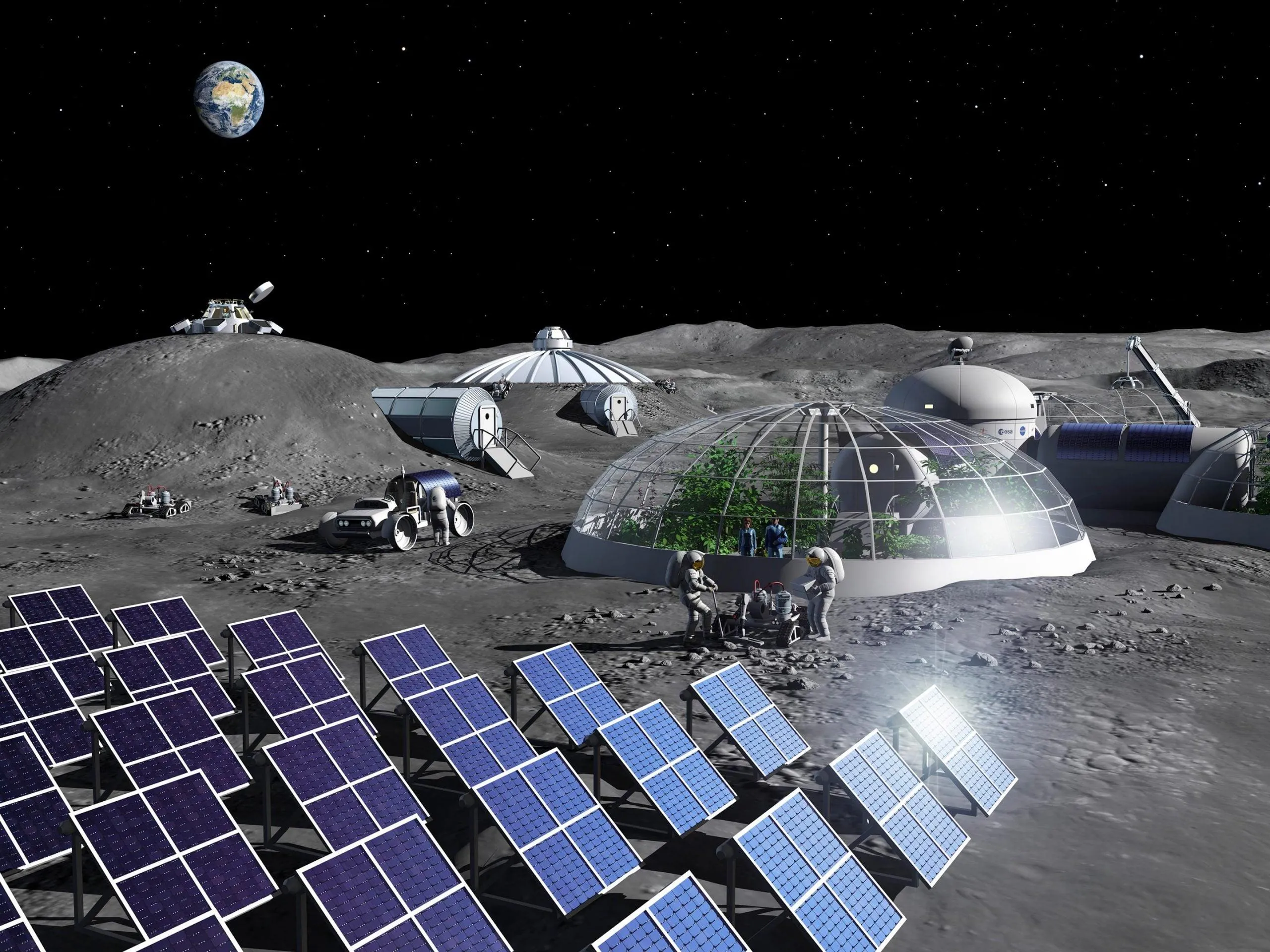
This return also comes amid competition among spacefaring nations. The U.S. aims to maintain its leading role in lunar exploration by engaging international partners and private companies. In this model, NASA does not necessarily have to develop every technology on its own: some of the work is carried out by commercial contractors, who can offer their own technical solutions.
At the same time, establishing a permanent infrastructure will require significant investment and many years of work. Even a successful landing in 2028 will not mean that people will immediately be able to live on the Moon for extended periods. To achieve this, issues such as energy supply, radiation protection, cargo delivery, communications, equipment maintenance, and providing crews with resources must be resolved.




