
The Black Sea Is Rapidly Warming Along with the World's Oceans — The Guardian
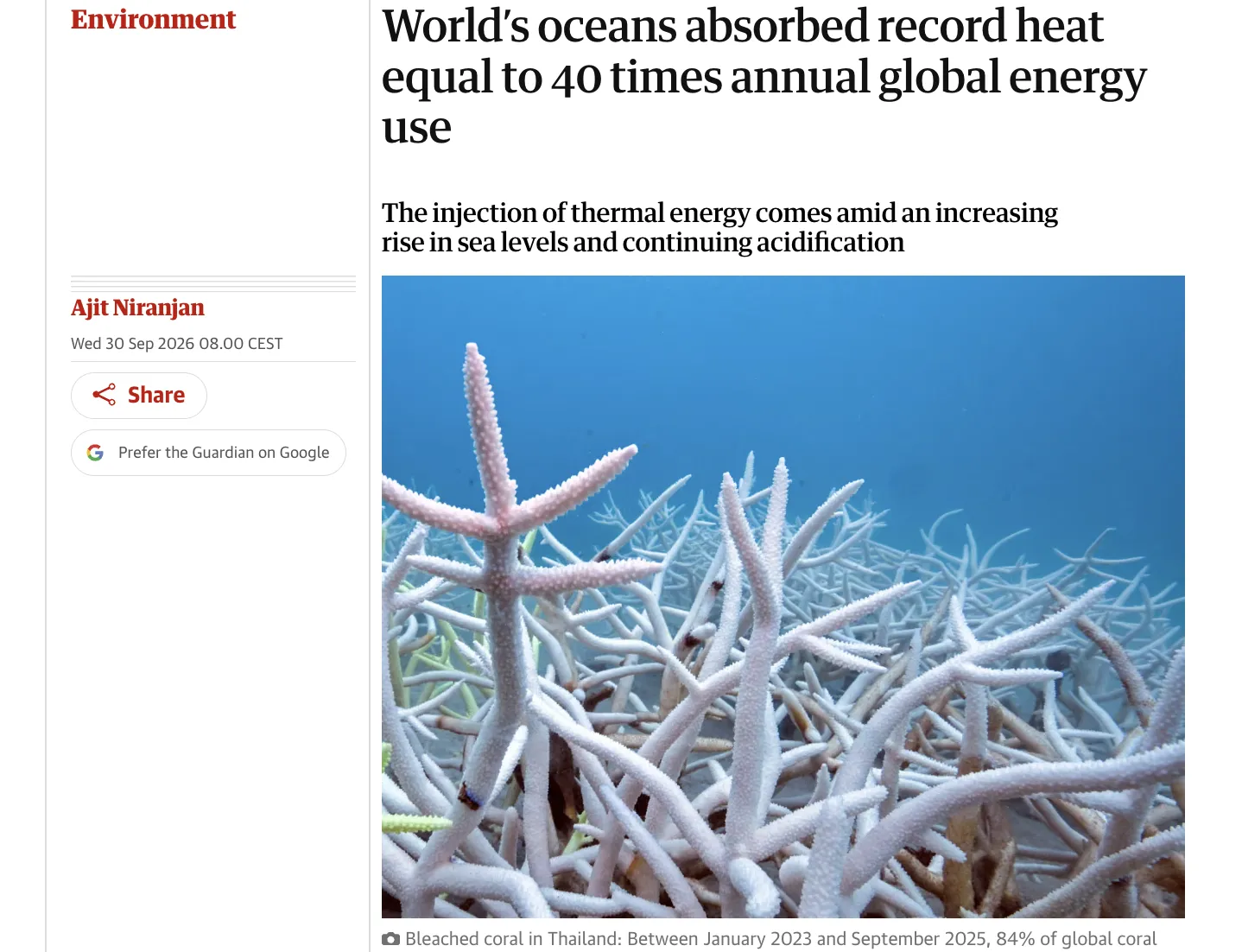
Last year, the world’s oceans absorbed a record 23 zettajoules of heat. That is nearly 40 times more energy than humanity used during the same period, and global warming is also affecting the Black Sea.
This heat accumulation is occurring against a backdrop of large-scale changes in the marine environment. Since 1999, global sea levels have been rising by approximately 3.8 mm per year, and between 2012 and 2025, the rate of rise increased to 4.2 mm per year. In addition, over the past 40 years, ocean acidity has increased by 17%.
The oceans absorb about one-third of the carbon dioxide emitted by humanity and approximately 90% of the additional heat trapped by greenhouse gases.
“The ocean is changing before our very eyes,” said Pierre Bahurel, Executive Director of Mercator Ocean International. According to him, warming, rising sea levels, and ecosystem degradation are interrelated signs of long-term change.
These processes are particularly noticeable in Europe, which is warming at roughly twice the global average rate. Record-breaking marine heatwaves are being recorded in the Mediterranean and Black Seas, with elevated temperatures persisting even at significant depths. The Mediterranean Sea as a whole is warming by about 0.32 °C per decade.
The consequences are already affecting marine life. From January 2023 to September 2025, 84% of the world’s coral reefs experienced thermal stress severe enough to cause bleaching. Over the past 30 years, nearly 5% of the ocean has experienced lasting changes in the growth patterns of phytoplankton—organisms that form the basis of food chains and play a role in regulating the carbon cycle.
In Antarctica, four emperor penguin colonies completely failed to breed in 2022 during periods of record-low sea ice coverage.
Source: The Guardian
Read also:
The UN has declared that the 1.5°C warming threshold will inevitably be exceeded
UNEP has stated the need to prepare for exceeding the 1.5°C warming threshold
Researchers in Florida are studying corals resistant to ocean warming




