
A potentially hazardous asteroid is approaching Earth
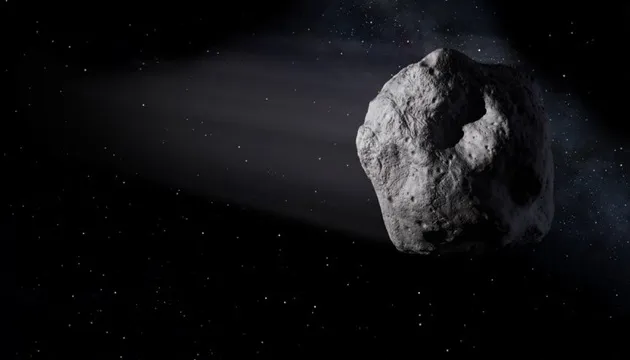
On Tuesday, April 7, a large asteroid will fly past our planet; experts have classified it as potentially hazardous.
This was reported by the U.S. space agency NASA, citing data from the Near-Earth Object Tracking System.
The celestial body has been designated 2002 TB70.
According to astronomers’ measurements, this space object is approximately 163.9 meters long. That is a significant size, exceeding the length of one and a half football fields.
Despite its tremendous speed, the asteroid will pass at a safe distance from Earth’s surface.
The minimum distance between the celestial body and our planet during the closest approach will be nearly 5.2 million km.
This is about thirteen times greater than the distance from Earth to the Moon. However, by cosmic standards, such a close approach is considered close enough to warrant careful observation.
NASA explained that there are clear criteria for designating an object as “potentially hazardous.”
If an asteroid approaches Earth at a distance of less than 7.5 million km and its size exceeds 150 m, it automatically falls into this category. Asteroid 2002 TB70 meets both of these criteria.
Currently, scientists are continuing to track the object’s trajectory to refine its characteristics.
Such observations help to better understand the dynamics of the Solar System and improve planetary defense systems. Experts do not predict any direct threat of collision during this flyby.
As a reminder, NASA is tracking a 130-meter asteroid near Earth.
A NASA telescope also helped study the temperature of an asteroid that posed a threat to Earth.


