
Study links Nullarbor trenches to cave collapses — Live Science
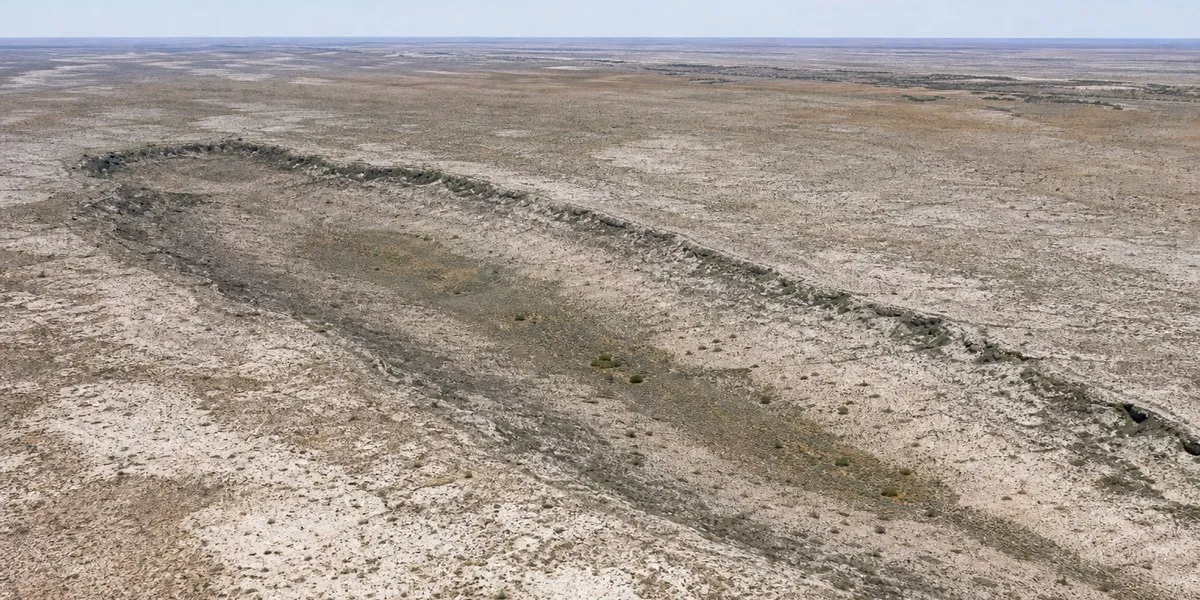
On the Nullarbor Plain in southern Australia, researchers have linked long, shallow trenches to the gradual collapse of large ancient cave systems underground. Live Science reports on the study's findings.
At the eastern edge of the arid, nearly treeless plain, there are five trenches oriented from north to south. They range from several kilometers to more than 20 kilometers in length, from 100 to 500 meters in width, and from one to nine meters in depth. Despite their size, these landforms are difficult to spot directly on the ground because of the exceptionally flat landscape.
Study of underground cavities
The researchers created digital terrain models with enhanced elevation differences to more precisely determine the boundaries of the trenches. They then used electrical resistivity tomography, a method that makes it possible to distinguish rocks from sediment deposits based on the passage of electric current through the ground.
Measurements showed that the trenches are depressions above sediment-filled canyon-like structures extending more than 40 meters deep. Sand predominates in the upper layers, while the proportion of finer silt and clay particles increases below. The scientists also compared the locations of the trenches with a database of known caves and found large, deep underground cavities located along them.
More current news is available on the UA.News Telegram channel Telegram.
How the trenches may have formed
According to the study's authors, the caves formed in porous karst limestones as a result of groundwater moving toward the coast during the Oligocene and early Miocene. Later, the cave roofs gradually collapsed, and material above the cavities subsided, forming elongated depressions on the surface.
The researchers tested this hypothesis in Clay Dam Cave, which can be accessed through a karst sinkhole within one of the trenches. There, they found subsidence of layers and sandy infill similar to those recorded by geophysical measurements in the other trenches. According to the study's first author, Matej Lipar, the fragmented nature of some depressions may indicate that the collapse of underground cavities is ongoing.
The work was published on September 17 in the journal Communications Earth & Environment. The authors suggest that where a trench ends at the surface, a large cave that has not yet collapsed may remain.


