
Study reveals a larger extent of ancient Gondwana — South China Morning Post
An international group of scientists led by Chinese researchers has discovered fragments of the ancient landmass Gondwana buried deep beneath parts of modern continents. As the South China Morning Post reports, new data indicate that around 500 million years ago, Gondwana encompassed at least 80% of Earth's continental crust.
New scale of the supercontinent
The study's findings were published in the peer-reviewed journal Science Advances. The work was carried out jointly by specialists from the Chinese Academy of Geological Sciences, Australia's Curtin University and Zhejiang Lab, a non-profit research institution in eastern China.
Earlier reconstructions suggested that Gondwana accounted for about 64% of the planet's entire continental crust. This was below the conventional 75% threshold at which geologists classify a landmass as a supercontinent. The research team called the revised structure, larger in scale, Greater Gondwana.
More current news is available on the UA.News Telegram channel Telegram.
Chemical traces of ancient crust
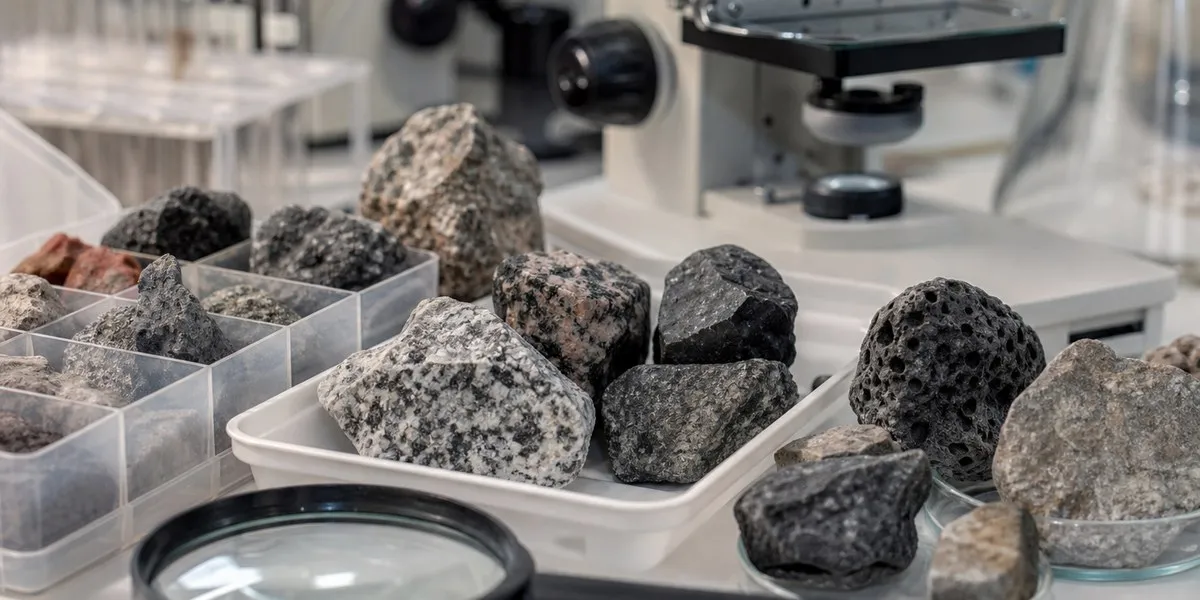
To search for remnants of ancient crust, the team used neodymium isotope mapping. The scientists analyzed a database of 25,346 igneous rock samples to trace ancient chemical signatures and determine their origin.
According to the researchers, over millions of years, parts of Gondwana's original crust separated, shifted and ended up beneath younger geological formations. Peking University geologist Wang Chao, who was not involved in the work, said that the discovery substantially revises Gondwana's spatial boundaries.
Wang Chao also suggested that large-scale subduction processes and volcanic activity along Gondwana's margins may have altered the global climate and marine environment, creating favorable conditions for the Cambrian explosion of life. Lead author Wang Tao stated that the peaks of this supercontinent's formation and breakup coincide in time with major global changes around 500 million years ago.


