
Early childhood development expert Yulia Kalyuzhna: “The best learning outcomes are achieved when parents and teachers work together.”
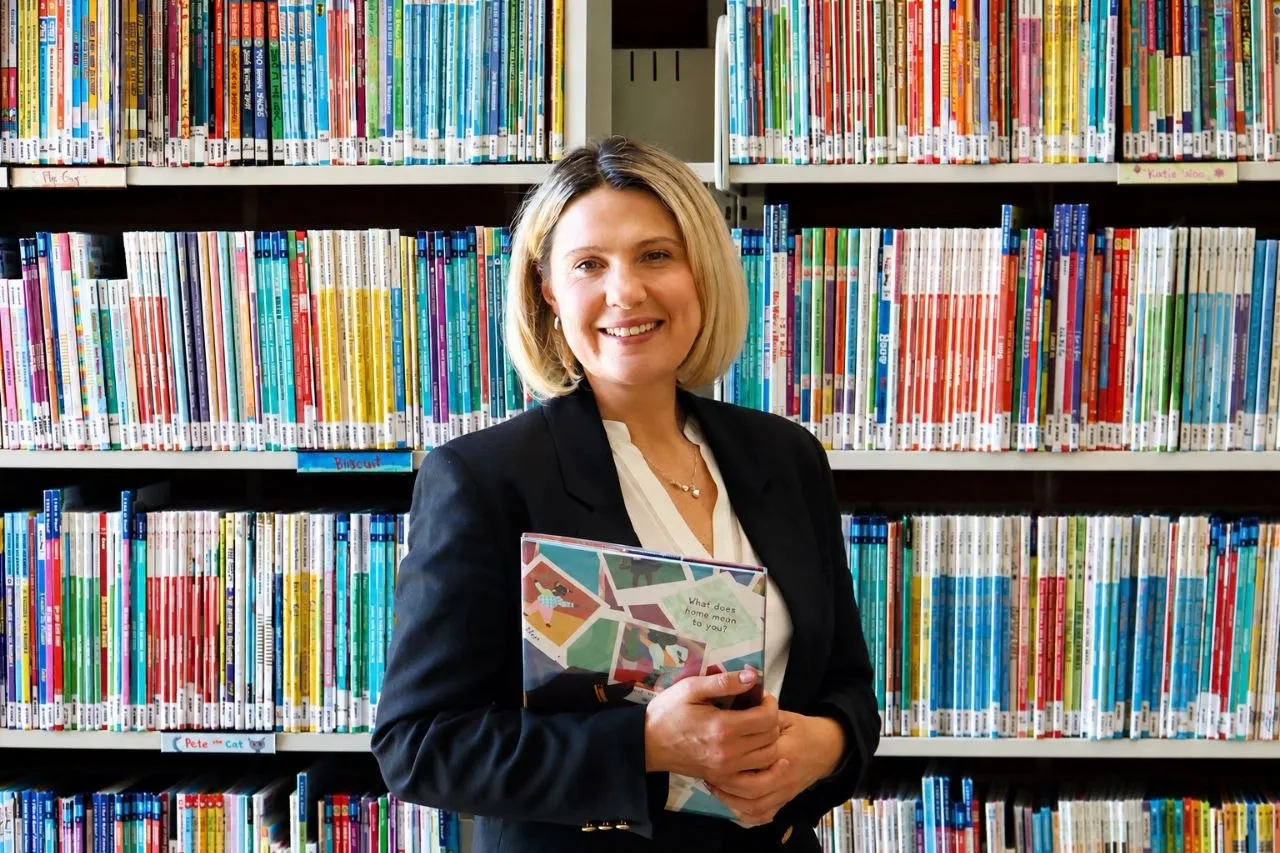
Early childhood development is the foundation on which a new personality is formed and prepared for future success. What should parents pay attention to when choosing an educational method? Yulia Kalyuzhna, an educator, expert, author of several academic works in the field of education, and creator of her own English-learning method, Finger ABC, shared her insights on this and much more.
Do you think parents can successfully support their children’s early development on their own, without the help of specialists?
Yes, I believe it is possible if parents have access to the right information and consciously create a stimulating learning environment at home. Mothers and fathers are a child’s first and most important teachers. They spend the most time with their child, encourage curiosity, and nurture an interest in learning.
At the same time, the role of educators is equally important, especially when a child needs more structured support and the parents do not have enough experience. Specialists can guide parents, suggest effective child development methods, and show them how to combine learning with play.
The best results are achieved when parents and educators work together: parents create the emotional foundation for learning and provide everyday practice, while educators contribute professional knowledge and monitor the child’s development.
You developed your own Finger ABC method. What inspired you to create something of your own?
The idea for Finger ABC emerged quite naturally. I was teaching my own children at home and trying to explain the English alphabet to them through play. We came up with gestures, movements, and images for each letter, and I noticed how quickly they began to remember sounds and words and build associations.
In 2009, I opened my own early childhood development center, Tili-Tili, in Kherson, where I began using the method with other children. Classes were held together with parents because I strongly believe that early development is most effective when the family is actively involved in the process.
The Finger ABC method not only helps children remember letters but also actively supports the development of neural connections, imagination, and associative thinking.
I respect other teaching methods as well, as each of them has its own value and can be beneficial. However, I believe that the more tools educators and parents have at their disposal, the better.
You have been living and working in San Francisco for two years. How did you adapt your method to the U.S. education system?
Adapting to the U.S. education system was both an interesting and challenging process for me. At my early childhood development center, the learning process was originally based on the principle that a teacher should act as a guide rather than a strict instructor. For this reason, many approaches used in the American education system felt very familiar to me.
In the United States, I had my degrees evaluated and recognized: a master’s degree in education and a bachelor’s degree in economics. I am also continuing my studies at City College of San Francisco to gain a deeper understanding of early childhood development approaches, preschool education, and the professional standards used here in the United States. This helps me better understand the American education system and adapt my many years of teaching experience to its requirements.
The Finger ABC method fits naturally into this system because it is also based on play, movement, and multisensory learning. It is a universal tool that helps children enjoy the learning process regardless of their nationality, native language, or educational background.
What cultural value does your work bring to American society?
I believe my work brings meaningful cultural value to American society. First, I help American children grow up in an environment where multilingualism and cultural diversity are valued.
Second, my Finger ABC method makes learning the English alphabet more engaging and effective. It not only helps children master English but also develops their ability to learn other foreign languages. For example, some of my former students whom I taught in Ukraine are now fluent in three or four languages.
Third, by working in multicultural classrooms, I create an atmosphere of mutual understanding and cooperation where children feel that they are part of one American community.
In this way, my work helps strengthen the values of inclusion, cultural respect, and innovation in education, directly contributing to and enriching American society.


