
Estonia plans to allow NATO citizens to serve in its military
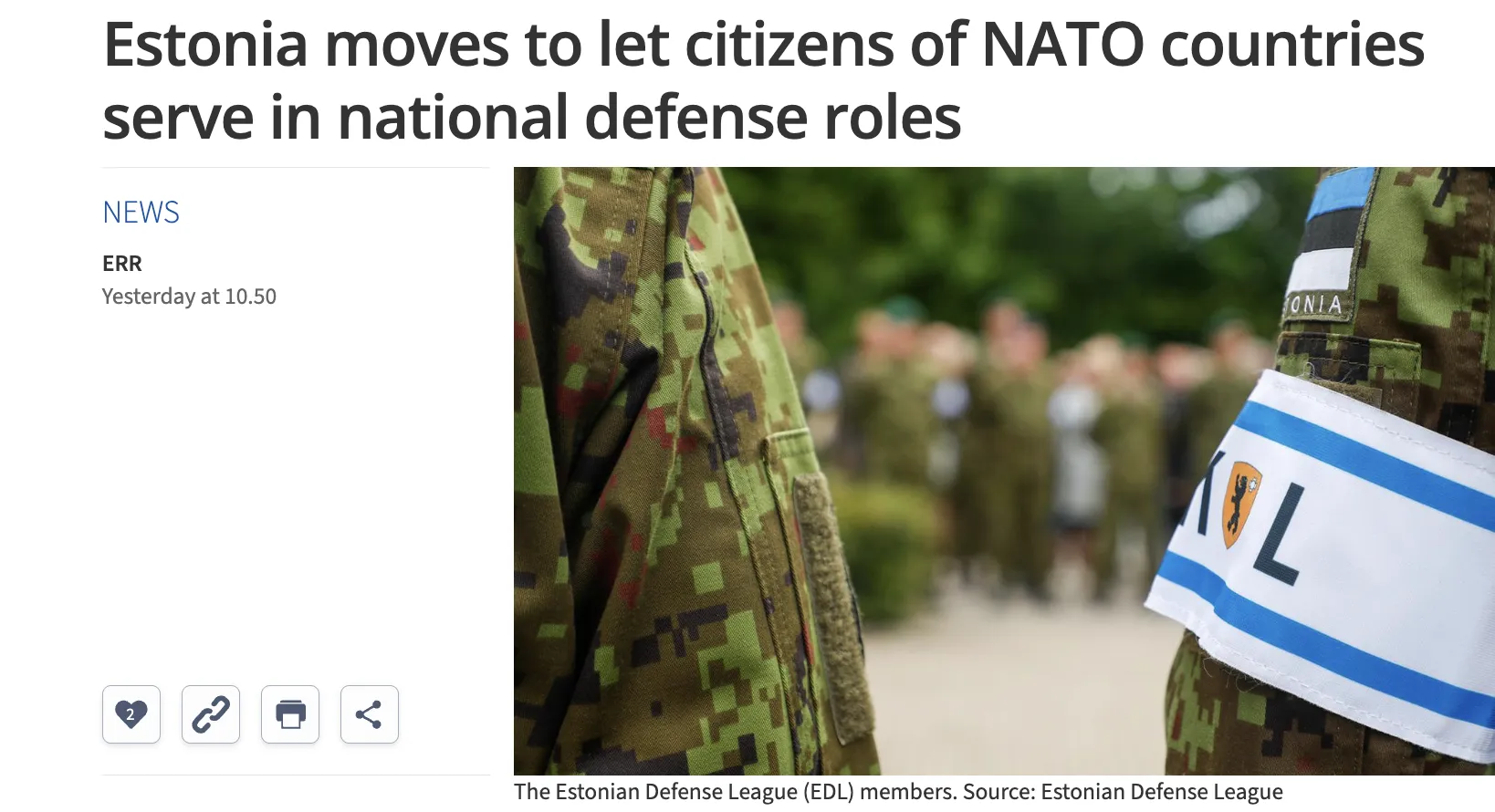
Estonia is preparing legislative changes that will allow citizens of other NATO member states to serve in the country’s Defense Forces and volunteer military units.
A corresponding bill was submitted to parliament by 53 members of the Riigikogu.
The document stipulates that citizens of NATO countries who are members of the Estonian Defense League (Kaitseliit) will be able to voluntarily assume military obligations and hold wartime positions for which a military rank is provided.
The bill’s sponsors believe that these changes will strengthen the readiness of both the Kaitseliit and the Estonian Armed Forces by creating a legal framework for foreign members of the organization to participate in the country’s defense.
Participation by foreigners will be strictly voluntary. The amendments do not extend compulsory military service in Estonia to citizens of other NATO countries. Instead, the bill proposes establishing a system of voluntary service for individuals aged 18 and older who have taken the military oath.
The bill also establishes a legal framework for appointing citizens of NATO countries to wartime positions, which is intended to improve planning for training and the formation of command structures.
In addition, the changes expand the role of auxiliary members of the Defense League, allowing them to participate more extensively in carrying out tasks during crises and emergencies. If adopted, the law is set to take effect on January 1, 2027.
At the same time, Aivar Engel, legal advisor to the Riigikogu’s National Defense Committee, drew attention to a number of unresolved issues in his legal opinion. In particular, the explanatory memorandum does not provide a quantitative justification for the need to involve foreign citizens.
“Given that the Defense League, together with women’s and youth organizations, has over 30,100 members, the organization should not be facing a shortage of personnel,” he noted.
Engel also pointed out that the language of command in the Estonian forces is Estonian, yet no language proficiency requirements have been established for volunteers at this time. Furthermore, less stringent medical standards apply to them than to active-duty military personnel.
According to him, it is also unclear which authority will verify whether citizens of other NATO countries meet the requirements set forth in the legislation governing the Defense League.
This was reported by the Estonian public broadcaster ERR.
During the upcoming NATO summit in Ankara, scheduled for July 7–8, a number of important decisions regarding support for Ukraine are expected, particularly within the framework of the U.S. PURL initiative to procure weapons for the Ukrainian Armed Forces.
At the NATO summit in Ankara, allies plan to announce new defense commitments, which will include multibillion-dollar contracts for weapons production and continued support for Ukraine.
German Chancellor Friedrich Merz called on European allies to demonstrate unwavering unity and send a strong signal of support for Ukraine at the upcoming NATO summit, which will take place on July 7–8 in Ankara, Turkey.
The Baltic states, Poland, and Romania have coordinated their positions ahead of the NATO summit in Ankara.


