
The editor-in-chief of a Russian media outlet was sentenced to 8 years in prison for posts about Bucha and Irpin
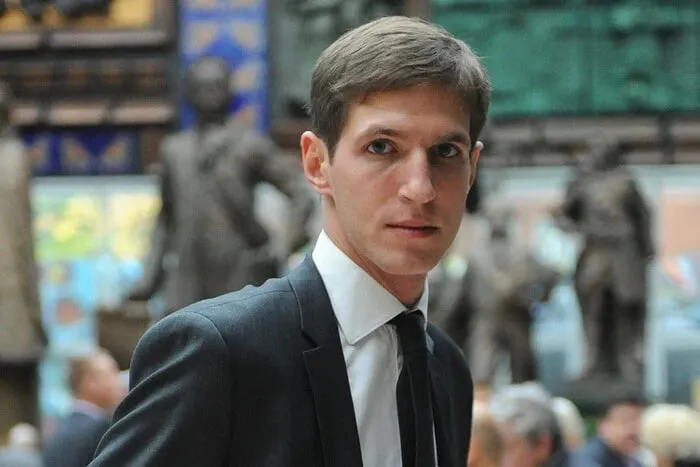
A Moscow court has sentenced Tikhon Dzyadko, editor-in-chief of the TV channel "Dozhd," to eight years in prison in absentia. The journalist was found guilty in a case involving so-called "fake news" about the Russian army, based on social media posts regarding events in Bucha and Irpin.
This was reported by Russian media outlets.
The verdict was handed down by the Golovinsky District Court of Moscow. The case was heard in absentia.
It is reported that in addition to the prison term, the Russian court imposed the following penalties on the journalist:
- A fine of 250,000 rubles.
- A four-year ban on managing online resources and maintaining social media accounts.
It is worth noting that the Russian prosecutor’s office had sought a much harsher financial penalty—a fine of 5.9 million rubles.
Earlier, in October 2025, Dzyadka was arrested in absentia and added to the Russian Federation’s list of “terrorists and extremists.”
The basis for the prosecution was posts on Dzyadka’s personal Telegram channel. Russian authorities called the information “knowingly false” regarding:
- mass killings of civilians in Bucha and Irpin;
- acts of violence by Russian military personnel against the civilian population of Ukraine;
- the deliberate destruction of Ukrainian cities.
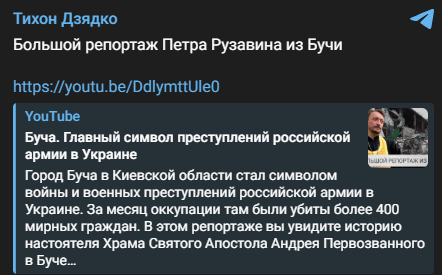
These were posts in which the journalist cited reports from the de-occupied town of Bucha and an investigation by The New York Times, which proved the Russian military’s involvement in war crimes in the Kyiv region.
The TV channel “Dozhd” ceased broadcasting in Russia shortly after the start of the full-scale invasion of Ukraine due to censorship and the threat of criminal prosecution of its staff. Currently, the editorial team is operating outside of Russia. Tikhon Dzyadko himself is also in exile, so the verdict is “in absentia.”
In Ukraine, the first student recruited into the Russian Federation’s unmanned aerial vehicle forces has been eliminated.
Russia is recruiting students into its drone forces at least at eight universities and five colleges in the temporarily occupied territories of Donetsk and Luhansk regions.
Russia has sharply accelerated the production of “Shaheds” at the Alabuga plant


