
Japan urged to focus AI on factory modernization — The Japan Times
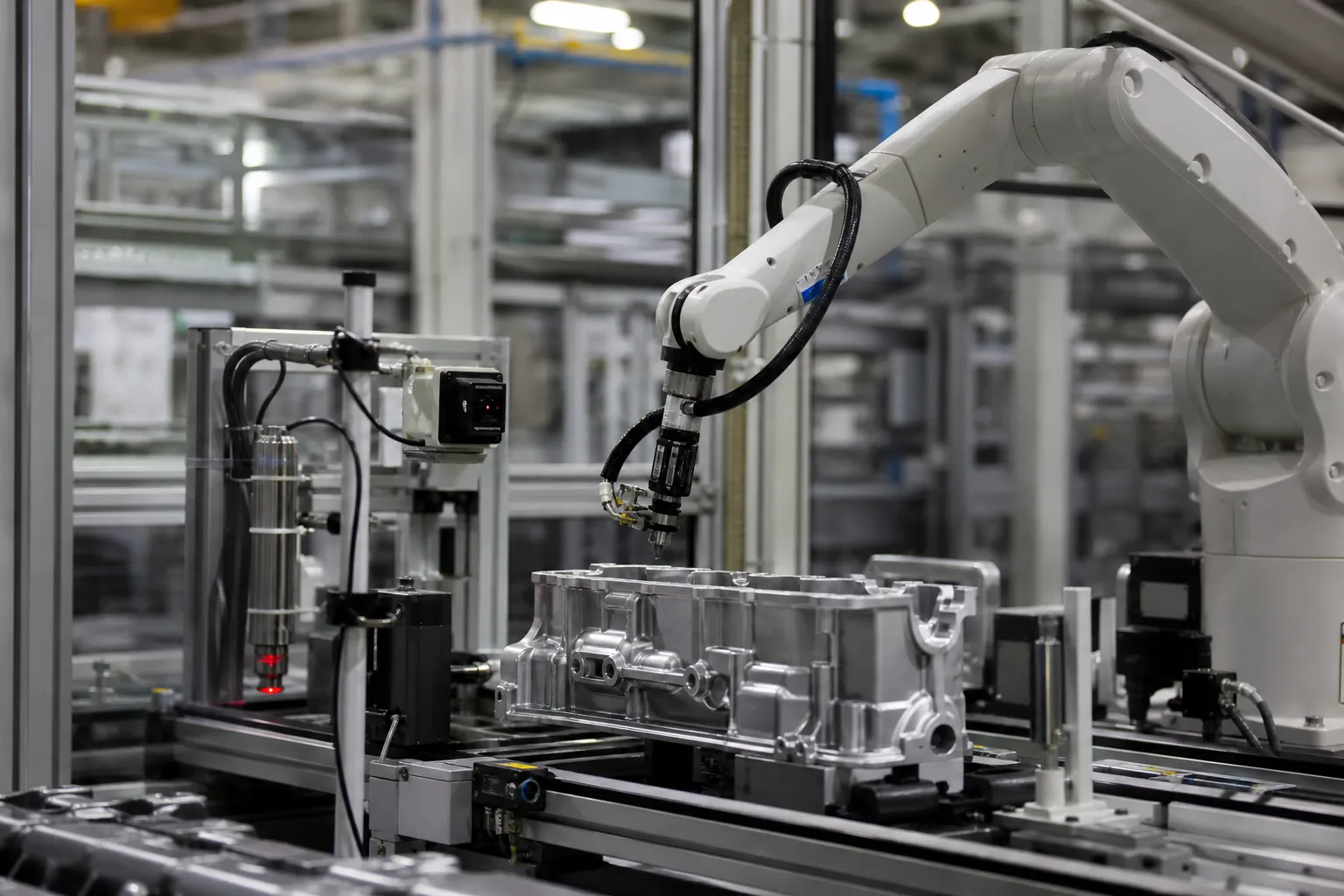
Japan should assess its competitiveness in artificial intelligence not by the number of chips purchased or the capacity of data centers, but by the scale of AI deployment in manufacturing. Bruno S. Sergi, a professor of political economy, expressed this view in an article for The Japan Times.
The author notes that Japanese companies are already using AI directly in production processes. At Toyota’s aluminum casting plant in Obu, Aichi Prefecture, a model analyzes 40,000 data points during each cycle and predicts a defect before the metal cools. At FANUC’s plant in Oshino, Yamanashi Prefecture, AI identifies the risk of robot motor failure using vibration data.
At a Musashi Seimitsu facility near Toyota City, a robotic arm inspects gears: it rotates a part in front of a light source and detects a defect in two seconds. Such systems operate on one or two graphics processing units directly at the plant and require approximately 5 to 10 kilowatts of electricity, the article says.
A bet on inference
Sergi calls industrial inference a key direction for Japan. Unlike training large models, such solutions must operate with minimal latency where parts are manufactured. In his assessment, Toyota cannot send casting data to a remote data center and wait for a response, while FANUC cannot allow a cloud service outage to stop a production line.
More current news is available on the UA.News Telegram channel Telegram.
The author also points to labor shortages, an aging population and a prolonged period of moderate productivity growth in Japan. In his view, using AI for quality control, predictive maintenance and energy consumption optimization can create economic value faster than expanding computing capacity in data centers.
Barriers for small businesses
The author names access to electricity and lengthy infrastructure approval procedures among the main constraints. Nearly 60% of new demand for data centers is concentrated in Greater Tokyo, where power grids were designed primarily for office buildings. At the same time, according to a national survey of small and medium-sized enterprises in 2025, only 16% of respondents reported using AI in operational activities.
The article proposes simplifying the connection of small inference systems for manufacturers and treating a 2-megawatt factory edge data center as industrial rather than commercial infrastructure. In the author’s view, the success criteria should be the number of modernized factories, defects eliminated, energy saved and increased worker productivity.


