
India Has Sharply Increased Its Purchases of Russian Oil — FT
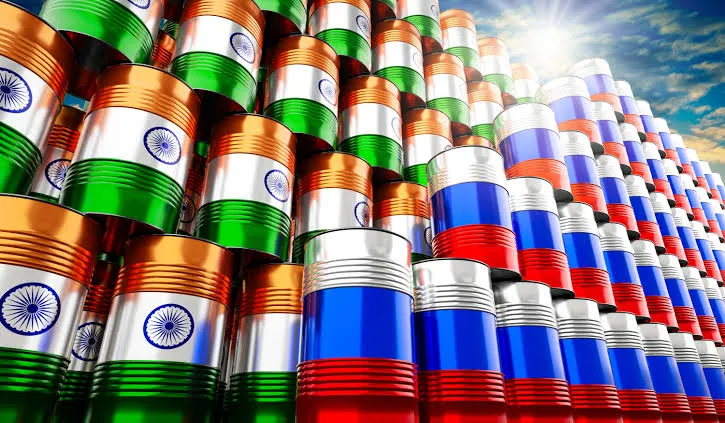
India has sharply increased its purchases of Russian oil. In June and July, the country imported more than 2.6 million barrels per day, a record high that accounted for more than half of India’s total oil imports.
The Financial Times reports this, citing data from the analytics firm Kpler. In June and July, India purchased more than 2.6 million barrels of Russian oil daily. By comparison, in February, this figure had dropped to approximately 1 million barrels per day.
Russian oil now accounts for more than half of India’s total oil imports. Overall, India imported about 5 million barrels of oil per day. This is the highest figure since the U.S. and Israel began bombing Iran in late February.
Why India Turned to Russia Again
The situation changed following the escalation in the Middle East. The conflict in the Persian Gulf has disrupted oil supplies, particularly through the Strait of Hormuz, which is one of the key routes for global energy shipments. India had previously attempted to reduce its purchases of Russian oil.
Last year, U.S. President Donald Trump accused New Delhi of funding the Russian war machine through its purchase of energy resources. Following that, India reduced its imports from Russia. However, the situation in the Middle East has changed the calculus. Due to supply issues and the lack of a peace agreement between Washington and Tehran, India once again needed Russian oil. According to the FT, Trump also granted exemptions allowing India to purchase Russian oil.
India Depends on Imports
For India, the issue of oil is particularly important, as the country is almost entirely dependent on foreign supplies. More than 90% of India’s oil and gas needs are met through imports. Therefore, supply disruptions or sharp price increases can quickly hit the country’s economy.
The conflict in the Persian Gulf has effectively highlighted this vulnerability. If shipments via key maritime routes become more difficult, New Delhi is forced to quickly seek out alternative sources. During his Independence Day speech this month, Indian Prime Minister Narendra Modi called energy security an “urgent priority.” “It is important for us to make every effort to develop alternative sources,” he emphasized.
India Is Building Up Its Reserves
At the same time, the country is trying to build up a larger stockpile of energy resources in case of new crises. The Indian government reports that the country’s strategic reserves can hold 5.33 million metric tons of petroleum products. When commercial storage facilities are included, the reserves could last for approximately 74 days of imports.
In addition, India is considering the possibility of storing part of its strategic reserves in the United Arab Emirates. But the situation with natural gas is more complicated.
Vibhuti Garg, Director for South Asia at the Institute for Energy Economics and Financial Analysis, noted that while India has strategic oil reserves, it lacks similar long-term reserves of liquefied natural gas. Due to the war, gas supplies from the Middle East have been disrupted. As a result, India, like a number of other Asian countries, has once again begun to rely more heavily on coal for energy production.
India cannot quickly phase out oil
Dependence on Russian oil is also linked to the growth of the Indian economy itself. The more the country produces and consumes, the more energy it needs. India has also significantly increased its coal production in recent years. Over the decade since March 2015, annual production has risen by approximately 70%—to 1.04 billion metric tons.
However, the country cannot completely replace oil with such resources. According to Garg, the current crisis has shown that for India, the problem lies not only in abandoning Russian or any other specific source of oil. It is important to have diverse suppliers and multiple secure delivery routes. “The war in Iran has underscored that the immediate challenge for India is not only to completely phase out oil but also to diversify its sources of crude oil and its transportation routes,” the analyst noted.
At the same time, India will not be able to phase out oil quickly. “Given India’s economic growth and rising demand, oil is likely to remain an important component of the energy mix for a long time to come,” Garg believes.
Thus, the current situation has once again made Russia one of India’s key oil suppliers. For Moscow, this means retaining a major buyer, and for New Delhi, it is yet another demonstration of how difficult it is to quickly reduce dependence on specific energy sources. The FT reports this.
Japan and India held their first joint government event on the processing of critical minerals at the Japanese Embassy in New Delhi. About 130 people attended Friday’s meeting, including government officials and representatives from waste processing companies.




