
Iran will never back down from confrontation with the U.S. and Israel — CNN
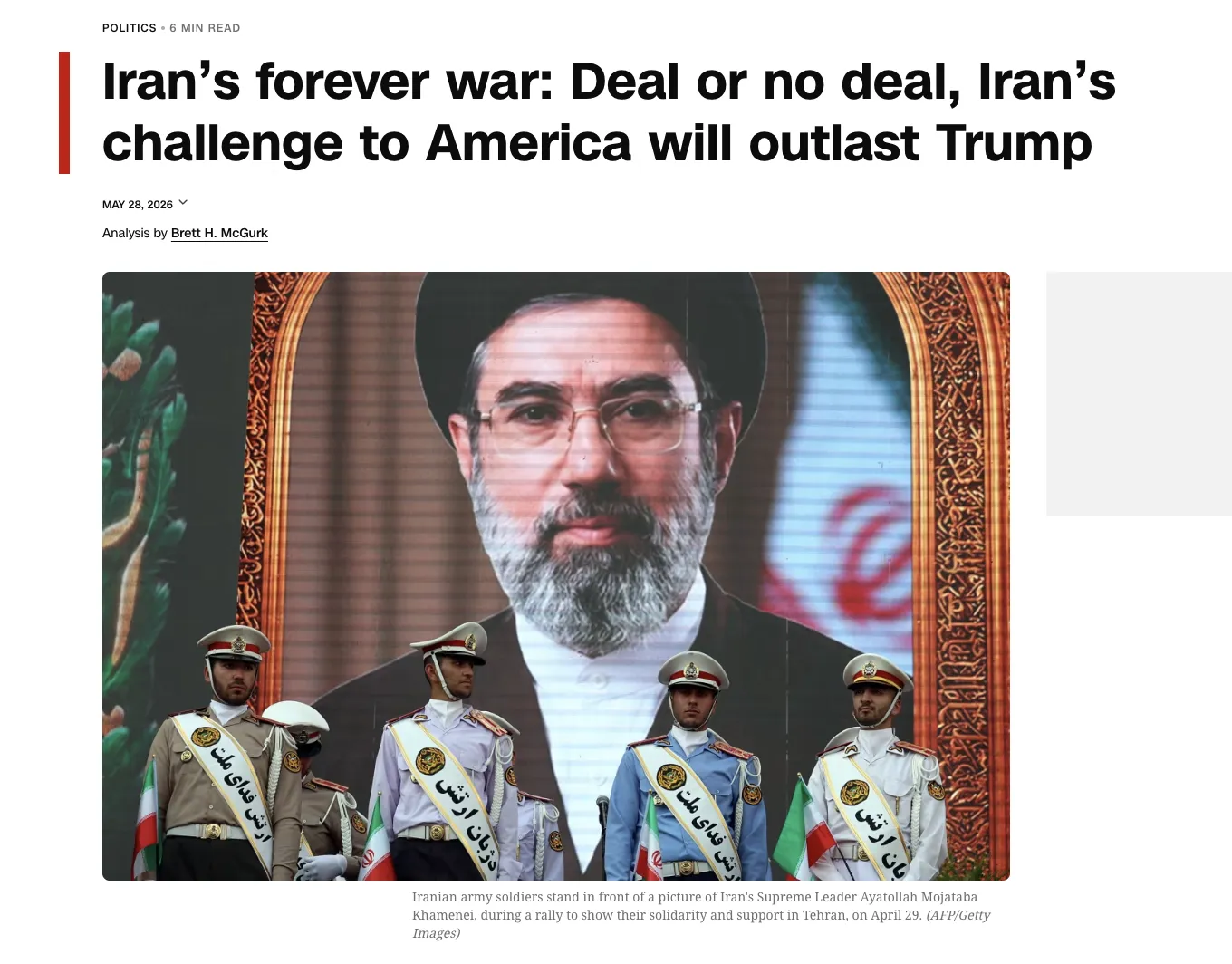
The ideology of the Islamic Republic remains the primary driver of its foreign policy. As CNN notes, Tehran’s policy, shaped after the 1979 revolution, aims to oust the United States from the Middle East and confront Israel, making the conflict a long-term one.
Historical experience in combating radical forces in Iraq—beginning with the letters intercepted in 2004 from Ayman al-Zawahiri to Abu Musab al-Zarqawi regarding the establishment of a caliphate—has proven that leaders’ public declarations of long-term ideological goals and their willingness to use violence should always be taken seriously. At the time, the terrorists’ intentions were ignored, and ten years later, al-Zarqawi’s successor, Abu Bakr al-Baghdadi, did indeed proclaim a caliphate in the captured territories, the elimination of which took another decade. This lesson applies fully to modern-day Iran.
In Washington, the debate traditionally revolves around changing approaches. Democrats prioritize diplomacy, viewing the 2015 Obama-era nuclear deal as the best deterrent. Republicans, on the other hand, favor “maximum pressure” campaigns and military operations, arguing that Tehran uses any agreements to fund regional expansion. However, neither tactic solves the problem at its core. Even the Trump administration’s current discussions regarding the reopening of the Strait of Hormuz and new nuclear restrictions are unlikely to alter the regime’s fixed course.
Iran’s constitution explicitly entrusts the Islamic Revolutionary Guard Corps (IRGC) and its Quds Force with the ideological mission of jihad, which consists of driving the U.S. out of the Middle East and destroying Israel. This explains Iran’s systematic investments in a network of proxy groups, including Hezbollah, Hamas, Palestinian Islamic Jihad, Iraqi militias, and the Yemeni Houthis. Western attempts to soften the regime through economic incentives proved futile. After the signing of the JCPOA, Supreme Leader Ali Khamenei only intensified his anti-Western rhetoric and predicted the disappearance of Israel.
This strategy culminated in Hamas’s attack on Israel on October 7, 2023. Immediately afterward, Iran mobilized its entire regional network to pressure the U.S. and Israel on multiple fronts, and subsequently launched direct missile strikes from its own territory.
Although Trump was the first U.S. president to authorize the elimination of top Iranian military leaders (notably Qasem Soleimani in 2020) and strikes on the country’s domestic infrastructure, these tactical successes did not yield a strategic outcome. Amid military pressure, the Iranian system has only consolidated, and hardline ideologues such as the new leader of the Islamic Revolutionary Guard Corps (IRGC), Ahmad Vahidi, have assumed leadership positions.
Iran’s current Supreme Leader has already reaffirmed his late father’s intention to eliminate Israel by 2040 and declared the slogans “Death to America and Death to Israel” as shared by the entire Islamic ummah. At the same time, Israel, regardless of the upcoming elections, will adhere to a new uncompromising security doctrine. A clear confirmation of the conflict’s persistence was the fact that, in parallel with negotiations regarding the Strait of Hormuz, the Islamic Revolutionary Guard Corps began laying new mines in its waters, which provoked yet another military clash. Until there is a change in the political regime in Iran itself, the situation will remain in a vicious cycle of temporary lulls and new confrontations.
Earlier, Iran and the U.S. exchangedaccusations following new strikes.
The day before, U.S. President Donald Trump announced significant progress in negotiations with Tehran, noting that as part of a potential agreement, Iran could transfer its highly enriched uranium to the United States.
Iran’s Supreme Leader has bannedthe transfer of enriched uranium.




