
A few minutes of darkness for hundreds of millions of euros: how astronomy tourism is becoming big business
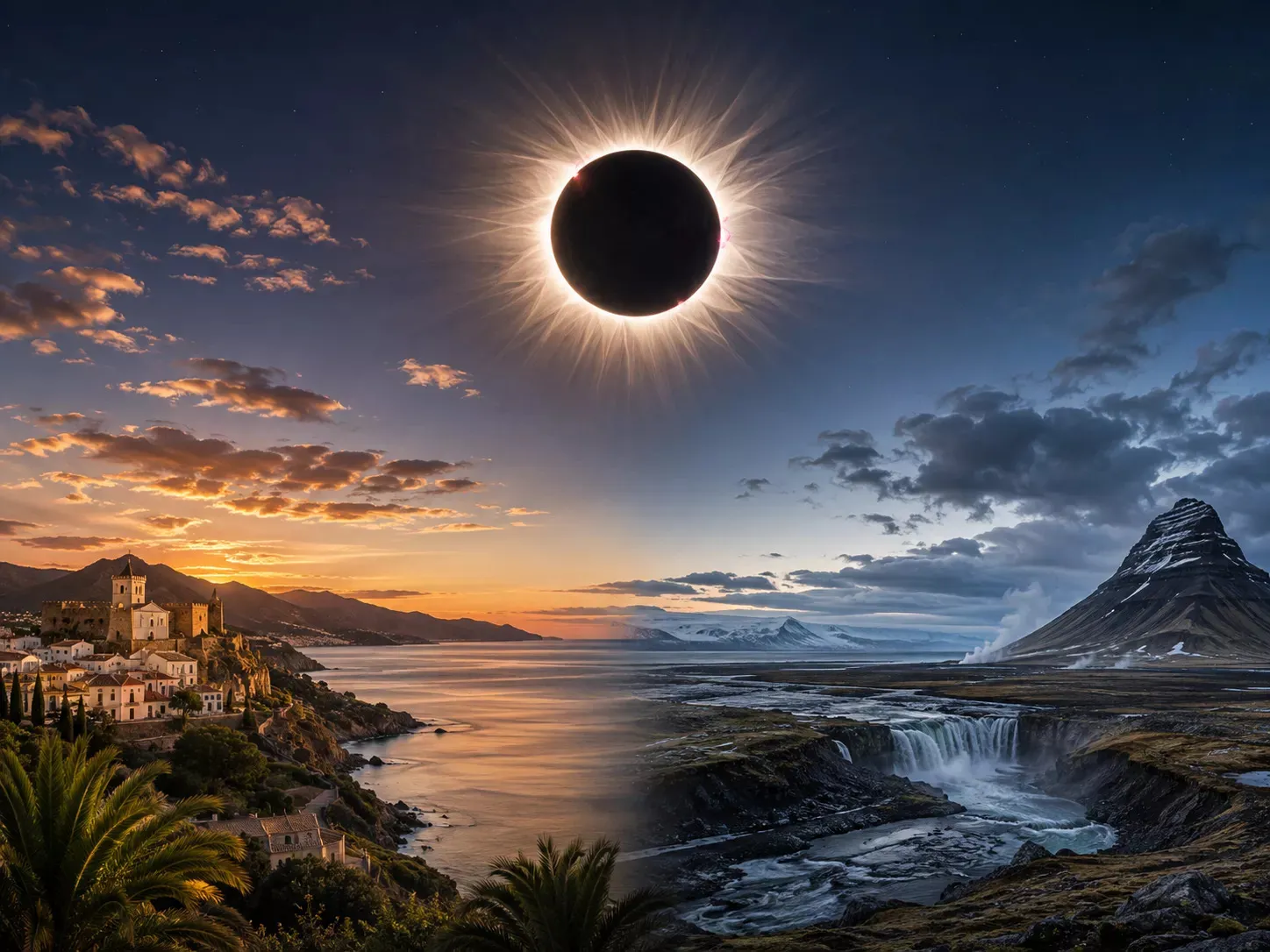
On August 12, 2026, millions of people will be looking up at the sky rather than at Spain’s beaches, museums, or architecture. A total solar eclipse will pass over a significant portion of the country—the first of this magnitude over mainland Spain in more than a century. In some regions, daylight will turn to twilight for a few minutes, and that very same night, tourists will be able to witness the peak of the Perseids.
For astronomers, this is a rare combination of celestial events. For the tourism industry, it’s effectively a separate peak season in the middle of an already busy August.
During the week surrounding the eclipse, the country could welcome about 447,000 additional tourists, whose spending will exceed 342 million euros. Authorities estimate the event’s total net contribution to the economy at approximately 347.6 million euros.
Astronomical tourism, which until recently seemed like a niche hobby for people with telescopes, is gradually becoming part of the broader tourism industry.
UA.News explains how airlines, hotels, and tour operators profit from eclipses and meteor showers, why Spain is using space to develop rural regions, and where the next tourism boom might occur.
The August 12 eclipse could bring Spain hundreds of millions of euros
The total solar eclipse on August 12 will pass over Greenland, Iceland, Spain, and a small part of Portugal. The total phase will last approximately 2 minutes and 18 seconds. As noted by the Associated Press, this will be the first total solar eclipse to be visible from mainland Spain in more than 120 years.
The 36 provinces through which the path of totality will pass or that are located near it are expecting about 446,700 additional tourists between August 10 and 16.
Foreign travelers are expected to spend about 247.3 million euros, while domestic tourists will spend an additional 94.9 million euros. If we roughly divide these expenditures by the number of additional visitors, the average comes to approximately 766 euros per tourist.
This money is distributed among airlines, railways, car rental companies, hotels, restaurants, shops, gas stations, and tour operators. That is why a few minutes of darkness can generate economic activity for several days.
Searches for airline tickets have doubled, and hotel prices have in some cases risen sevenfold

The eclipse’s effect is already evident in tourists’ behavior. According to La Voz de Asturias, the number of international searches for flights to northern Spain for August 8–16 has increased by 98% compared to last year.
This includes, in particular, flights to A Coruña, Bilbao, Asturias, and Santander. Domestic demand has also risen—the number of searches among Spaniards themselves has increased by approximately 11%.
Searching for a ticket does not equal purchasing one, so this does not automatically mean a doubling of airline revenues. However, the figure clearly demonstrates the scale of additional demand that a single major event can generate.
The situation is even more striking in the housing market.
The newspaper El País analyzed prices for more than 5,500 accommodations in 201 municipalities and compared rates for the night of the eclipse with prices from the week before the event.
In Soria, the median price per night rose from approximately 116 to 879 euros—an increase of 658%. In León, it rose from about 59 to 445 euros—an increase of approximately 654%.
In Teruel, some listings approached 500 euros per night, and in Soria, nearly 900 euros.
According to El País’s calculations, approximately 70% of hotels within the total eclipse path raised their prices, while outside that path there was no such sharp increase.
For a small hotel, the economic impact can be enormous. A 20-room property that typically charges 100 euros per room would earn 2,000 euros per night at full occupancy. If the average rate rises to 500 euros during the eclipse, the potential revenue is already 10,000 euros—not including the restaurant, parking, and other services.
That’s why just a few minutes of this astronomical event can have an impact on local businesses comparable to that of a major festival or a major sports final.
Tour operators aren’t selling the eclipse itself, but a full-fledged vacation
Companies that turn an eclipse into a comprehensive travel experience stand to earn even more.
Eclipse Tours, a specialized American tour operator, builds entire travel packages around solar eclipses.
The package may include accommodations, transfers, the services of professional astronomers, special equipment, excursions, and even backup viewing locations in case of bad weather.
In this way, a few minutes of the eclipse turn into a seven- or ten-day vacation that can cost thousands or tens of thousands of dollars.
This is particularly evident in the case of the next major eclipse in 2027 in Egypt, where tour operators are selling premium packages long before the event itself. Rarity acts as the perfect marketing tool here: tourists realize they won’t be able to repeat such a trip a month later.
How Spain Is Trying to Draw Tourists Away from Overcrowded Beaches
For Spain, the astronomical boom has not only economic but also strategic significance.
For years, the country has been grappling with an excessive concentration of tourists in Barcelona, the Balearic and Canary Islands, and along the Mediterranean coast. Tourism generates enormous revenue, but at the same time drives up housing prices and puts a strain on transportation, water supplies, and infrastructure.
One of the priorities of Spain’s tourism strategy through 2030 is the transition to a more balanced model, in which tourism revenues are distributed more evenly among regions.
Dark skies are an almost ideal tool for this. To observe the starry sky, a tourist doesn’t need to go to Barcelona or Ibiza. On the contrary—the less artificial light, development, and people there are, the better the conditions.
This gives an advantage to Soria, Burgos, Castile and León, and other inland regions that are usually left off mass tourism itineraries.
This also aligns with Madrid’s broader policy. The Spanish government has approved a strategy for territorial equality aimed, in particular, at developing rural and sparsely populated areas.
Astronomy tourists are particularly valuable here: they travel to places that ordinary tourists often do not reach.
How the U.S. Has Already Profited from Solar Eclipses
Spain is far from the first country to benefit from a solar eclipse in terms of tourism.
In 2017, a total solar eclipse crossed the U.S. from Oregon to South Carolina. For example, Nebraska expected between 116,000 and 466,000 visitors, and hotels and campgrounds along the path of totality were booked months in advance.
The eclipse on April 8, 2024, was even more massive. Ahead of the event, TIME estimated potential additional spending by tourists along the path of totality at approximately $1.5 billion.
After the event, Indiana officials estimated its economic impact at approximately $148.5 million.
Such events have a particularly strong impact on small towns. If a town has a population of a few thousand people but tens of thousands of tourists arrive for the eclipse, the local economy shifts into a different gear for several days.
Cafes operate at full capacity, hotels are fully booked, stores and gas stations see record revenue, and local residents rent out their homes and parking spaces.
A Solar Eclipse and the Perseids on the Same Day
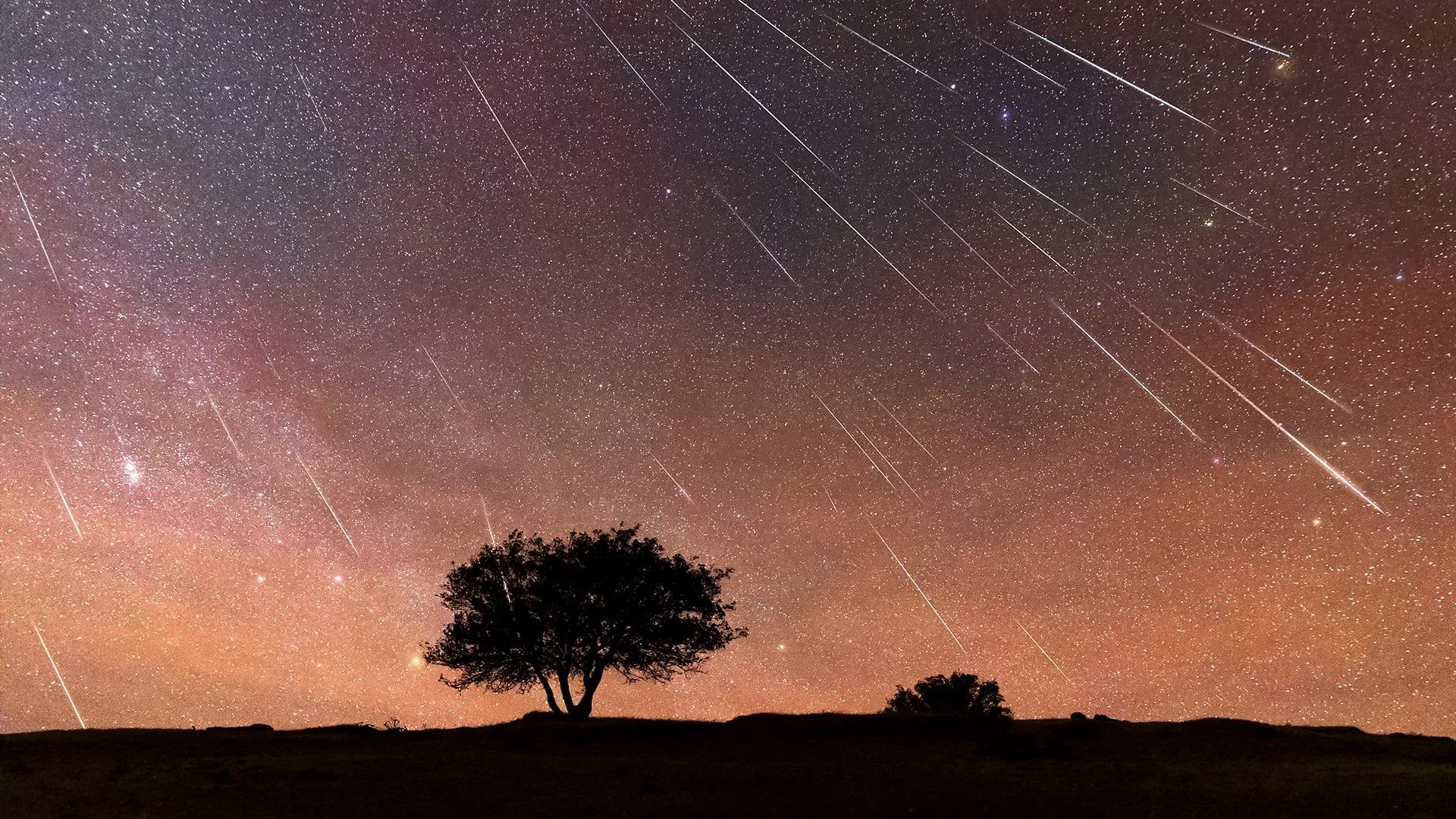
August 2026 is also special because the solar eclipse practically coincides with the peak of the Perseids.
According to the National Geographic Institute of Spain, the peak activity of the meteor shower is expected to occur around the night of August 12–13.
This means that a tourist visiting for the eclipse will be able to witness another spectacular astronomical event just a few hours later. For the tourism industry, this is practically a ready-made package: a trip to the viewing site during the day, the eclipse in the evening, and the Perseids at night.
A one-day trip can easily turn into a multi-day stay, which means additional spending on hotels, restaurants, and transportation.
The next tourism boom is coming as early as 2027
The upcoming eclipse will be just the beginning of an extraordinary period.
The European Space Agency refers to the three eclipses that will pass over Spain in 2026–2028 as the “Iberian Trio.”
The next total eclipse will occur on August 2, 2027. According to NASA, its path will pass through southern Spain, Morocco, Algeria, Tunisia, Libya, Egypt, and part of the Middle East.
Egypt could see a particularly large surge in tourism. Near Luxor, the total phase will last more than six minutes, and visitors will be able to combine viewing the eclipse with visits to historical sites.
Another major event will take place on January 26, 2028, when an annular eclipse featuring the characteristic “ring of fire” will pass over Spain.
The Dark Sky Becomes a Tourist Resource
Eclipses aren’t the only draw for astronomical tourism.
Following the Perseids in 2026 will come the Draconids, Orionids, Taurids, and Leonids. None of these meteor showers is likely to attract hundreds of thousands of tourists to a single region on its own. But it is precisely these recurring phenomena that make it possible to turn a one-time boom into a sustainable business.
Small hotels can offer night tours, astrophotography, telescope viewing, camping, and trips to observatories.
This is particularly relevant for Spain. As reported by Reuters, the country expects approximately 100 million international tourists in 2026.
The challenge now is not only to attract even more people but also to ensure that a portion of this influx travels not just to the coast but deeper into the country. And here, rural regions have a resource that competitors cannot quickly replicate: the dark sky.
For a tourist, the eclipse will last only a few minutes. For an airline, it means additional passengers; for a hotel, the opportunity to raise rates several times over; for a restaurant, a full house; and for a small town, a chance to appear on the global tourism map for a few days.
This is the economics of astronomical tourism: sometimes, you don’t need to build a new resort to create a tourism boom. All it takes is for the Sun to disappear for a few minutes.




