
Chinese scientists claim BeiDou was refuelled in orbit — South China Morning Post
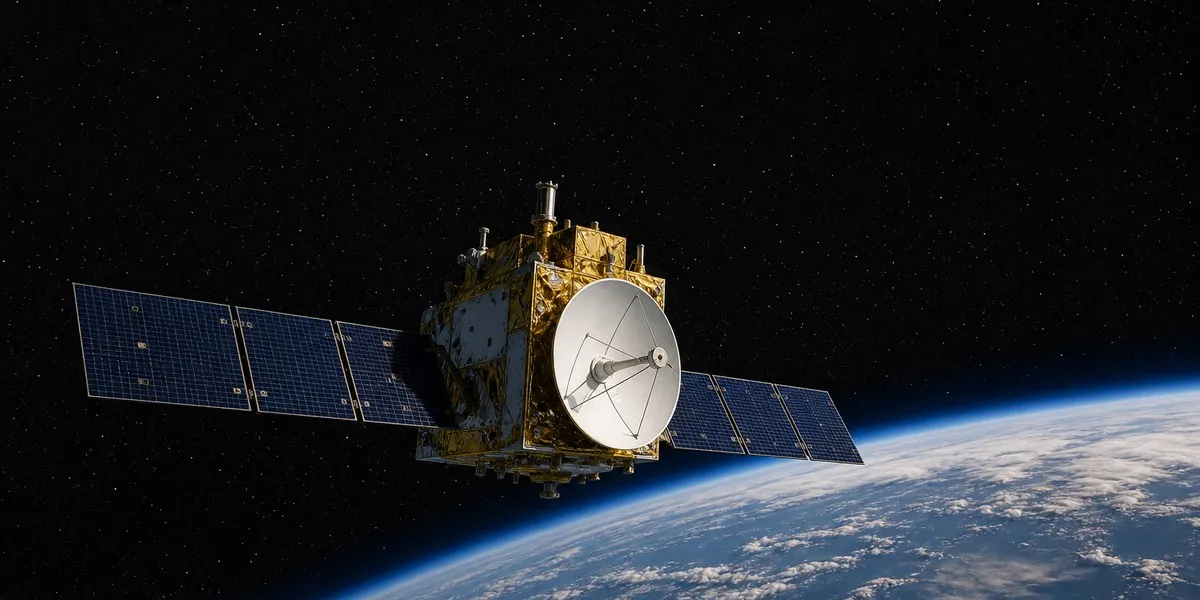
Chinese researchers said they had, for the first time, refuelled a BeiDou navigation system satellite in high orbit using room-temperature propellant. South China Morning Post reported this, citing a paper by a team from China’s state Deep Space Exploration Laboratory that is still under peer review.
The researchers did not provide details of the operation but said it gave China practical experience. At the same time, they stressed the need to develop technologies for transferring ultra-low-temperature fuel, which has better performance characteristics for large spacecraft and deep-space missions.
Claim of 142 kilograms of fuel
In a separate study published in April in the International Journal of Aerospace Engineering, scientists from the Chinese Academy of Sciences named the spacecraft that allegedly took part in the operation. According to their version, the Shijian-25 servicing satellite transferred 142 kilograms of fuel to the BeiDou-2 G7 satellite in February 2025, which was expected to extend its service life by eight years.
More current news is available on the UA.News Telegram channel Telegram.
Shijian-25 was launched on January 7, 2025, to refuel and repair other spacecraft and remove space debris. The BeiDou system is China’s global satellite navigation, positioning and timing network.
Orbital data cast doubt on the claim
However, neither the paper under peer review nor the Chinese Academy of Sciences study cites a source for the information about the claimed refuelling. According to the publication, US Space Force tracking data indicate that Shijian-25 and BeiDou-2 G7 did not approach each other closely enough for docking, either in February 2025 or during the first half of that year.
Satellite-tracking expert and former Harvard astrophysicist Jonathan McDowell noted that BeiDou-2 G7 was in geostationary orbit near 110.5 degrees east longitude from January to July 2025. After launch, Shijian-25 was tracked near 120 degrees east longitude, where it remained until June, and later moved to 127 degrees. In McDowell’s view, the claimed close approach in early 2025 could not have occurred unless the US military was tracking other objects.




