
Lithuania calls on NATO to take a tougher stance following the incident involving a Russian drone
Lithuania has called on NATO to act much more decisively following an incident in Romania, where a Russian drone crashed into a high-rise building. Officials in Vilnius believe that such incidents cannot be left without a strong response, and that pressure on Russia must be stepped up immediately, according to LRT.
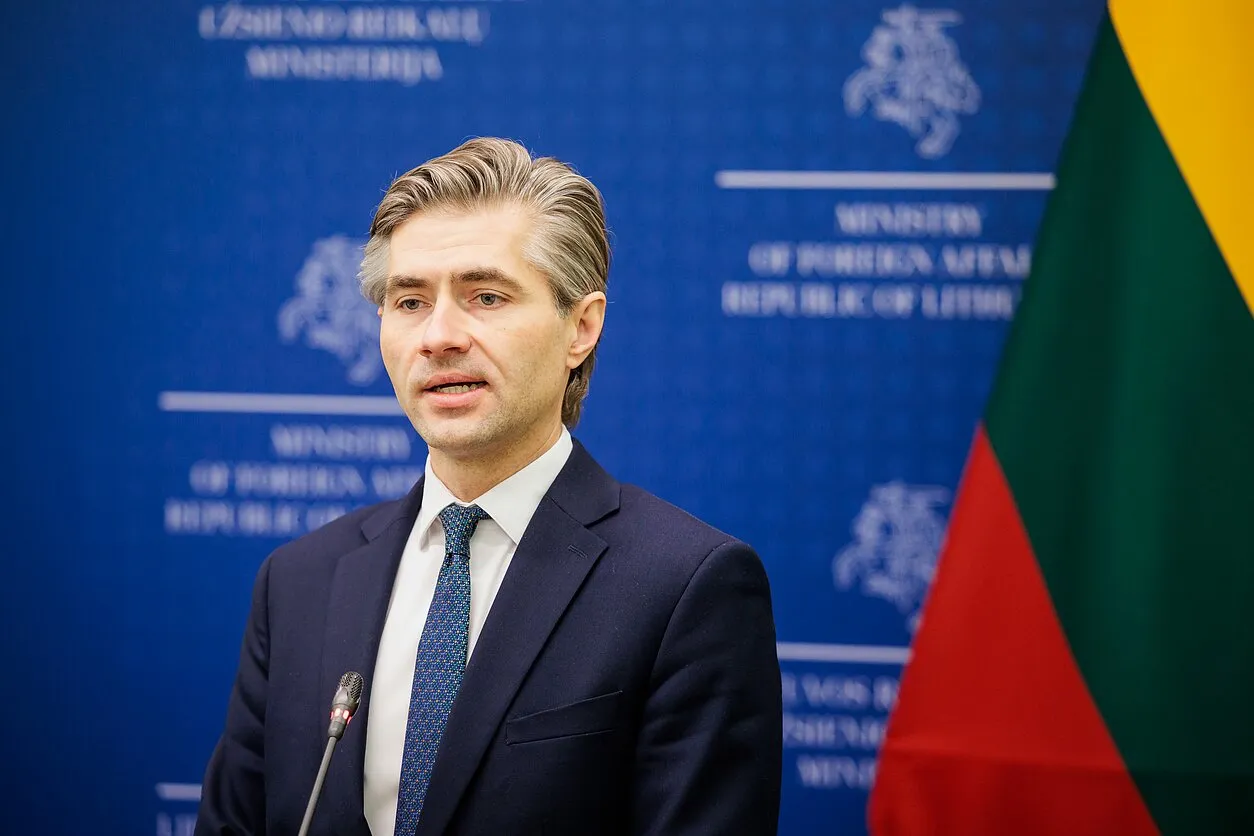
Lithuanian Foreign Minister Kęstutis Budrys stated that NATO must change its approach to such incidents and respond much more firmly. “In this particular case, NATO really should have reacted more decisively,” he said while speaking with journalists, commenting on the incident involving the Russian drone in Romania. He noted that the Alliance has already demonstrated effective responses in the past, particularly in Poland, where similar incidents were successfully “pushed back” from the border thanks to enhanced security measures.
Budris emphasized that such decisions must be made systematically—along the entire length of NATO’s borders, where there is a risk of similar incidents. He also drew attention to the role of the European Union, which, in his view, has broader financial and technical capabilities to respond. This includes, in particular, the development of anti-drone systems, the strengthening of defense mechanisms, and the enhancement of the resilience of European countries’ infrastructure.
The Lithuanian minister emphasized that the response does not necessarily have to be a military escalation, but it must be felt by Russia. “We have the opportunity to show that this comes at a certain cost. Not necessarily by striking back, but by increasing the number of fighter jets, intensifying patrols, and applying pressure directly at the border. That is exactly how we must respond,” Budrys noted. Among the key proposals are increasing the number of fighter jets patrolling the airspace, as well as strengthening NATO’s military presence on the eastern flank.
The Lithuanian minister’s statements came amid a new incident involving a Russian drone in Romania, which has once again intensified the debate within NATO over exactly how the Alliance should respond to such provocations. In Vilnius, officials believe that the time for “soft responses” is gradually running out, and allies must move toward a clearer and swifter reaction to airborne threats.
Video: Russiandrone crashes into a residential building in Romania.
During the Russian strike on the Odesa region on April 25, Russian drones were moving along the border with Romania. British aircraft patrolling Romanian airspace tracked their routes. Later, drone debris was found in border areas of Romania.
The Romanian Ministry of Foreign Affairs summoned the Russian ambassador over the incident involving a drone crash near the city of Galați.


