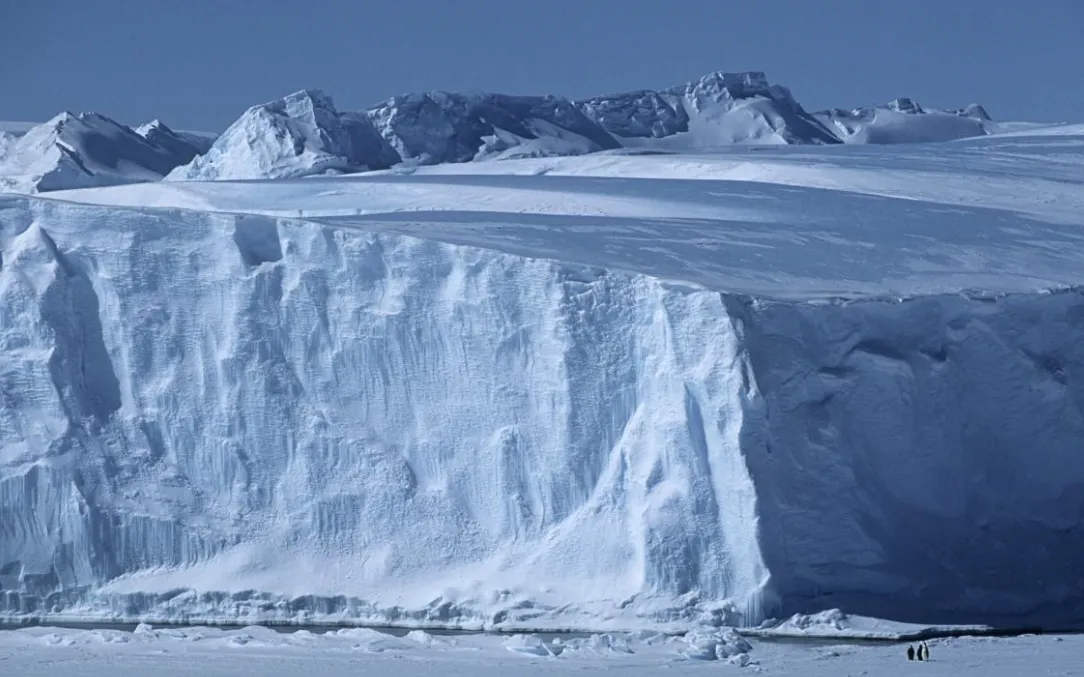
The Thwaites Glacier in Antarctica, nicknamed the "Doomsday Glacier," is rapidly losing stability and could lose its entire ice shelf. Scientists warn that this could significantly accelerate the rise in global sea levels.
New satellite observations have detected massive cracks in the eastern Thwaites Ice Shelf, which holds back one of the largest ice sheets in West Antarctica.
Marine geophysicist Robert Larter stated that the ice shelf is effectively “ready to collapse.”
“We don’t know exactly how it will happen, but it will definitely disappear,” the scientist said.
Thwaites is considered one of the most dangerous glaciers on the planet. It is roughly the size of the U.S. state of Florida, and the ice thickness in some places exceeds two kilometers.
Scientists warn that the complete destabilization of the glacier could raise global sea levels by about 65 centimeters, posing a serious threat to coastal cities around the world.
In addition, Thwaites holds back other glaciers in West Antarctica, so its collapse could trigger a more widespread melting of the ice sheet.
Researchers note that the glacier has been actively melting since the 1980s due to warm ocean waters eroding its base. Since 1992, Thwaites has already retreated by approximately 20 kilometers.
According to a study published in the journal Geophysical Research Letters, by 2067 the glacier could lose up to 200 billion tons of ice annually.
Scientists attribute the accelerated melting of the glacier to climate change and emphasize that past a certain point, this process will become irreversible for thousands of years.
Environmentalists explained the appearance of feral cows in Chernobyl.
As a reminder, the previous owners—Odarka and Hrytsyk—returned on April 5–6 to the nest in the Pyriatyn National Nature Park, where a new pair of storks—Kvitka and Lel—had formed on April 2.