
Israeli Education Minister Kish asks court to preserve proportional funding for ultra-Orthodox schools
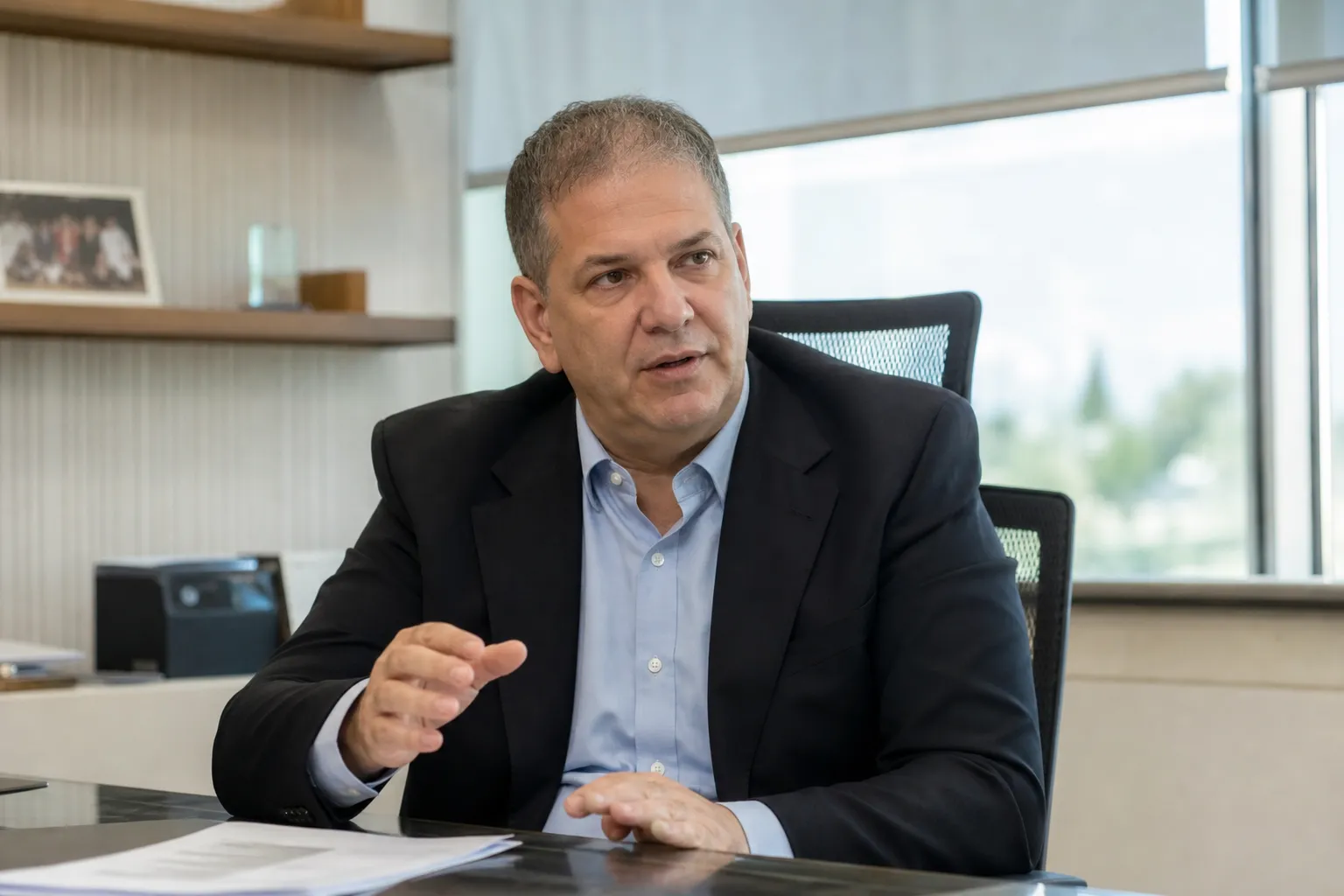
Israeli Education Minister Yoav Kish has asked the High Court of Justice to preserve a system of proportional state funding for ultra-Orthodox schools based on the extent to which they teach core subjects. He also asks the court to revoke its requirement for the government to justify this policy and dismiss a petition by Hiddush — For Religious Freedom and Equality, The Jerusalem Post reports.
Terms of state funding
The dispute concerns hundreds of schools in the Independent Education Center and Ma’ayan Hahinuch Hatorani Bnei Yosef networks, affiliated with the United Torah Judaism and Shas parties, respectively. These institutions are recognized by the state but are not part of the public school system. A special legal provision allows the two networks to receive funding at the level of public schools, while other recognized but unofficial institutions generally receive 75% of equivalent funding.
Hiddush insists that schools can qualify for full funding only if they teach the full core curriculum, including mathematics, English, and science subjects. The petitioners argue that some schools continued to receive funds without meeting these requirements and that oversight by the Ministry of Education did not provide an accurate picture of the educational process.
Kish disagrees with this approach and defends a practice under which the amount of funding is determined proportionally to the share of the core curriculum taught by a particular school. Under this model, an institution that teaches 85% of the mandatory curriculum may receive funding at a comparable level. The minister believes that requiring full implementation of the curriculum as the sole condition for funding could prompt schools to move to educational frameworks with fewer state requirements.
More current news is available on the UA.News Telegram channel Telegram.
The court’s questions and disagreements over calculations
In February, the court ordered the government to explain why funding should not depend on the full teaching of core subjects, the availability of properly trained teachers, and participation in external assessments at a level comparable to public schools. The court also raised the issue of inspections of each school that would not rely exclusively on the institutions’ self-assessments or prearranged visits.
According to data cited by Kish, in the 2025–2026 school year, 498 of the 517 schools in the networks taught between 96% and 100% of the required core curriculum, while 476 institutions were assessed as teaching it in full. At the same time, Attorney General Gali Baharav-Miara said that the ministry’s calculation method may conceal gaps in individual subjects. In particular, schools where English or mathematics was not taught in entire classes could be classified as fulfilling more than 95% of the curriculum due to the calculation of the total number of hours by subjects and age groups.
Kish acknowledged a shortage of qualified educators but noted that a similar problem exists in public schools as well. According to his data, notices of exclusion from the networks were sent to 22 schools, and two Independent Education Center schools were subsequently moved outside the network. The court must decide whether the explanations provided are sufficient to preserve the current funding arrangement.


