
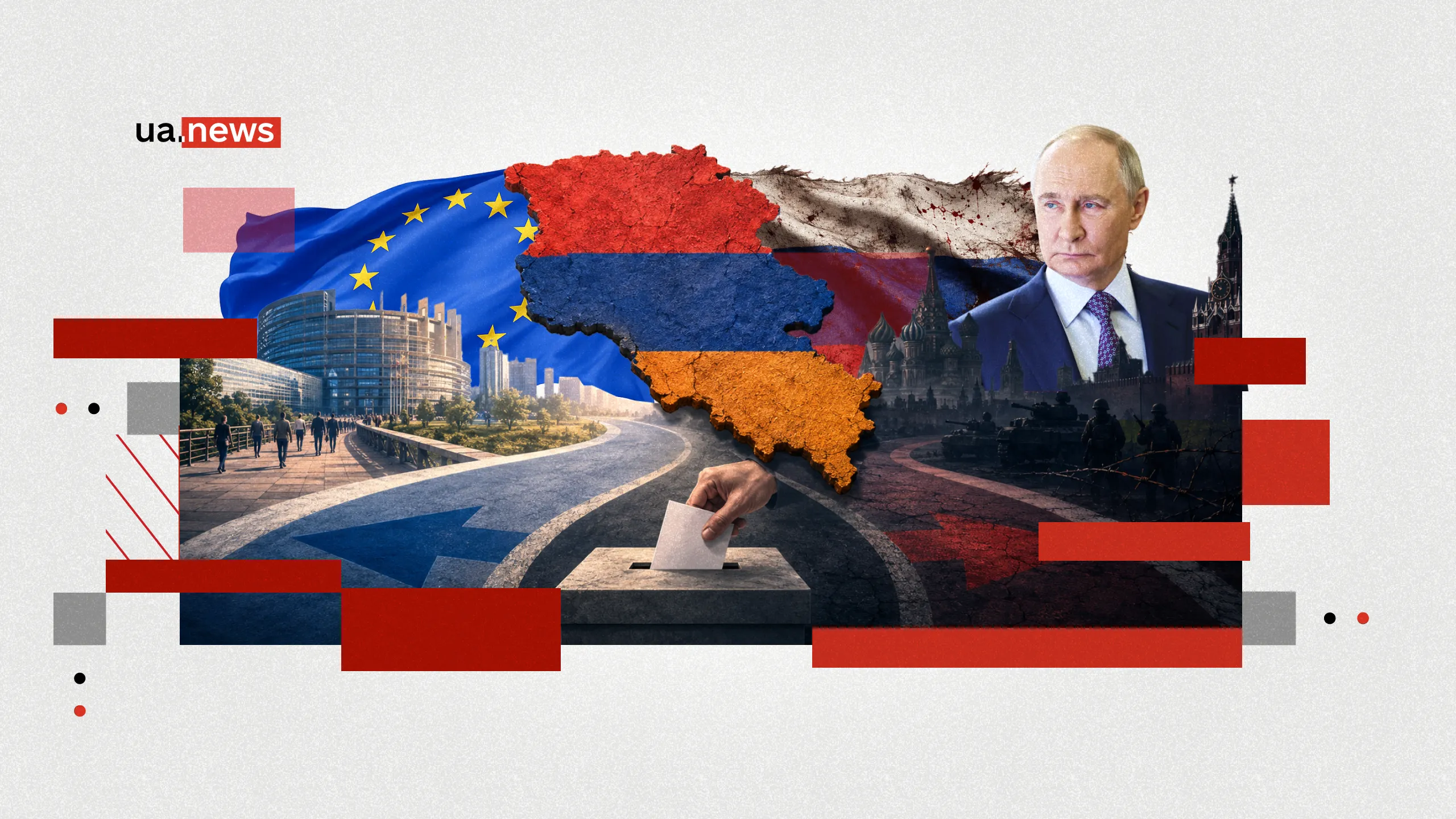
Exactly one week from now, on June 7, 2026, Armenia will make a choice that will determine its course for years to come. Next Sunday, the country is set to hold parliamentary elections, which have de facto already turned into a referendum on confidence in Prime Minister Nikol Pashinyan.
Yes, formally, Armenians will be electing deputies to the National Assembly, but everyone understands: at stake is the political survival of a man who came to power on the wave of the 2018 “Velvet Revolution,” lost the war over Karabakh, ceded territory, fell out with Moscow, and now promises the nation a “new European future.”
Will voters believe this? And will external players allow Pashinyan to win? UA.News political analyst Mykyta Trachuk, together with experts, examined the issue.
Balance of power: three opposition leaders against “spies”
In the previous 2021 elections, Pashinyan’s “Civic Contract” party triumphantly secured a constitutional majority: 71 seats out of 107. Today, no pollster would dare guarantee a repeat of that result. The range of figures in pre-election polls resembles data not just from different centers of power—but from different planets.
Surveys affiliated with pro-government structures paint a picture of a confident victory for the ruling party: the “Civic Contract” rating allegedly reaches 60% and higher. In contrast, independent polling firms, including the local Gallup office, report the ruling party’s support falling below 30%. In this scenario, the combined total of the three main opposition forces clearly outnumbers Pashinyan’s supporters.
Who are these three forces? Pashinyan himself rather comically dubbed them the “three-headed party of spies” and openly accuses them of working for the Kremlin and Russian interests. These are:
- The “Armenia” bloc led by former President Robert Kocharyan. Kocharyan is a native of Karabakh, a war veteran, and a figure whom people in Yerevan refer to as a representative of the “Karabakh clan.” For his electorate, he is a symbol of revenge and an uncompromising stance toward Azerbaijan.
- “Prosperous Armenia” led by Hagik Tsarukyan. He is a populist politician, owner of the country’s largest media holding company and an exotic zoo with lions. Tsarukyan embodies the old oligarchic order that Pashinyan promised to destroy but ultimately failed to do so.
- The “Strong Armenia” bloc led by billionaire Samvel Karapetyan. A billionaire who made his fortune in Russia through real estate development, he has long stayed out of public politics. His decision to head the electoral list is something of a sensation in this campaign. It is Karapetyan, with his resources and
connections in Russia, who is considered the “dark horse” capable of drawing in the protest electorate that trusts neither Kocharyan nor Tsarukyan.
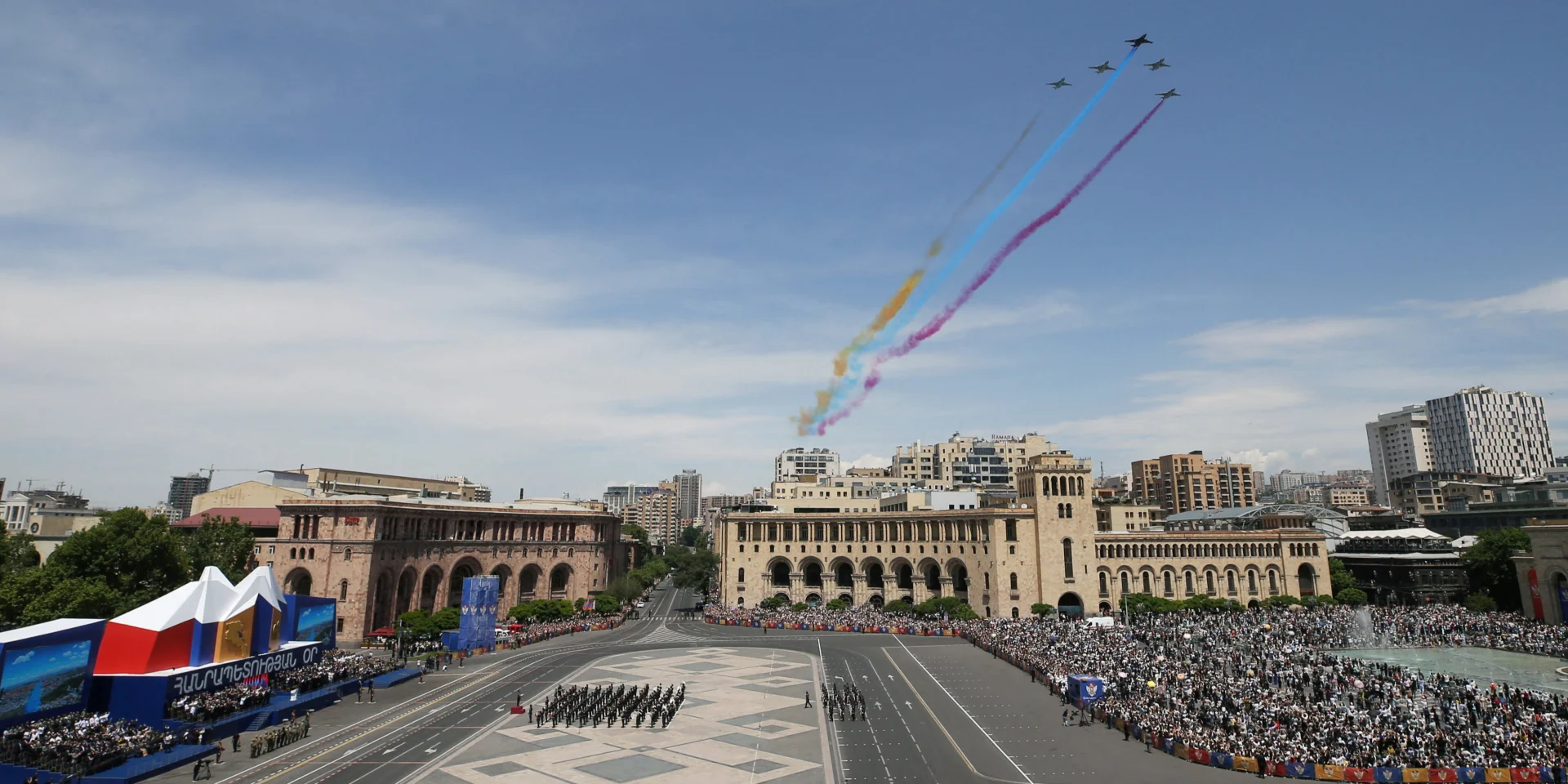
Election Fervor: Lions, a “Fatal Mistake,” and Threats from Baku
The intensity of this year’s campaign is off the charts. When Pashinyan once again called the opposition “spies,” Tsarukyan, known for his lack of inclination toward diplomatic phrasing, even released a meme:
“If Pashinyan can’t prove it (that the opposition is working for the Kremlin—ed.), then he should come and climb into the cage with my lion. And not with a female, but specifically with a male!” Tsarukyan declared.
However, all of this is merely public rhetoric and hate speech: there is plenty of such “goodness” in any election campaign. In substance, the lines of confrontation run along several political “tectonic fault lines.”
And first and foremost is Karabakh: the main wound of the Armenian nation, which is still bleeding. Three years after Azerbaijan’s 2023 blitzkrieg, which put an end to the existence of the self-proclaimed republic, Pashinyan made a series of statements that a significant portion of society perceived as a slap in the face to the souls of the fallen. For instance, he initially called the Armenian movement for Karabakh a “fatal mistake,” and then added that this territory had never historically belonged to the Armenians. And recently, he went so far as to claim that the topic of the 1915 genocide was deliberately exaggerated by the Soviet authorities and the KGB to sow discord between Armenians and Turks.
Of course, such a view of history has a right to exist—though it seems rather strange coming from the leader of the Armenian state. But for a people whose identity has been built for decades around the tragedy of the genocide and the struggle for Karabakh—where nearly every family has lost loved ones in both wars—such words are not merely a political miscalculation, but a genuine insult. To put it in perspective: it’s as if a Ukrainian politician were to declare that the struggle to restore the 1991 borders was a fatal mistake, that Crimea and Donbas are not Ukrainian territory and never were, and that the Holodomor and Stalinist repressions were hyped up by the CIA to drive a wedge between Ukrainians and Russians.
So it is entirely expected that the opposition is now accusing Pashinyan of betraying national interests, conspiring with “historical enemies”—Turkey and Azerbaijan—and persecuting the Armenian Apostolic Church. But the prime minister’s own logic is different: Yerevan lost the war due to insufficient support from Russia, and therefore it is necessary to urgently resolve all disputes with neighbors, make peace, and open the path to European integration—the only guarantee of security and development, in his view. It’s a rather strange “cocktail” of statements and policies, but this is exactly how Pashinyan sees the situation as it stands.
Opponents, however, respond to the prime minister’s views by noting: Azerbaijan and Turkey will never become Armenia’s friends, and unilateral concessions only whet Baku’s appetite for a military seizure of the “Zangezur Corridor”—the Syunik region, which separates mainland Azerbaijan from its exclave of Nakhchivan—and perhaps other territories as well. A statement by Azerbaijani President Ilham Aliyev last week, which was also picked up by Armenian opposition figures, was particularly telling.
“We know that in Armenia’s political sphere there are still circles driven by hatred toward the Azerbaijani people and state, and if they come to power, it is the Armenian people who will suffer,” Aliyev stated.
The Azerbaijani president makes it clear: Pashinyan is a “convenient” partner who handed over Karabakh almost without a fight, and in theory, one can negotiate further concessions with him. The rise to power of revanchists led by Kocharyan, however, would mean a new confrontation and the risk of yet another war with unpredictable consequences.

The Russian Factor: An Ultimatum a Week Before the Election
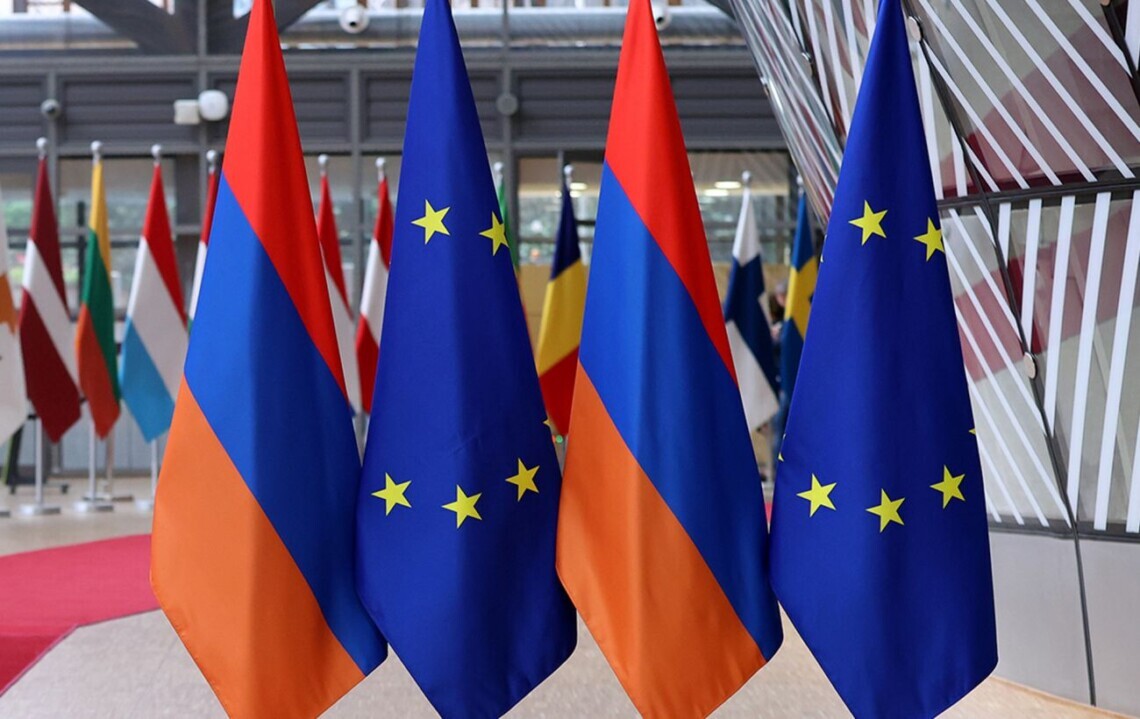
Perhaps the most pressing issue of this election campaign has been the serious deterioration of relations with Russia. Pashinyan’s rhetoric about a course toward European integration—despite the fact that the country remains a member of the Eurasian Economic Union (EAEU)—has clearly infuriated the Kremlin.
Putin’s message was extremely simple: membership in the EAEU and a course toward EU accession are incompatible. If you want to join Europe, leave the union—and lose preferential gas prices, access to the Russian market, and billions in remittances from migrant workers. This was not just a signal, but an ultimatum and even a threat from Putin, deliberately voiced a week before the vote. In particular, the Russian dictator stated that the “crisis in Ukraine” also began with the desire to join the EU, as if hinting at what might happen to Armenia as well.
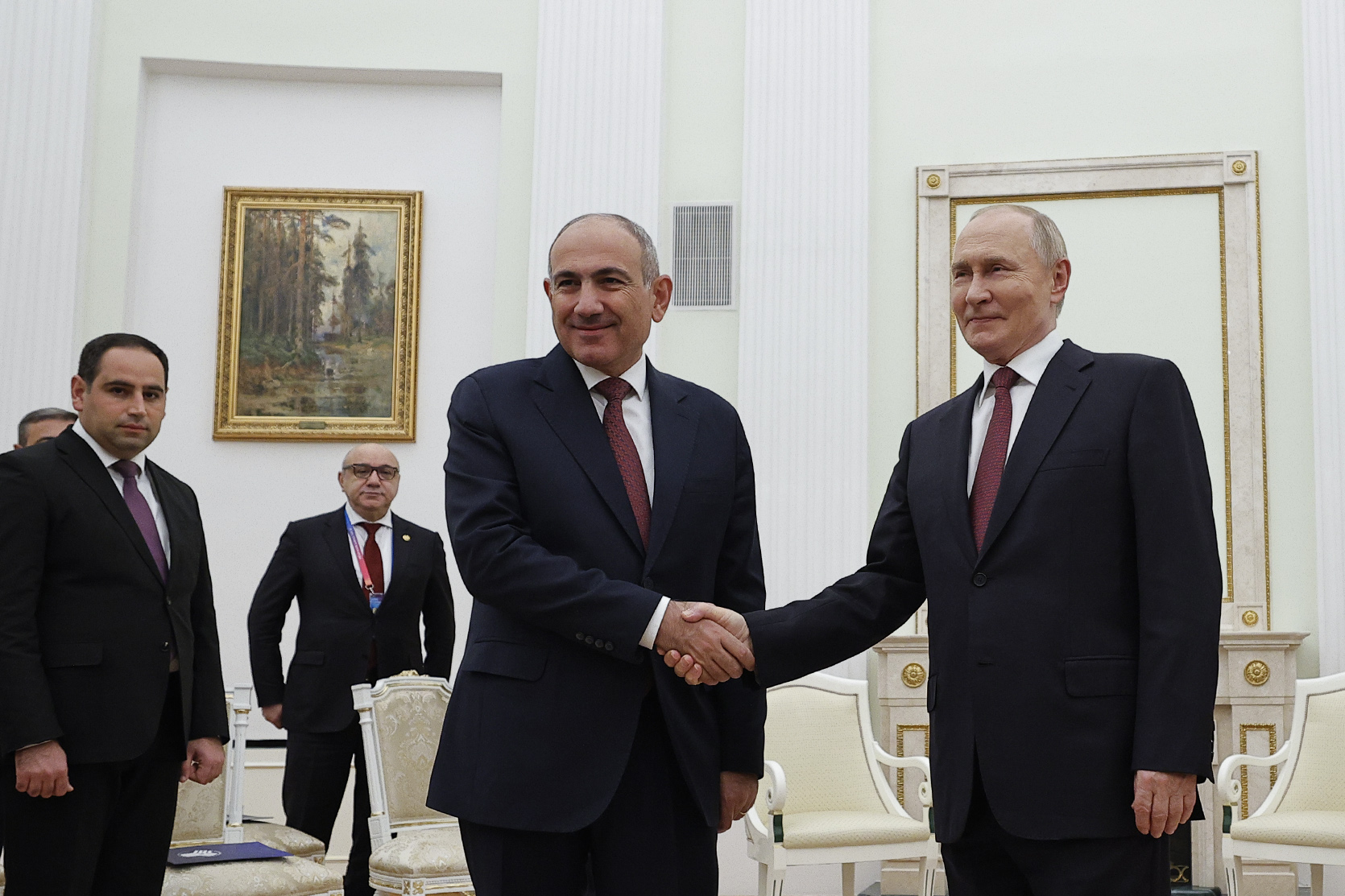
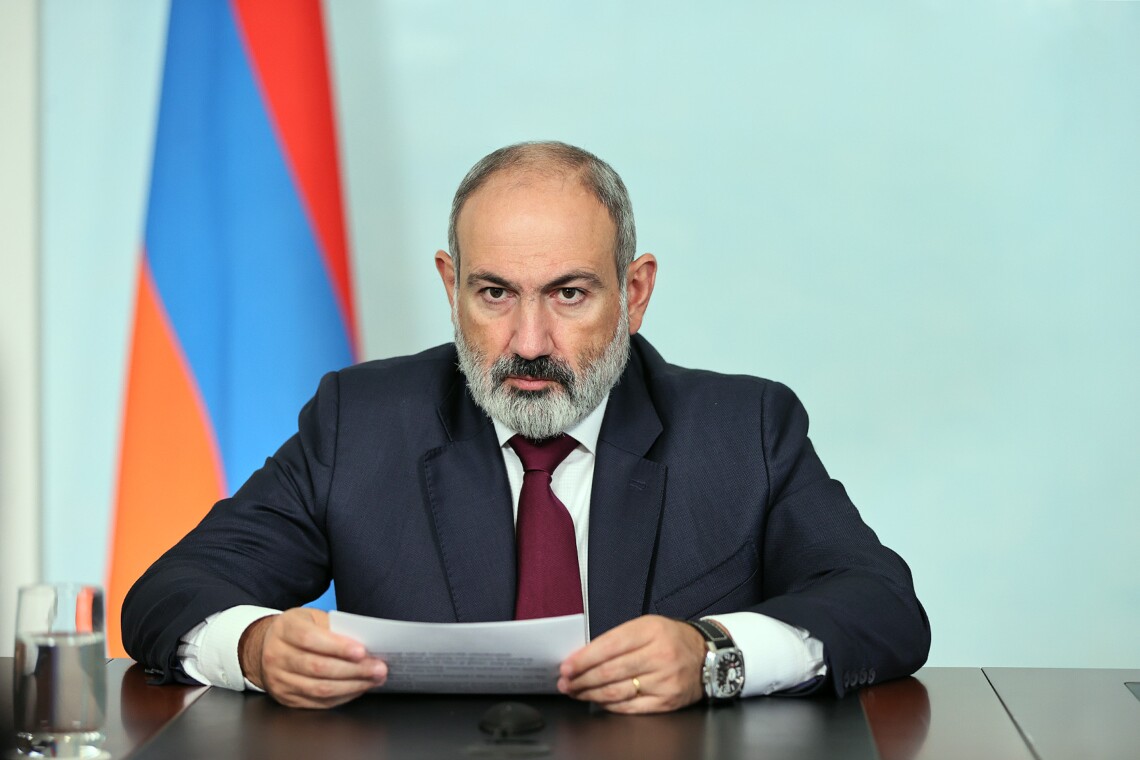
Yerevan’s reaction was frankly bewildered. Pashinyan himself, who usually doesn’t mince words, has yet to comment directly on the statement, limiting himself to euphemisms and generalities. Instead, Deputy Prime Minister Mher Grigoryan offered an evasive explanation: he said that Armenia would consider the choice between the Eurasian Economic Union and the European Union “when the issue comes to a head,” and that for now, Yerevan would not initiate a withdrawal from the union. This, it seems, is Pashinyan’s strategy—to try to sit on two chairs, publicly declaring a European choice while appealing to the West, and at the same time maintaining the economic “umbilical cord” that ties Armenia to Russia.
The Kremlin has seen through this game and decided to strike at the most vulnerable spot. Armenia is indeed critically dependent on Russia economically. Countless Armenian families rely on remittances from migrant workers in Russia. The Russian market is the main destination for Armenian exports. Cheap gas is the foundation of energy security. In such a situation, any foreign policy maneuver becomes complicated.
This play of the Moscow card has a double bottom. On the one hand, Pashinyan’s team is cleverly using pressure from Russia to consolidate its own electorate: look, the prime minister is suffering at the hands of Moscow because of our European choice, so let’s rally around him. On the other hand, a significant portion of the business community and ordinary citizens, whose well-being is directly tied to Russia, are just as frightened by the prospect of a rupture as they are by Putin’s pressure and veiled threats. That is precisely why Pashinyan’s reluctance to give a clear answer to the Kremlin’s ultimatum speaks volumes: this issue is extremely uncomfortable for him. Moscow, meanwhile, will obviously continue to hammer this point home in the days leading up to the vote, hoping to pull away from the prime minister precisely that segment of voters who are still undecided.
Trump, the EU, and the Western Factor
There is another geopolitical dimension to this story: the EU and the US have unequivocally supported Pashinyan. In a personal call, Donald Trump assured the prime minister of “unwavering support for the democratic choice of the Armenian people.” Brussels also issued a statement calling the upcoming elections “a historic opportunity for Armenia to cement its place on the European path.” This unprecedented synchronization of signals from both sides of the Atlantic underscores that the West has staked its hopes on keeping Pashinyan in power, seeing him as a tool for finally pulling Armenia out of Russia’s orbit.
But there is a trap here. In the eyes of the opposition and a significant portion of voters, the overt interference of external forces in the campaign—whether Aliyev’s threats, Putin’s ultimatum, or statements from Brussels and Washington—only confirms the thesis of a lack of independence. Armenia risks becoming a battleground for foreign geopolitical ambitions, where the voice of the people becomes a bargaining chip.
What might the scenarios be? A week before the vote, three possible outcomes are clearly taking shape.
Scenario one: a decisive victory for the “Civic Contract.” If we are to believe the polls, which are optimistic for Pashinyan, his party will once again form a single-party majority. In that case, the prime minister will receive a free hand to continue his course: accelerated European integration, a final peace settlement with Azerbaijan on Baku’s terms, and a gradual distancing from the CSTO and the EAEU while simultaneously attempting to preserve the economic benefits of cooperation with Russia. However, the stability of such a course is questionable: Moscow will not allow itself to pretend to be an ally for long, and the West will not want to support indefinitely a country that is hooked on the Kremlin’s “gas needle.”
Scenario Two: Victory for the opposition coalition. Collectively, the three opposition forces could secure a majority of seats. However, forming a coalition between Kocharyan, Tsarukyan, and Karapetyan is a tall order. Even if they manage to agree on anything, such an alliance would remain unstable due to the politicians’ differing views and ambitions.
Scenario Three: A “hung” parliament and a political crisis. In this scenario, no single force secures a clear majority, coalition talks reach an impasse, and the country descends into internal strife. This scenario is the most dangerous: external actors gain a window of opportunity to destabilize the situation, the economy collapses, and society splits apart.
Expert Opinions
Political scientist and director of the Institute of World Policy Yevhen Magda believes that the parliamentary elections in Armenia are very important for the Kremlin. And, most likely, they will mark yet another defeat for Moscow.
“Nikol Pashinyan’s chances of retaining the prime minister’s post are quite high. He is also, among other things, demonstrating a desire to be a new partner of the European Union. In this case, the EAEU has already adopted a decision aimed at forcing him to take a different course. But I would put it this way: as of today, we see a situation in Armenia where the election context is very simple: it’s either Pashinyan or the pro-Russian candidates. Russia will try to exert influence and may attempt to destabilize the situation in Armenia. But this will not be effective, because Pashinyan now fully controls law enforcement agencies and will be able to repel such attempts,” noted Yevhen Magda.
Political analyst and director of the Ukrainian Institute of Politics Ruslan Bortnik believes that Pashinyan has a 90% chance of winning the election, and his party will take first place in these elections. There is also a fairly high probability that it will secure a majority of the votes—though this is less certain than simply winning the election. There is a certain problem in that Pashinyan may not potentially secure 50+1 percent of the votes, and accordingly, a parliamentary majority could be formed by the three opposition parties currently competing against Pashinyan, though each of them lags significantly behind him.
“In other words, a victory for Pashinyan’s party—at least a tactical victory—is almost inevitable. But whether it will be able to form a government and a majority in parliament is a more complicated question. Still, Pashinyan has a good chance of this scenario unfolding. Overall, the elections in Armenia have turned into a major geopolitical battle for the Caucasus, where Russia, the West, Iran, and Turkey, along with Azerbaijan, are vying for which side Armenia will lean toward and whether it will set a precedent as the first member state of the Eurasian Economic Union and the CSTO to potentially leave these structures and join the EU. The struggle is extremely serious, and the elections are highly geopolitical.
We see that Russia has begun to resort to economic sanctions, and threats are even being made from the EAEU—not only from Moscow but also from Lukashenko. If Pashinyan does not yield to this pressure, relations with the EAEU will begin to deteriorate, which threatens military destabilization of the region, given that there is a Russian military base in Armenia. Furthermore, there is also a significant pro-Russian political opposition. Russia is also banking on the Armenian Apostolic Church. In other words, Moscow has significant footholds within Armenia, and a loss of control over these processes could escalate into a serious internal political crisis within Armenia, potentially leading to attempts to overthrow the government by force and efforts to split the country into spheres of influence… “An extremely complex situation and an extremely difficult choice for Pashinyan and for the entire Armenian people,” noted Ruslan Bortnik.

In summary, the 2026 Armenian elections are a litmus test for the entire post-Soviet geopolitical landscape. On one side of the scale lies a model of gradual integration into Euro-Atlantic structures, accompanied by a severing of historical ties with Moscow, painful concessions to neighbors, and an attempt to build a national project based on new values. On the other—a return to the “besieged fortress” paradigm, relying on a military alliance with Russia and permanent confrontation with the Turkic world.
For Ukraine, this experience is particularly instructive. The Armenian case is a mirror in which one can glimpse an alternative history: what happens when a country finds itself between a rock and a hard place, and its leader tries to sit on two chairs, making promises to both the West and the East, ultimately losing the trust of both. One thing is certain already: these elections will not pass peacefully—neither for Armenia nor for the entire region.


