
Rare pigeon photographed in Philippines for first time in two decades
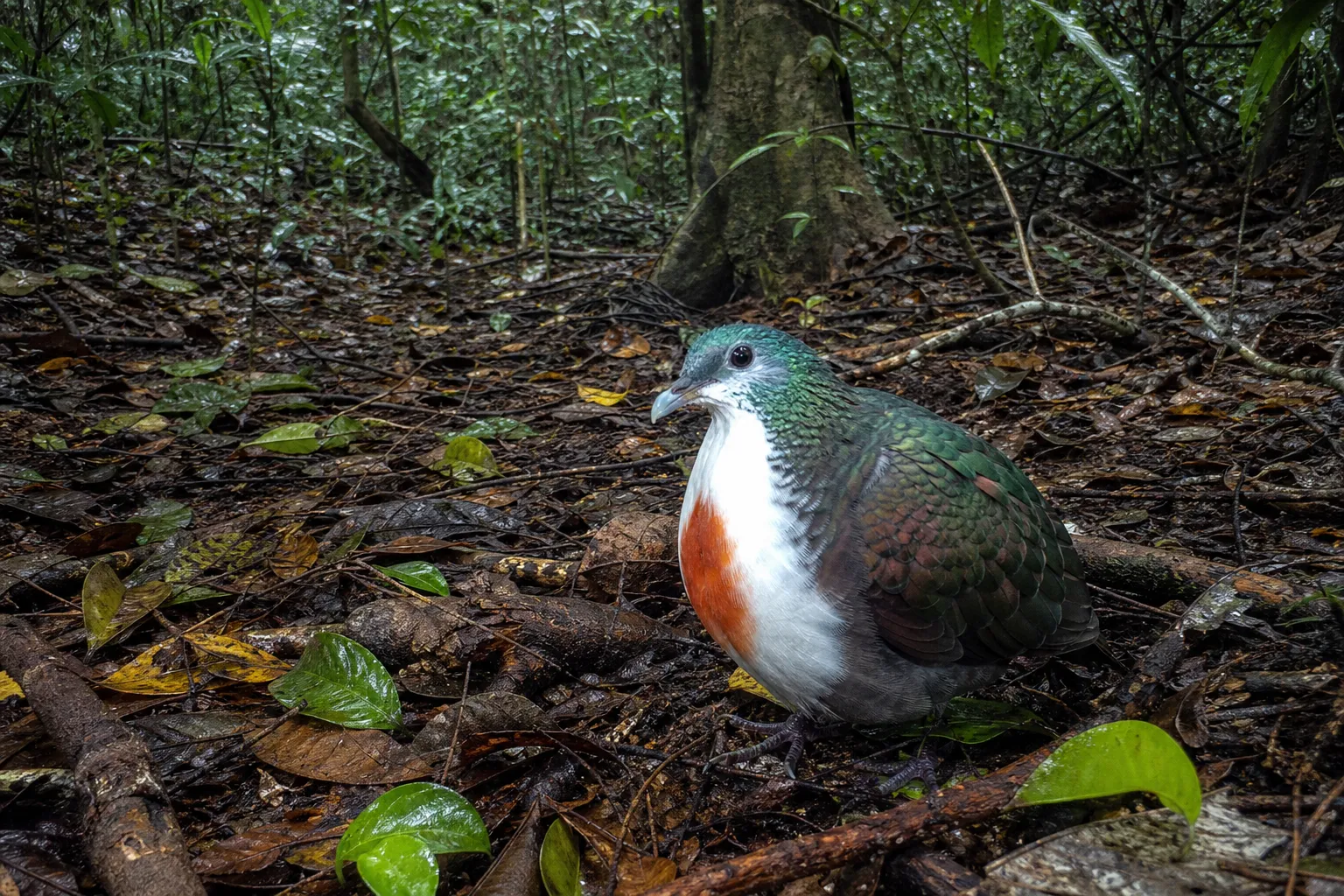
On the Philippine island of Mindoro, a camera trap recorded the Mindoro bleeding-heart pigeon, Gallicolumba platenae, which is classified as critically endangered. The image was taken in August in the tropical forest of Puerto Galera; it is the first confirmed photograph of the bird in two decades, Mongabay reports.
The cameras were installed by specialists from the conservation organization Center for Conservation Innovation Ph Inc. together with forest patrol members from the Indigenous Iraya-Mangyan people. The bird’s identification was independently confirmed by ornithologist Juan Carlos Gonzalez of the University of the Philippines Los Baños and Alex Berryman of BirdLife International.
Species characteristics and rare encounters
Scientists identified the Mindoro bleeding-heart pigeon by the orange-red patch on its white breast, the iridescent green coloration of its head and neck, and its blue-green and brown upperparts. The species is also characterized by brown wings with a single whitish stripe.
This ground-dwelling pigeon is endemic to Mindoro. In the past, it was described as a common species in the island’s forests, but confirmed encounters became rare in the second half of the 20th century. The last confirmed record before the current finding dated to 2005, when the bird was caught in a snare intended for red junglefowl.
More current news is available on the UA.News Telegram channel Telegram.
Due to the prolonged absence of scientifically confirmed observations, the Search for Lost Birds program included the pigeon on its list of “lost” species. On the International Union for Conservation of Nature Red List, the species is classified as critically endangered.
Finding at a higher elevation
The camera trap was triggered at an elevation of more than 900 meters above sea level. The Mindoro bleeding-heart pigeon is usually considered an inhabitant of lowland forests: it is primarily found at around 400 meters in elevation, and sometimes up to 800 meters. Gonzalez noted that the mountain range at an elevation of about 900 meters may retain moist lowland and transitional mid-montane tropical forests.
According to CCIPH researchers, the appearance of a lowland species at a higher elevation does not necessarily mean that its range is expanding: the birds may be losing suitable habitats on lower slopes, where forests are degrading as tourism develops. At the same time, a single image does not make it possible to assess the population’s size, its dynamics, or confirm the species’ breeding.
Experts called for expanding camera-trap research, conducting a comprehensive population assessment, and strengthening forest protection. Gonzalez also proposed creating a legally designated protected area for the Halcon-Malasimbo mountain range. Other proposed measures include combating illegal logging and poaching, as well as preventing pigeons from accidentally being caught in snares.


