
Archaeologists have discovered more than 450 mouse skeletons at the Sanctuary of Apollo in Crete
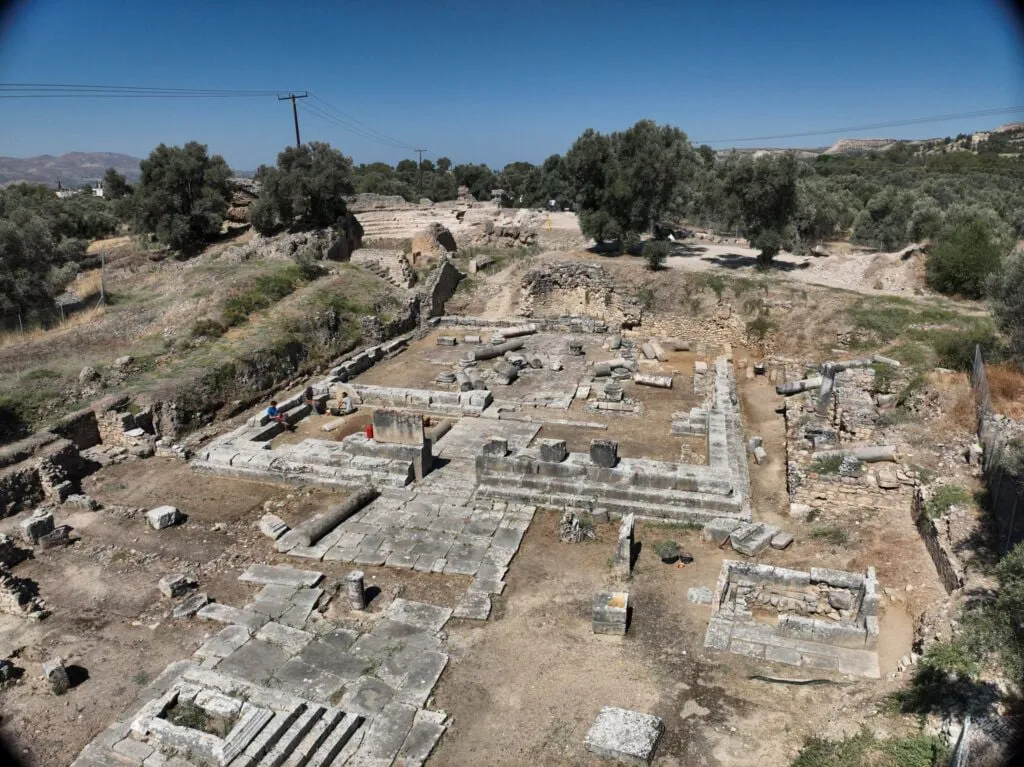
During archaeological excavations in the ancient city of Gortyna on the island of Crete, researchers discovered an unusual burial site containing the remains of more than 450 mice. The discovery was made on the grounds of a sanctuary dedicated to the god Apollo.
Scientists speculate that the large number of rodent skeletons may be linked to a previously unknown religious cult that existed on the island in the 7th century BCE. Archaeologists are continuing their research to determine what role mice may have played in ancient rituals.
The discovery points to the likely worship of Apollo Smynpheus—the so-called “Mouse Apollo.” In ancient Greek mythology, this deity was considered both the patron of epidemics and a protector against the plague carried by rodents. Previously, similar sanctuaries were found mainly in Asia Minor, where live mice were even kept under the altars at the expense of the city community.
Archaeologists note that the mass burial of hundreds of small mammals within a single ritual complex is an exceptional case for all of Greece. This indicates that Crete had its own branch of this cult—previously unknown to science—which operated in parallel with the traditional worship of Apollo Pythian.
In addition to the ritual complex, an expedition of researchers from the universities of Padua and Rome uncovered new elements of a neighboring Roman theater dating to the 2nd century CE. The researchers unearthed fragments of the stage’s monumental facade, featuring a colonnaded portico and marble decoration.
Hortyna was one of the most powerful city-states on Crete, and during the Roman Empire, it served as the capital of the entire province. It was here that the famous Gortyn Codex—the oldest fully preserved legal code in the Greek world—was once discovered.
Currently, an international team of experts is continuing to analyze the skeletal remains and architectural fragments. Researchers are convinced that these small finds will significantly change our understanding of religious life in the ancient Mediterranean.
This is stated in a report by the Italian Archaeological School in Athens.
In the Odesa region, archaeologists have uncovered Roman burials containing unique artifacts.
Previously, archaeologists determined that the kings of Urartu used bronze bowls for propaganda purposes.
As a reminder, gold jewelry dating back to before the Bronze Age Catastrophe was found in Cyprus.
Near Halych, archaeologists have found unique medieval artifacts.


