
An artifact that surprised archaeologists was discovered in the Poltava region
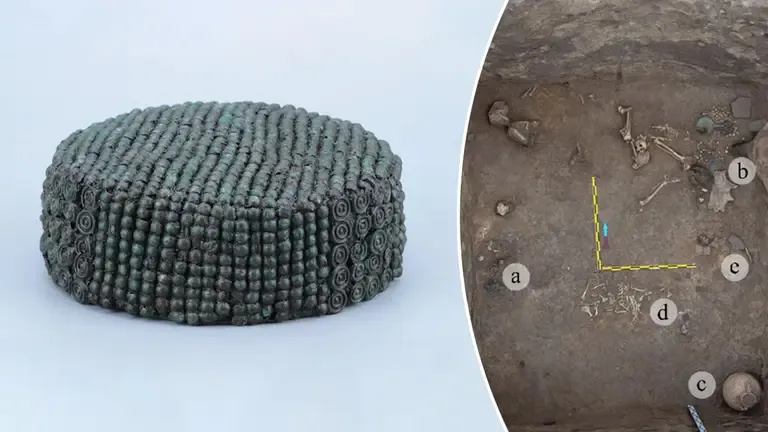
In the Poltava region, archaeologists have excavated a unique burial site from the Scythian period, where they discovered rare artifacts that were unusual for the culture of that time. A leather cap and belt, crafted using techniques typical of Central Europe, particularly caught the researchers’ attention.
Genetic studies also showed that the buried woman may have had ties to the population of the territory of modern-day Croatia. According to scientists, these findings help to better understand the migrations and contacts of peoples over 2,500 years ago.
In the Scythian necropolis of Skorobir near the Bilsk settlement in the Poltava region, archaeologists discovered a rare burial site that provided new insights into the lives of people in the 6th century BCE. Although the discovery itself was made back in 2017, the results of its detailed study and restoration have only now been made public. Inside the burial mound, researchers discovered a double burial of a man aged approximately 30–40 and a young woman between 18 and 22 years old. Despite the fact that the grave had been looted in ancient times, some of the items were still preserved.
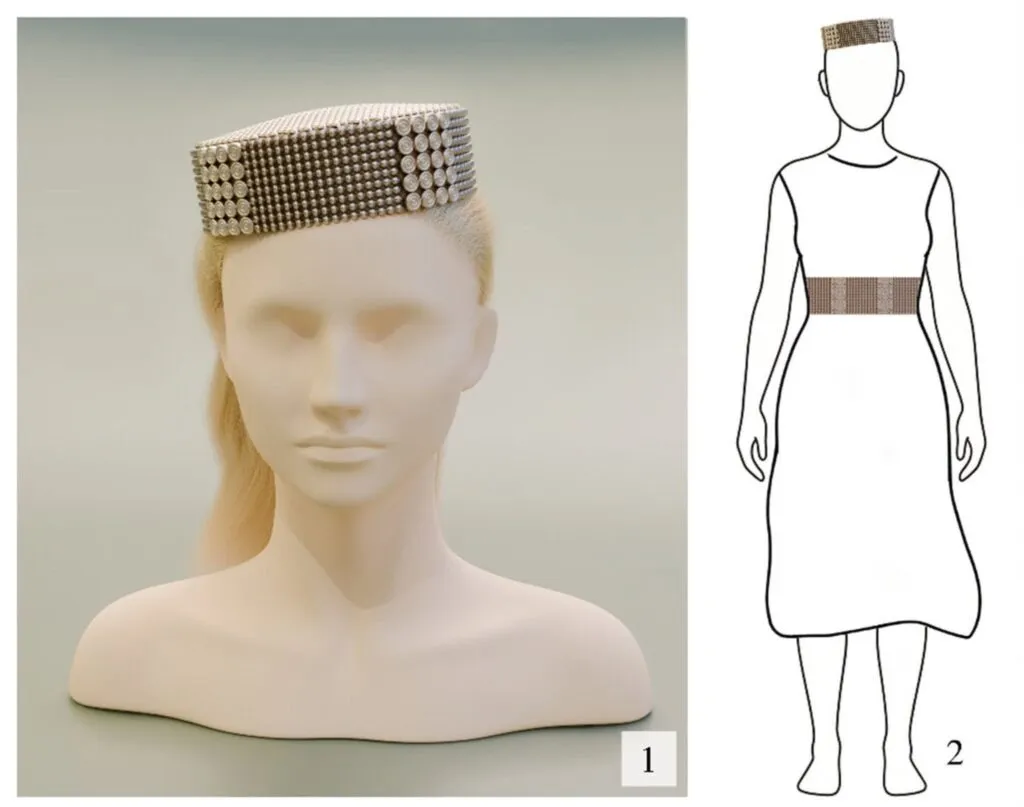
Near the woman, archaeologists found the remains of a leather cap and a belt decorated with dozens of bronze plates. The burial also contained a bronze mirror, dice, a black-polished bowl, a horn dish, and fragments of a wooden vessel. The headdress itself was one of the most unusual finds. The cap was shaped like a low cylinder with a flat top and resembled a traditional headdress known in Croatia as a “lika.”
Researchers noted that the manufacturing technique was atypical for the Scythians. Instead of gold ornaments, which were often used by members of the local nobility, the craftsmen decorated the hat with small bronze plates affixed to a leather base. Archaeologist Iryna Shramko, who published the research findings in the journal Arts, notes that similar techniques were common among the peoples of the Hallstatt culture in Central Europe. Scientists find the closest analogies to such artifacts in southern Germany and the Alpine regions.
The work to preserve the artifacts themselves proved no less challenging. Organic materials, particularly leather, very rarely survive for millennia. As soon as the objects were exposed to the air, they began to deteriorate rapidly. That is why experts removed the finds along with the soil, and restorers from the Kharkiv branch of the National Research and Restoration Center of Ukraine, Serhii Omelniuk and Volodymyr Bolotin, carried out the stabilization of the material right in the field.
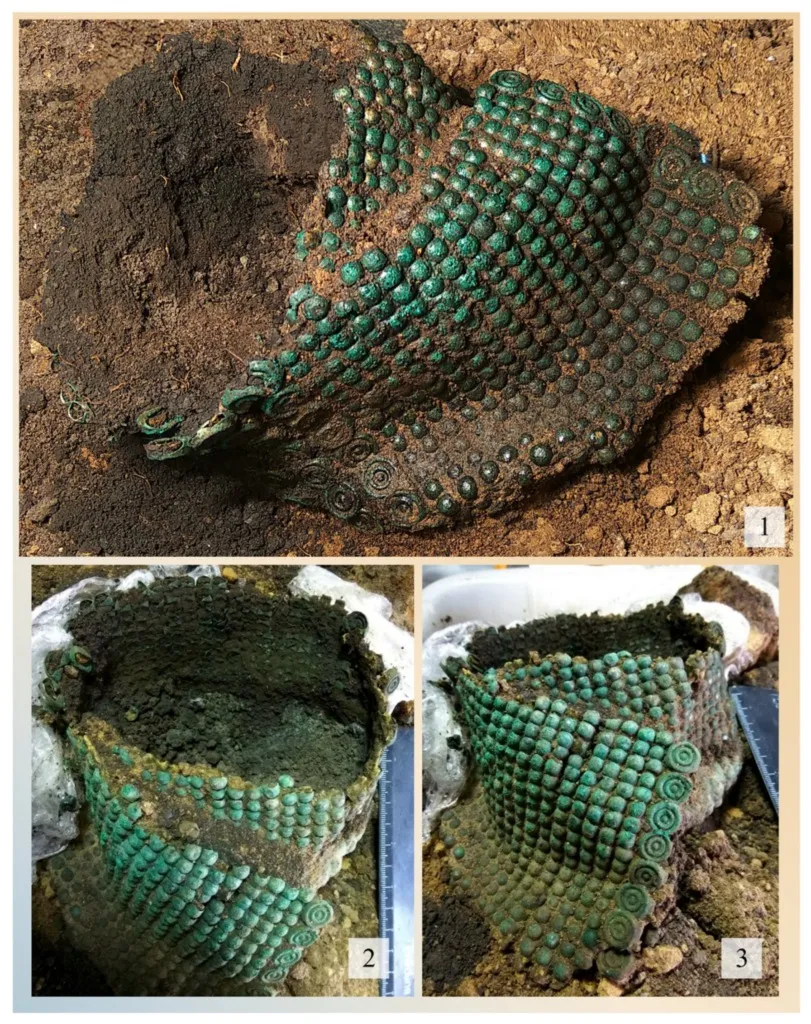
The work was extremely difficult. The leather was warped and losing its shape, but the experts managed to preserve the structure of these unique items. Genetic research yielded another important result. Scientists at the University of Tartu in Estonia analyzed the woman’s teeth and skeletal remains and concluded that she was genetically related to the population of Central Europe.
In particular, the researchers found a connection to the Japod tribes, who lived in what is now Croatia. “The discovery does not provide grounds for definitively determining the woman’s ethnic origin, but it indicates active contacts and, likely, marital ties between different regions of Europe,” the researchers note.
Scientists believe that the Bilsk settlement was not just a large settlement, but an important political and commercial center. Some historians even link it to the legendary city of Gelon, which was described by the ancient Greek historian Herodotus. The Skorobir necropolis is one of the largest burial grounds associated with this settlement. Of the more than a thousand burial mounds, archaeologists have so far excavated fewer than a hundred, but each new discovery helps to better understand the lives of people in the Early Iron Age.
Researchers note that the use of bronze instead of gold in jewelry may have had symbolic rather than material significance. Such items could have emphasized status, origin, and family traditions. In the future, the discovered artifacts are planned to be entered into the State Register of Ukraine’s National Cultural Heritage. Once all necessary procedures are completed, they are to become part of a museum exhibition in Poltava. “Each such discovery opens new pages of history and shows how close the ties between the peoples of Europe were even thousands of years ago,” the researchers emphasize.


