
Possible evidence of psychoactive seed use 25,000 years ago found on Sulawesi
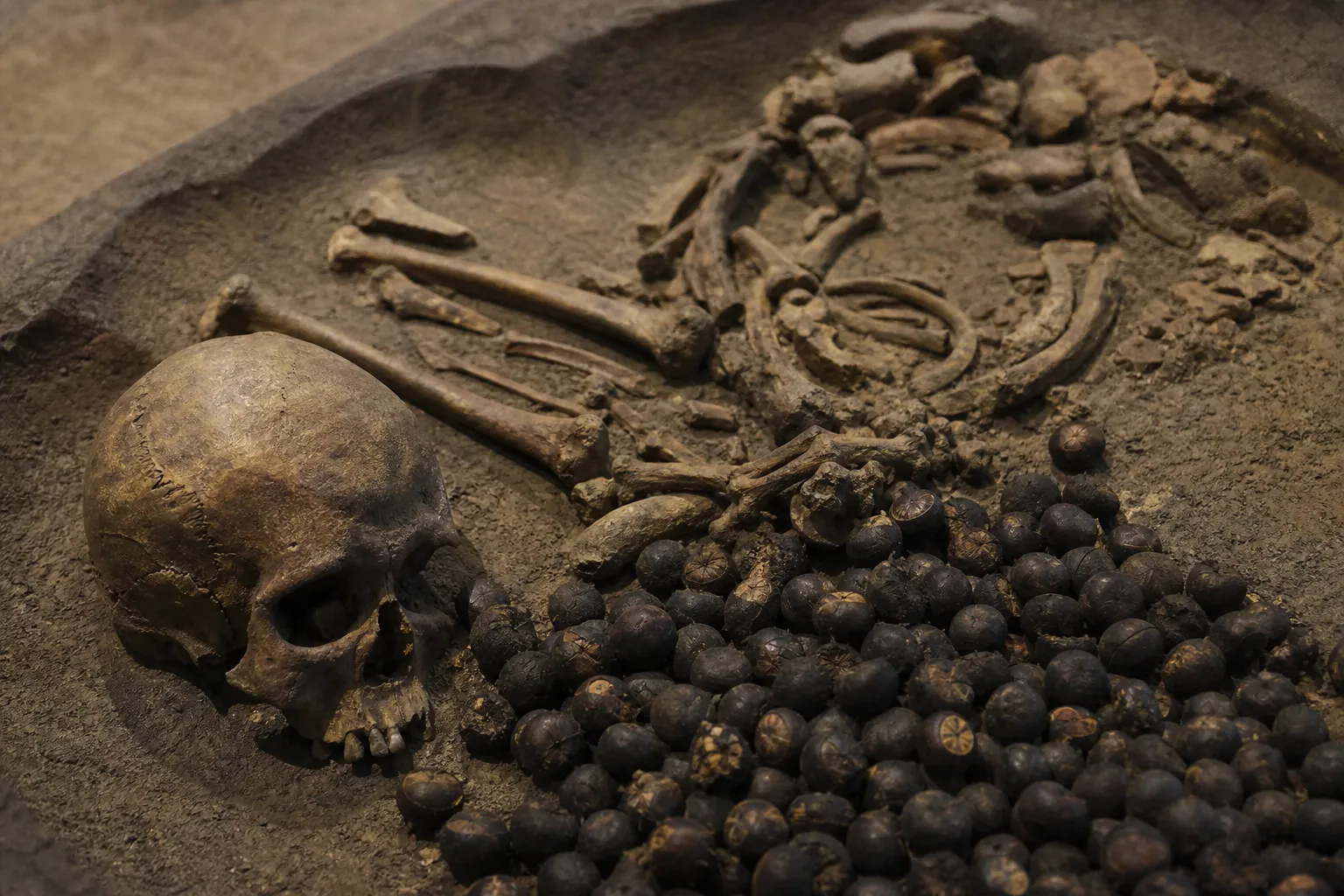
On the Indonesian island of Sulawesi, researchers have found evidence that may be the oldest known proof of humans using psychoactive plants. An analysis of two skeletons of people who lived before the emergence of agriculture showed significant tooth wear and the presence of arecoline in dental tissues — a psychoactive compound contained in the seeds of the Areca catechu palm. According to The Guardian, one skeleton was dated to approximately 7,000 years ago, while the other dates to between 16,000 and 25,000 years ago.
Grooves on the teeth
Scientists who published the work in the journal Science Advances examined the remains of two adults found in different locations on Sulawesi. Their teeth had deep rounded grooves; some were so deep that they could have exposed the dental pulp.
Professor Adam Brumm of the Australian Research Centre for Human Evolution at Griffith University suggested that such marks may have resulted from the prolonged movement of hard, round and abrasive objects in the mouth. The researchers linked the pattern of tooth wear to the possible regular sucking of areca seeds, often called betel nuts.
More current news is available on the UA.News Telegram channel Telegram.
Arecoline in dental tissues
Betel nuts are actually the seeds of the areca palm, and received their name because of the widespread practice of wrapping them in betel leaves for chewing. Today, the seeds are usually chewed mixed with slaked lime, which is made, among other things, from ground burnt shells. This mixture enhances the release of the psychoactive substance.
To test this version, the team soaked areca seeds in artificial saliva. The liquid quickly developed a concentration of arecoline capable of producing a psychoactive effect, although weaker than when chewing. An analysis of the teeth of ancient Sulawesi inhabitants also found traces of this substance in their tissues.
According to the researchers, people may have sucked areca seeds before discovering that mixing them with slaked lime enhanced their effects. Brumm also suggested that this practice may have been used as a traditional remedy for toothache, although prolonged sucking of hard seeds could have damaged teeth even further. Elisa Guerra-Doce, a researcher of European prehistory, called the findings direct evidence of the antiquity of human use of psychoactive plants.


