
NASA is testing the X-59 experimental aircraft for quiet supersonic flight
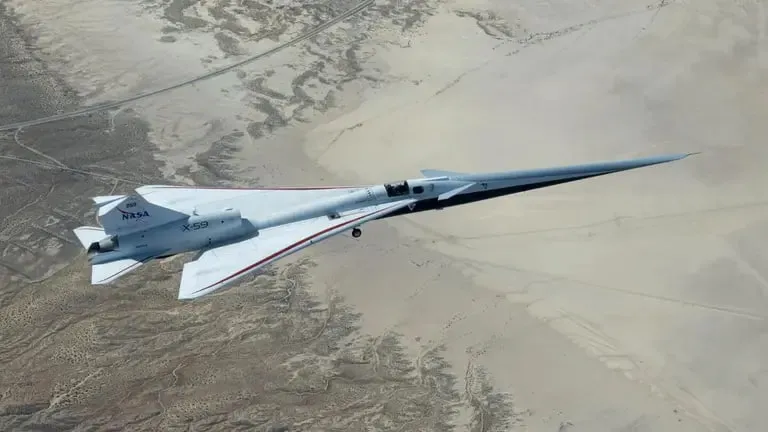
NASA has begun testing the new X-59 experimental aircraft, which is designed to make supersonic flights significantly quieter. These are the first developments of this kind since the end of the Concorde era.
The main goal of the project is to eliminate the loud sonic boom that typically occurs when breaking the sound barrier. If successful, the technology could pave the way for commercial supersonic flights without the characteristic loud “boom.”
How did the designers tame the sonic boom?
When a conventional aircraft breaks the sound barrier, the air waves in front of it compress and merge into a single powerful shock wave. On the ground, this feels like an extremely powerful explosion measuring about 110 decibels—louder than a rock concert.
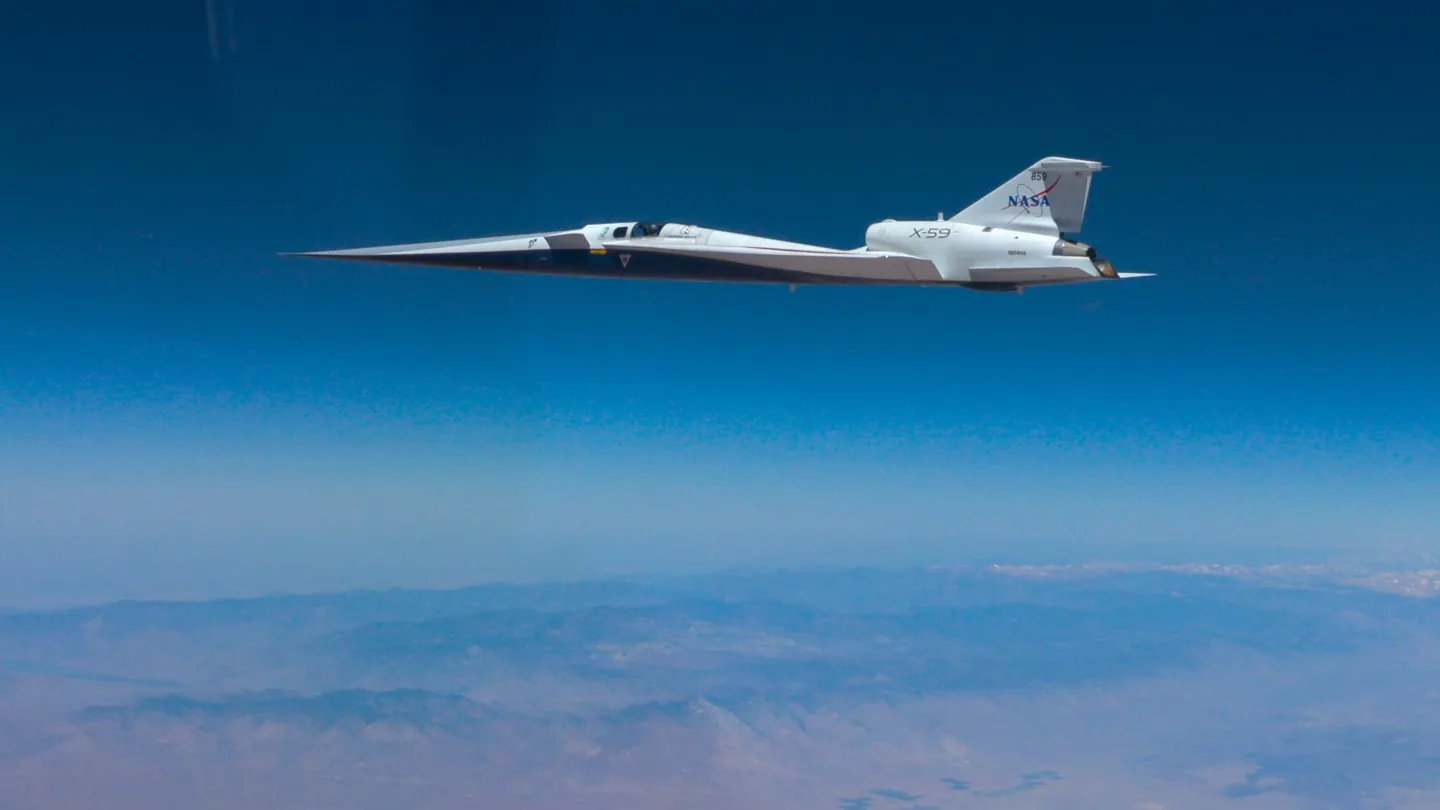
The Lockheed Martin X-59 Quest (Quiet SuperSonic Technology) experimental aircraft features a unique aerodynamic design. Its fuselage is 30 meters long, with nearly a third (14 meters) consisting of an ultra-thin nose. This design literally disperses the shock waves, preventing them from merging. As a result, the noise level on the ground is reduced to a safe 75 decibels.
How did the first historic flight go?
The historic test took place on Friday, June 5, 2026. Test pilot Jim “Clue” Less took the aircraft into the air from Edwards Air Force Base in California. The flight lasted 81 minutes over the Mojave Desert.
During the tests, the aircraft climbed to an altitude of 13,200 meters and successfully reached a speed of Mach 1.1 (approximately 1,150–1,300 km/h). An F-15 fighter jet accompanied the X-59 in the sky. It was equipped with a special probe that measured the characteristics of the shock waves generated.
Why is the X-59 called the “Frankenjet”?
The development of the aircraft under a 2016 NASA contract with Lockheed Martin Skunk Works cost $247.5 million. To save money, engineers assembled the aircraft using parts from other well-known models, which is why it was dubbed the “Frankenjet.”
Due to the specific geometry of its long nose, the cockpit has no windshield at all. Instead, visibility is provided by the eXternal Vision System (XVS), which transmits high-definition images to a display in front of the pilot.
Experimental aircraft are usually built on the principle of “making do with what’s available”—using parts from other aircraft just to demonstrate a single technology. “We need to prove this, too, but at the same time, we need a reliable aircraft that can fly across the country and collect data,” explained pilot Jim Less.

When will supersonic flights become commonplace?
The path to commercial use of the technology will be gradual:
- The X-59 made its first flight back in October 2025, after which it underwent 14 subsonic tests.
- The next stage involves flights at 1.4 Mach (1,490 km/h) at an altitude of 16.7 kilometers.
- In the final tests, the aircraft is scheduled to reach a maximum speed of Mach 1.6 (about 1,960 km/h).
- By the end of 2026, NASA plans to begin flights over populated areas in the U.S. to gather public feedback on noise levels.
Experts will submit the collected data to the International Civil Aviation Organization (ICAO). The lifting of the ban on supersonic flights over land—which the FAA imposed back in 1973 due to public complaints—is not expected until at least 2030.
Who else is vying for the supersonic skies?
Meanwhile, another ambitious project is underway in the U.S. Boom Technology has successfully completed testing of its experimental XB-1 aircraft. This development is intended to pave the way for the creation of the Overture passenger jet, designed to carry 60–80 passengers.
However, even if the sound barrier can be broken without noise, the main challenge for developers remains financial viability. The enormous fuel consumption at supersonic speeds still calls into question the profitability of such flights.
According to Ars Technica, the developers aim to transform a powerful sonic boom into a quiet sound resembling the closing of a car door.
NASAhas announced the crew members for the upcoming Artemis III lunar mission.
Earlier, scientists at the University of California discovered why rivers in Alaska suddenly turn bright orange—the cause is toxic iron released as permafrost melts. This is not just a strange natural phenomenon, but a consequence of large-scale climate change that is already affecting water, fish, and entire ecosystems. Researchers warn that the process is likely to intensify.
An international team of researchers from Egypt and Japan has identified the features that have helped the Pyramid of Cheops survive for over 4,500 years, withstanding earthquakes, sandstorms, and other natural forces.


