
NATO Is Preparing a Plan for Victory in the Event of a Russian Attack — Bloomberg
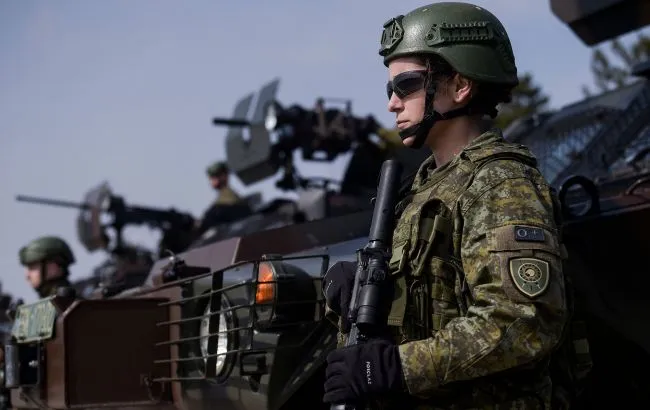
NATO is preparing a new strategy in case of a Russian attack on Alliance countries. Bloomberg has reviewed the unclassified version of the document, which calls for combining traditional weapons with drones, automated systems, and artificial intelligence. The “Theory of Victory” is scheduled to be presented on October 12 in Poland.
NATO is preparing a new concept designed to outline how the Alliance will respond in the event of a Russian attack. Bloomberg obtained the document and reviewed its unclassified version. The strategy, titled “Theory of Victory,” is being developed by General Alexus Grinkevich, Supreme Allied Commander Europe.
He plans to present the document on October 12 in Poland. According to officials and diplomats familiar with the concept’s development, it is intended to give Alliance countries a clearer understanding of how NATO might respond to potential Russian aggression.
However, this is not a ready-made war scenario with step-by-step instructions. The concept is intended to outline the Alliance’s general approach to defense and demonstrate what capabilities could be deployed in the event of an attack.
Drones and Artificial Intelligence
One of the key features of the new concept is the significantly greater role of modern technologies. NATO aims to integrate traditional military forces and weaponry with technologies that have been actively developed during the full-scale war in Ukraine. These include drones, automated systems, minimally crewed systems, and target-acquisition systems utilizing artificial intelligence.
In other words, this does not mean a complete abandonment of tanks, artillery, or other traditional weapons. On the contrary, NATO views new technologies as an additional tool designed to work in tandem with existing military capabilities.
In the event of a Russian attack, the Alliance’s first task should be to halt the advance. To this end, it plans to deploy ground forces and other assets as part of a deterrence initiative on NATO’s eastern flank.
Once the situation allows for more active operations, the focus will shift to the enemy’s command and control systems. According to the concept’s authors, neutralizing these systems should weaken Russian forces and help NATO gain the upper hand on the battlefield.
NATO Wants to Deter a Possible Attack
The document places particular emphasis on the fact that NATO remains a defensive alliance. Therefore, its actions should be aimed at protecting member states, not at creating additional tension. The authors of the concept also stress the need to avoid actions that could lead to unintended escalation.
At the same time, NATO aims to deter Russia even before a potential open conflict begins. The logic is simple: a potential adversary must understand that an attack on Alliance countries will not enable it to achieve its objectives.
Countering hybrid threats also plays a key role in this approach. This refers to actions that may not constitute a direct military attack but are capable of creating serious problems for NATO countries. These include, in particular, various forms of pressure and destabilization that may occur even before the start of full-scale hostilities.
Colonel Martin O’Donnell, a spokesperson for Hrynkevych, did not disclose specific details of the document. At the same time, he emphasized its defensive nature. “The Supreme Allied Commander Europe’s theory of victory is simple: to maintain NATO’s advantage,” O’Donnell said.
According to him, the unstable global situation requires the Alliance to create conditions for deterring aggression now and to be prepared for victory should an attack occur.
How the War in Ukraine Has Affected NATO
Russia’s war against Ukraine has become a key source of experience for rethinking modern warfare within NATO. The Alliance itself is already conducting strategic research on which lessons from the war can be applied to its future planning.
The new “Theory of Victory” is also intended to show how to integrate conventional military forces with technologies whose development has accelerated significantly during this full-scale war. This primarily refers to drones, but not exclusively. NATO is also exploring the broader application of automated systems and artificial intelligence on the battlefield.
However, these technologies are not viewed as a complete replacement for traditional troops. The question is how to properly combine different capabilities and gain the upper hand in combat more quickly.
The new approach could affect defense spending
The document also addresses the issue of future defense spending by NATO countries. European allies are already increasing their defense spending. However, discussions continue within the Alliance regarding exactly where these funds should be directed. On the one hand, countries need traditional types of weaponry—specifically tanks, artillery, and other systems. On the other hand, the war in Ukraine has highlighted the rapid development of drones, electronic warfare capabilities, automated systems, and other technologies.
That is why NATO is trying to strike a balance between traditional military equipment and new systems. Thus, the “Theory of Victory” is intended not only to outline the Alliance’s possible actions in the event of a Russian attack but also to define what a modern NATO army should look like in order to effectively counter new types of threats.
Bloomberg notes that the document is still in the drafting stage. Its presentation in Poland is expected to provide allies with more details about NATO’s approach to deterrence and a potential response to Russian aggression. This is reported by Bloomberg.
In Poland, Foreign Ministry spokesperson Maciej Wewiór responded to Moscow’s letter to NATO, in which the Russian Federation — an aggressor state — allegedly warned of the possible use of nuclear weapons in the event of an attempt to cut off the Kaliningrad region.




