
Nouri al-Maliki opposes disarming groups in Iraq
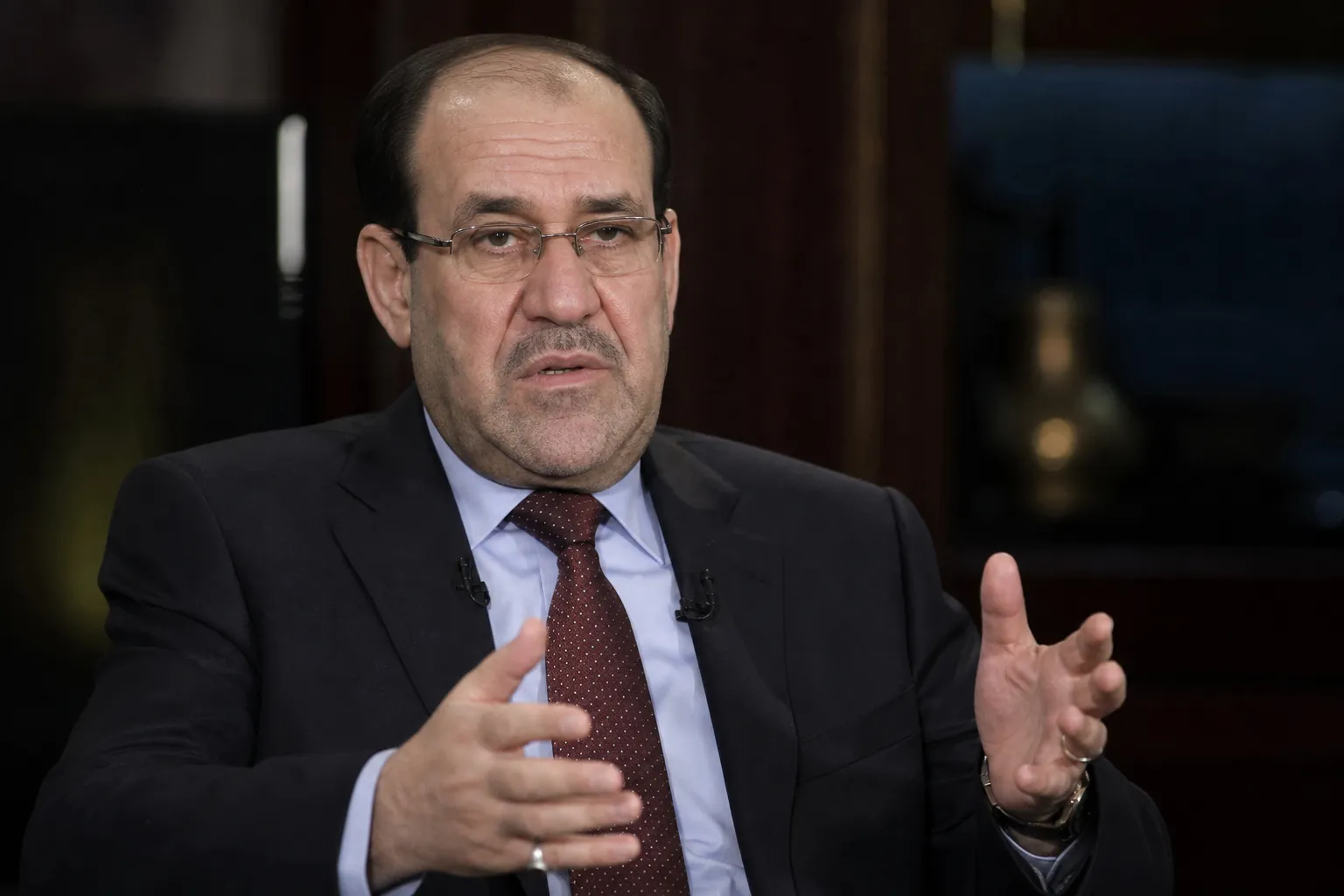
Nouri al-Maliki, leader of the State of Law Coalition, said that armed groups in Iraq will not hand over their weapons to the state after September 30. Instead, he proposed a mechanism for regulating and controlling them, the details of which are still under discussion.
As Asharq Al-Awsat reports, al-Maliki joined critics of Prime Minister Ali al-Zaidi’s government program, which parliament unanimously approved. The program provides for restricting weapons possession through state control.
Reaction of armed groups
The State Administration Coalition, which includes leading Shiite, Sunni and Kurdish forces, less than a month earlier authorized al-Zaidi to determine the course of action after September 30. The withdrawal of the remaining U.S. military personnel from Iraq is scheduled for that date.
Armed formations, including Kataib Hezbollah and Harakat al-Nujaba, rejected this deadline. They describe their weapons as “ideological” and link them to the Iran-led “Axis of Resistance.”
More current news is available on the UA.News Telegram channel Telegram.
Earlier, the State Administration Coalition warned that armed activity outside state authority after September 30 would be considered under the counterterrorism law. The government, for its part, said that the deadline for handing over weapons remains unchanged and that, after the withdrawal of U.S. troops, the groups will have no grounds to retain their arms.
Committee for negotiations
After the visit to Iraq by Iranian Parliament Speaker Mohammad Bagher Ghalibaf, the process became more complicated amid signs that Tehran does not want the complete disarmament of all groups, the publication writes. The government agreed to establish a committee of the Shiite forces’ Coordination Framework, which after the end of September is to begin negotiations with armed groups on a mechanism for regulating weapons rather than disarming them.
The three-member committee includes al-Maliki, former Prime Minister Mohammed Shia al-Sudani, and Badr Organization leader Hadi al-Amiri. In their statements, al-Maliki and al-Amiri used the terms “regulation,” “freezing,” or “postponing” the weapons issue instead of disarmament.
Harakat al-Nujaba Secretary-General Akram al-Kaabi said that U.S. President Donald Trump is mistaken if he expects to achieve victory in Iraq after failing in Iran. Saleh al-Arbawi, head of the Waai movement, suggested that the handover of weapons could be formal or circumvented, since the groups, in his words, have a transnational ideology and leadership.


