
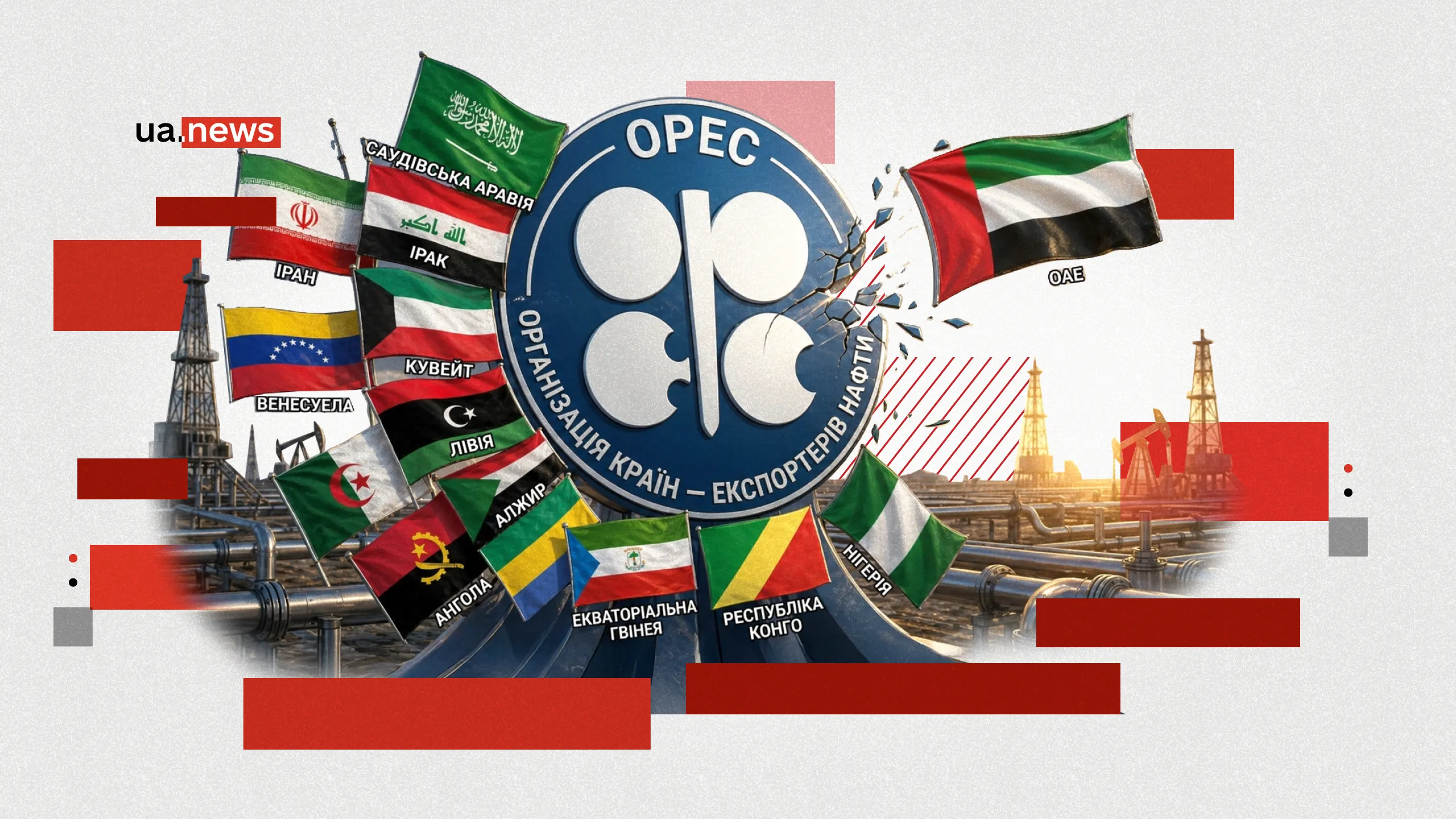
April 28, 2026, will undoubtedly go down in the history of the global economy as the day when one of the most influential players in the energy sector decided to walk away from the collective effort and strike out on its own. The United Arab Emirates officially announced its withdrawal from OPEC and the OPEC+ agreement effective May 1—without prior consultations, without attempts at compromise, in a single decision that some media outlets are already calling a “tectonic shift” for the oil market.
For an organization that has built its authority for over 60 years on demonstrating unity, this is not just the loss of a member, but a blow to the very essence of their alliance. The UAE itself has already stated that it is leaving the cartel due to “disappointment in its neighbors” over a lack of support during the war with Iran.
What exactly is OPEC and why is it needed? Why was OPEC+ created? What lies behind the Emirates’ decision, and what should we now expect in the market? UA.News political analyst Mykyta Trachuk, together with experts, examined the issue.
What is OPEC and why was OPEC+ created?
The Organization of the Petroleum Exporting Countries (OPEC) was founded in 1960 in Baghdad as a response by five countries—Iraq, Iran, Kuwait, Saudi Arabia, and Venezuela—to the policies of major oil companies, which at the time effectively controlled global oil prices. Simply put, the producing countries were tired of someone else deciding how much their primary resource would cost, and decided to take control of the process themselves.
OPEC’s mechanism is remarkably simple in its effectiveness: member countries agree on oil production quotas. If there is too much oil on the market, the price falls; if there is too little, it rises. By regulating production volumes, OPEC attempts to keep prices within a range that is favorable to producers. As of early 2026, the organization controlled about 30% of the global oil market, and its members collectively held approximately two-thirds of the world’s proven “black gold” reserves.
OPEC+ is an expanded format that emerged in 2016 when ten more countries joined OPEC, including Russia, Kazakhstan, Mexico, and others. The catalyst was a sharp drop in oil prices, and stabilizing the market required the efforts of a broader group of producers. Since then, OPEC+ has become the main platform for global oil agreements, and its members collectively control more than half of the entire global oil market.

The UAE in OPEC: A Small Player with Big Ambitions
The United Arab Emirates fully joined OPEC in 1971. Over more than 50 years, the small UAE has become one of the organization’s key players, ranking third in crude oil exports after Saudi Arabia and Iraq. The country produces 3–3.4 million barrels of oil per day, accounting for about 11–12% of OPEC’s total output.
It is precisely these figures that have been a source of long-standing dissatisfaction. The UAE has actively invested in expanding its oil production capacity and could produce up to 5 million barrels per day, but OPEC quotas have limited production to approximately 3.4 million barrels. For a country that has invested billions in modernizing its oil industry, such restrictions seemed increasingly unfair. Thus, the UAE’s decision was not spontaneous: it had been brewing for years and was the result of a complex interplay of geopolitical, economic, and other factors.
First, the war in the Middle East served as a key catalyst. Since February 2026, the region has been in the midst of the most acute crisis in decades.
The U.S. and Israel continue their military operation against Iran. In response, Tehran launched a massive attack on the Gulf states, including the UAE. Dubai, long considered an oasis of stability amid the chaos of the Middle East, has temporarily turned into a ghost town, resulting in multi-billion-dollar losses for the Emirates. Under these circumstances, the UAE expected solidarity from its Arab neighbors but did not receive the necessary level of support. The country is “disappointed” by the reaction of other Gulf states to the Iranian attacks, as it has stated explicitly.
Second, the blockade of the Strait of Hormuz. This strategic waterway, through which about 20–25% of global oil trade passes, remains effectively paralyzed. Oil exports from the region have fallen sharply, which has hit the Emirates hard.
Third, long-standing disputes with Saudi Arabia have played a role. Relations between Abu Dhabi and Riyadh had shifted from quiet rivalry to open confrontation even before the war. Saudi Arabia has traditionally insisted on limiting production to support prices, while the UAE has sought to increase output. Historically, disputes between the two countries have been ongoing since the 1980s and have repeatedly hindered integration initiatives in the region—in particular, the project for a common currency among the Gulf states.
Finally, there is also the Donald Trump factor. Reuters directly calls the UAE’s exit from the organization a “victory for Trump,” who has repeatedly accused OPEC of “ripping off the rest of the world” through artificial control of oil prices. The U.S. administration has consistently pressured its allies in the region, demanding increased production to lower fuel prices. The UAE’s withdrawal from OPEC allows the country to ramp up production without regard for cartel restrictions, which is entirely in line with American interests. Incidentally, the UAE’s energy minister emphasized that his country did not consult with other member states, including Saudi Arabia, which is an additional political “slap in the face.”
The UAE’s Exit from OPEC: How It Will Affect the Oil Market
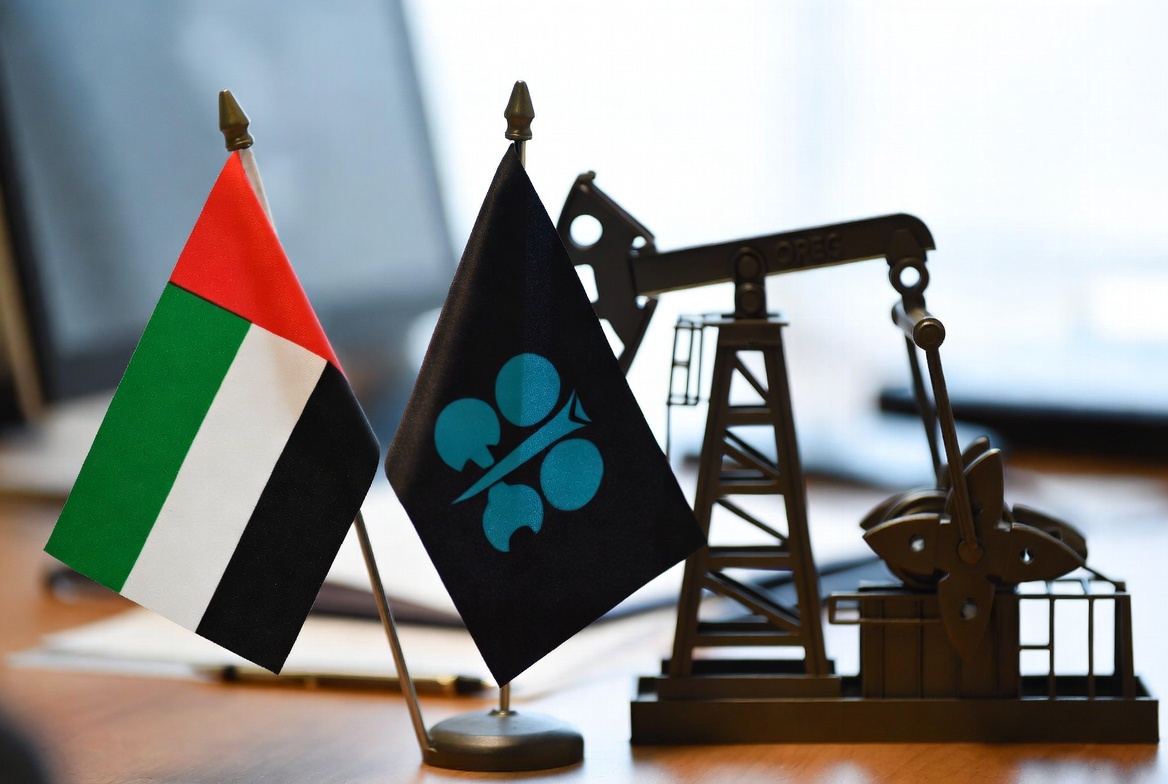
The short-term consequences of the UAE’s exit from OPEC are quite paradoxical. On the one hand, the loss of a country that accounts for 11–12% of production should cause chaos in the market. On the other hand, the blockade of the Strait of Hormuz has already caused such a supply shortage that oil prices have risen by about a quarter since the beginning of the year, and the UAE’s withdrawal is not yet capable of either significantly increasing supply (since there is no physical way to safely transport oil) or lowering prices.
However, the long-term outlook is different. The UAE has already announced that it will “continue to act accordingly,” gradually ramping up production in line with market conditions. This could trigger a new price war among producers, with each country attempting to maintain its market share by dumping prices. Moreover, along with Saudi Arabia, the UAE was one of the few OPEC members with significant spare capacity—a mechanism through which the cartel influenced the market. The Emirates’ withdrawal means that this leverage is significantly weakened.
The UAE’s withdrawal is not only an economic but also a deeply political gesture. For decades, the UAE has been the de facto leader of OPEC, and the withdrawal of one of its most powerful members without prior consultation is a direct challenge to Saudi dominance. Riyadh is clearly very unhappy about this, and relations between the countries have already deteriorated significantly.
At the same time, as noted above, the UAE’s withdrawal strengthens the U.S.’s position in the region. Whereas Washington previously had to negotiate with the organization as a single bloc, it now has the opportunity to work directly with individual producers, offering them more favorable terms in exchange for increased production.
The key question is: will the UAE’s withdrawal trigger a chain reaction? Other OPEC members, especially those who are also dissatisfied with the quotas, are closely monitoring the situation. If the Emirates’ example proves successful—that is, if the country can increase production and generate more revenue outside the cartel—this could prompt other countries to take similar steps. That said, it is still too early to speak of “the beginning of the end of OPEC.” The organization has weathered even tougher times: the collapse of the Soviet Union, the war in Iraq, sanctions against Iran, the COVID-19 pandemic, and so on.
In summary, the UAE’s decision to leave OPEC is yet another symptom of a profound transformation of the global order, where old institutions are gradually losing their influence, and national interests are increasingly taking precedence over collective rules. The most important question remains open: will OPEC be able to adapt to the new reality? History shows that this organization knows how to survive under the most difficult conditions. But what is happening now is not so much another crisis as a potential change in the very rules of the game. And if the UAE truly manages to operate successfully outside the cartel, this could signal that the era of all-powerful oil alliances is coming to an end.

Expert Opinions
Economic expert Yuriy Gavrilechko is certain: the UAE’s decision to leave OPEC and OPEC+ is not merely a technical move. It is a signal of a change in the rules of the game in the global energy market. In fact, this amounts to a rejection of the quota system that has for years restricted oil production in order to prop up prices.
“Withdrawing from the agreement means one thing: the UAE gains the freedom to increase production as much as its technical capabilities and economic interests allow. The logic of expectations is clear: more oil on the market means greater supply, which puts downward pressure on prices. In theory, that’s exactly how it works. Moreover, the effect isn’t limited to oil alone. A decline in oil prices usually also leads to lower prices for petroleum products (gasoline, diesel), an indirect impact on gas prices, reduced logistics and production costs, and so on. In other words, in an ideal world, this would be good news for consumers and economies dependent on energy imports. But there’s a catch, and it undermines the entire linear logic: today’s energy market isn’t about the balance of supply and demand. It is about the balance of risks and fears. And these risks are currently at their peak.
First, the escalation between the U.S. and Iran. Any escalation in this region automatically builds a “risk premium” into the price. Second, the Strait of Hormuz is a key artery for global oil supplies. Blocking it or even partially restricting tanker traffic could instantly reduce market supply—regardless of how much oil the UAE produces. Third, logistics. A shortage of tankers, rising shipping insurance costs, and route changes—all of this increases the final price per barrel of oil for the consumer. And here lies the paradox: the UAE may increase production, but the world may physically be unable to deliver this oil to the market quickly and cheaply. “As a result, we have two opposing forces: the fundamental factor (supply) is pushing prices down, while the geopolitical factor (risks) is pushing prices up,” the economist notes.
According to Gavrilechko, as long as the second factor dominates, the market behaves irrationally from the perspective of classical economics.
“What does this mean for fuel prices? First and foremost, it means high volatility: prices can either fall or rise—and quite sharply. In the short term, the price will be determined not by the UAE’s decision but by the news: if tensions escalate, prices will go up; if they de-escalate, we expect a rapid drop. In the medium term (in the absence of major conflicts), the effect of increased production will still manifest itself. Then we can expect a gradual decline in prices. It is also worth noting that the oil market is no longer a market of resources. It has become a market of expectations! And that is why prices fall not when production increases, but when uncertainty disappears. As long as uncertainty remains the main driver, any forecast is not a calculation but a scenario of how events might unfold,” summarized Yuriy Gavrilechko.
Economist and head of the Economic Discussion Club Oleg Pendzin commented on the situation as follows:
“By and large, this is a huge plus for the Americans. The main goal of the U.S. is to bring the global oil market under control. OPEC was a major obstacle to them in this regard. The United Arab Emirates’ withdrawal from OPEC significantly reduces the organization’s influence on the global oil market. OPEC’s main task is to set oil prices by allocating production quotas. At this point, in order to recoup losses incurred from the war and the blockade of the Strait of Hormuz, the UAE has decided to leave the organization so as not to limit itself to these very oil production volumes. “So, in this situation, the UAE’s key objective is simply to recoup its losses and get rid of restrictions. But they did this partly under the influence of the U.S. position, and this brings significant benefits to the latter,” Oleg Pendzin is convinced.


