
Pakistan lacks institutions to access climate finance — Dawn
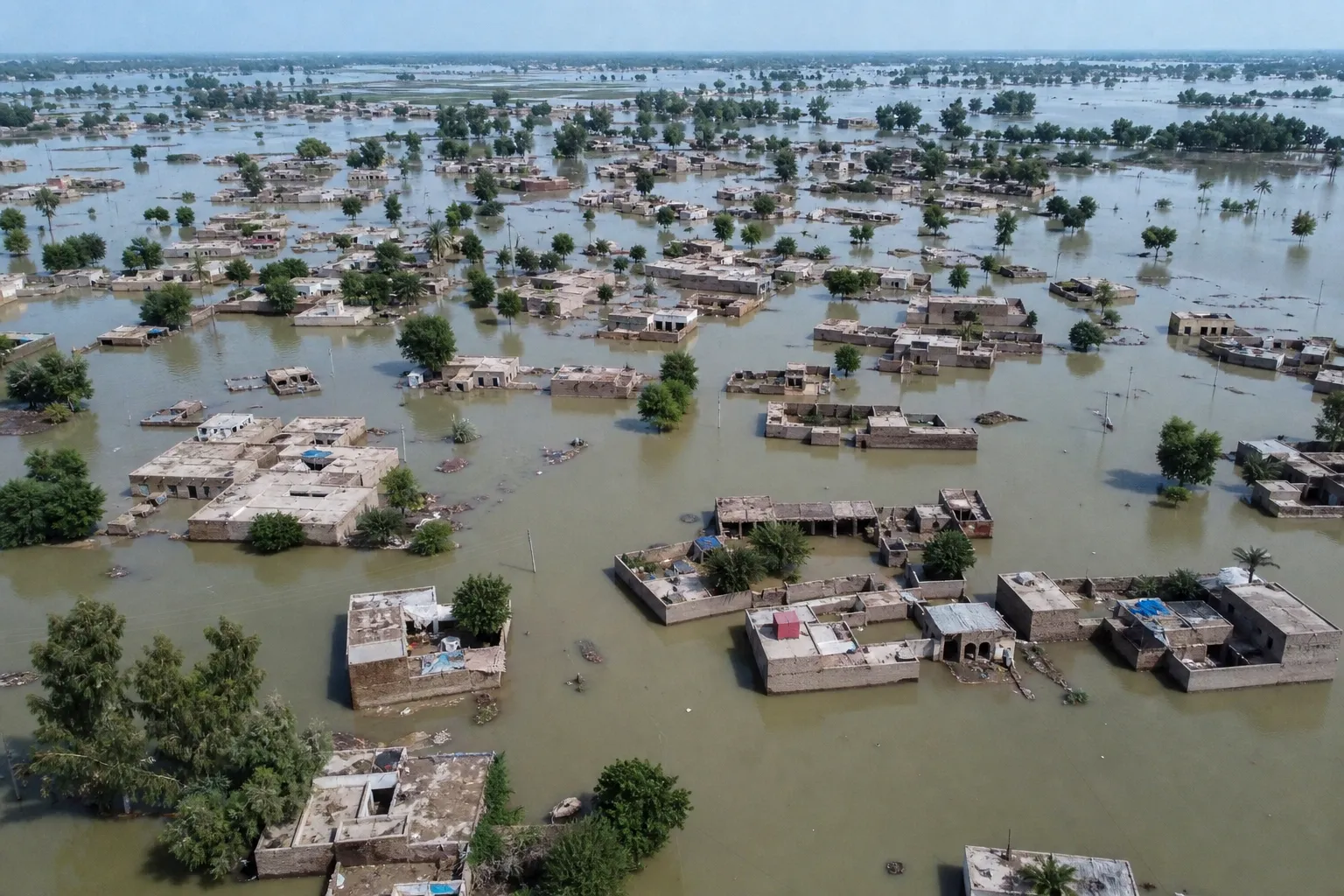
Pakistan needs about $348 billion in 2023–2030 to respond to climate and development-related challenges, but the country cannot fully tap even the available international climate financing. This is stated in a Dawn review.
According to the World Bank, $152 billion of this amount is needed for adaptation and resilience-building, while another $196 billion is required to reduce emissions across all sectors of the economy. At a conference in Geneva in January 2023, donors pledged more than $9 billion for post-flood recovery, but a significant share of these funds consisted of loans or previously agreed development financing. Disbursements were slow and uneven.
The scale of needs after the floods
In the summer of 2022, monsoon rains together with glacier melt caused one of the most severe floods in Pakistan’s history. Approximately 2 million homes were damaged, the disaster affected 33 million people, and around 8 million people were reportedly forced to leave their homes. A World Bank post-disaster needs assessment put the damage at nearly $15 billion and reconstruction needs at more than $16 billion.
At the COP27 climate conference, Climate Minister Sherry Rehman helped reach a global agreement to establish a loss and damage fund. At the same time, the new Fund for Responding to Loss and Damage was operationalized in 2025 under a World Bank trustee arrangement. As of April 2025, it had received contribution pledges of about $768 million from 27 contributors. Researchers estimate the annual needs of low- and middle-income countries to address climate losses at $290–580 billion by 2030.
More current news is available on the UA.News Telegram channel Telegram.
Barriers to obtaining funds
International climate funds, including the Green Climate Fund, the Global Environment Facility, and the Adaptation Fund, require funds to be received and administered by accredited institutions with sound financial management systems and transparent procedures. Pakistan’s Ministry of Climate Change is the national designated authority for the Green Climate Fund and reviews projects, but its approval does not mean financing is automatically obtained.
One problem is the shortage of prepared projects that meet international funds’ requirements for financial viability, design, and due diligence. Federal and provincial agencies lack their own technical capacity and therefore depend on external support. The situation is complicated by the transfer of many environmental and climate powers to the provinces, while work with international funds is concentrated at the national level in Islamabad.
Donors also assess transparency and the effectiveness of how funds are used. In particular, local communities linked a World Bank-supported drainage channel in Sindh to the worsening of the consequences of the 2022 floods. According to the review’s authors, Pakistan needs strong national institutions, a project preparation mechanism, coordination between federal authorities and the provinces, as well as continuous monitoring and reporting.


