
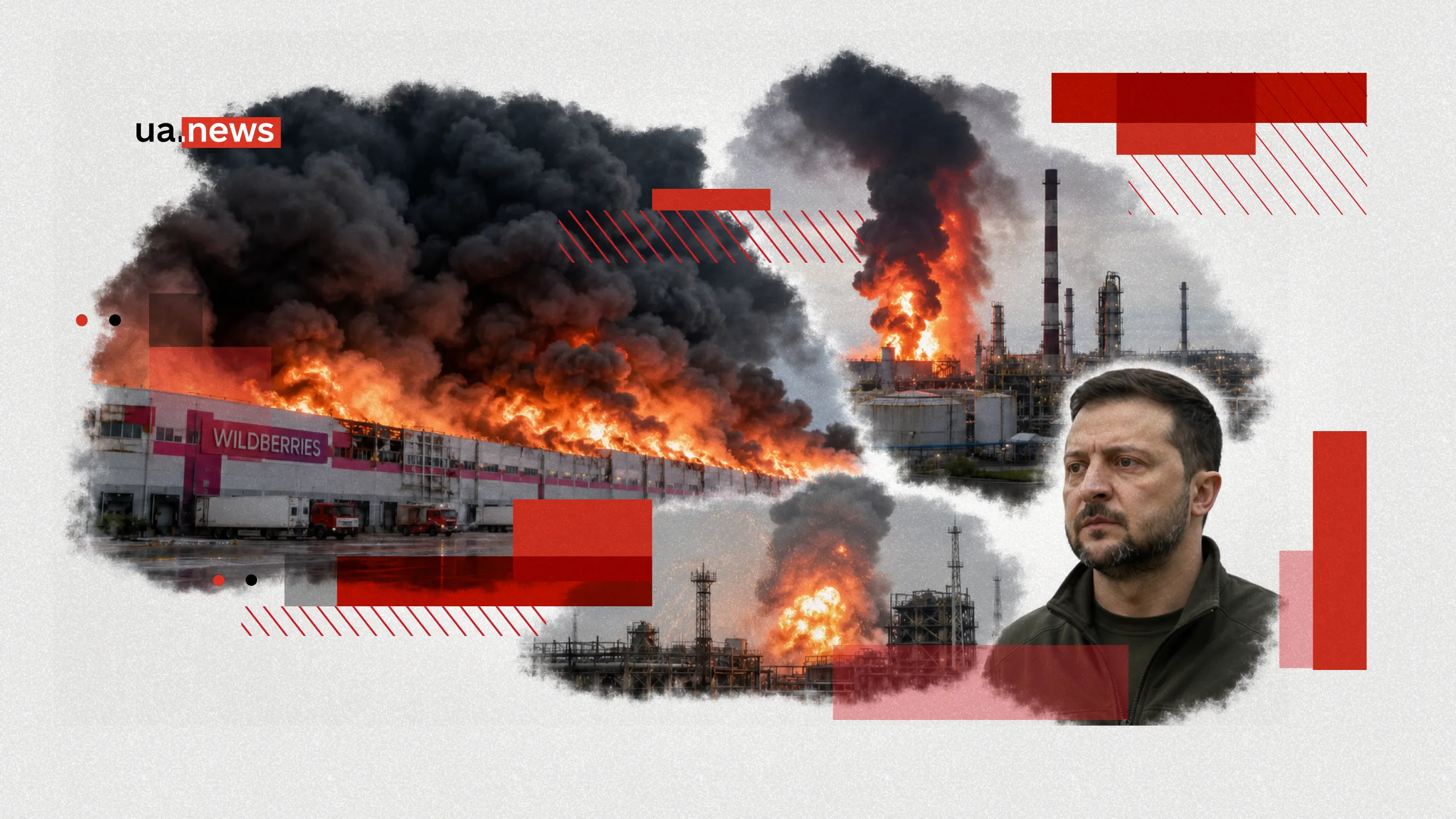
On June 25, President Volodymyr Zelenskyy announced the decision to authorize the Security Service of Ukraine to carry out a 40-day “operation of influence” against the aggressor state. The goal was stated as clearly as possible: “to compel Russia to end the war.” The details of the plan, of course, were not disclosed, but the following weeks made it clear that it involved a systematic series of long-range strikes against various targets deep within Russia and in the temporarily occupied territories.
Today, July 21, marks the 26th day of the 40-day period—meaning more than half of the allotted time has passed. It’s time to take a closer look at which targets were struck during this period, what the true cost of this pressure is, and what to expect going forward. For more details, see the UA.News article
Chronology of the Largest Strikes on Russia (June 25 – July 21)
Over these less than four weeks, the strikes have covered dozens of locations: from the border regions to the Moscow suburbs, from the Stavropol Krai to the temporarily occupied Crimea, and beyond. Let’s try to identify the key events during this period.
The operation began with powerful strikes on the temporarily occupied Crimea. On the night of July 3, the SBU attacked the “Gvardeyskoye” and “Saki” military airfields. At the “Gvardeyskoye” airfield, drones struck two hangars where UAVs and aviation equipment were stored. According to sources, the strike damaged seven aircraft used by Russian troops to carry out combat missions. That same night, five power substations were on fire in occupied Crimea.
On the night of July 4, the Russian city of Belgorod came under missile attack. Following a series of explosions, the city experienced widespread disruptions to its electricity and water supplies. The missile strike damaged the Michurinsk Thermal Power Plant—a key facility in the city’s energy system. Belgorod was partially plunged into darkness.
On the night of July 5, the Defense Forces again struck the “Gvardeyskoye” airfield in Crimea. On the same day, July 5, they struck fuel and lubricant depots. An ammunition depot in Mizhhiria was also hit. In addition, UAVs attacked energy facilities on the peninsula, leaving Crimeans without power.
On the night of July 5–6, drones attacked a number of targets in Russia and occupied Crimea. Fires were reported at the Yaroslavl Oil Refinery—incidentally, not for the first time in recent months. In Omsk (over 2,500 (!) km from Ukraine), the Ukrainian Armed Forces attacked Russia’s largest oil refinery. In Crimea, a number of energy facilities were attacked overnight—the entire peninsula was plunged into a blackout, the port in Kerch was hit again, and a power substation was ablaze.
July 7 — a new series of strikes on Belgorod. The Russian city came under missile attack again; this time, a local thermal power plant was targeted, and a fire broke out following the explosion. On the same day, drones struck the Moscow region: explosions were heard there, and smoke rose into the sky.
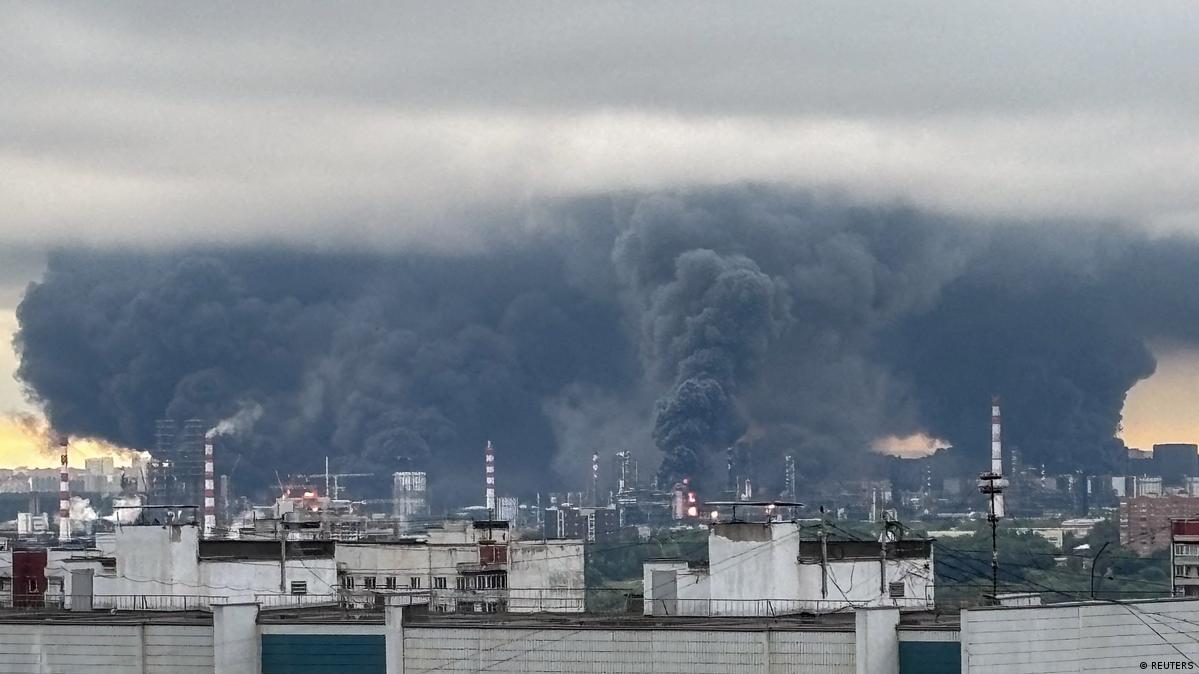
On the night of July 9, the Ukrainian Defense Forces struck 45 targets in Crimea and in the south of the occupied territories. Among the targets hit were 12 energy facilities. On the same day, oil depots in the Stavropol Krai and Tver were on fire in Russia.
On the night of July 10, another attack on a Russian oil refinery was recorded—this time, the Ilsky Oil Refinery in the Krasnodar Krai was hit. Also on the night of July 10, Moscow was attacked by drones. On July 12, powerful explosions were heard again in Crimea: locals complained about air defense operations, and power outages began in Sevastopol.
On the night of July 13, Ukrainian drones attacked several Russian regions. Russian air defense forces shot down 35 UAVs over Moscow. On the same day, another oil depot exploded in Russia. The Stavropol oil depot was struck again—a fire broke out following the attack.
On the night of July 14, an explosion occurred at an ammunition depot in the temporarily occupied city of Donetsk, followed by a prolonged chain reaction of shell detonations. According to reports, the depot was completely destroyed. On the evening of July 13, explosions were heard in Donetsk; a fire broke out at a Russian army ammunition depot, and secondary detonations were recorded. Also, on the night of July 14, the Defense Forces struck two oil refineries, a ship transshipment area, tankers, dry cargo ships, and other enemy military targets. On the night of July 16, the Ukrainian military attacked a number of key enemy targets, including six tankers, tugboats, and other vessels.
On the night of July 18, drones attacked several regions of Russia, including the Moscow region. As a result of the attack, an oil depot in Noginsk caught fire. The “Noginskaya” oil depot was hit: the facility is used for the storage, transshipment, and shipment of light petroleum products, including gasoline, diesel fuel, and kerosene. The facility houses 24 storage tanks with a total capacity of 11,500 cubic meters. It serves as a key logistics hub for fuel companies in the Moscow region.
In addition, in the Moscow region, a large logistics complex belonging to the Wildberries marketplace, located in Elektrostal—one of the company’s largest facilities in the region—caught fire as a result of drone strikes. According to the mayor of Moscow, air defense forces allegedly shot down 55 drones as they approached the capital, while fires and damage were reported in various parts of the region.
On the night of July 19, attack drones struck three oil depots in the city of Mikhailovsk in Russia’s Stavropol Krai. Large-scale fires broke out at the facilities following the strikes. Local residents reported seeing air defense systems in action and hearing the sounds of drones, followed by powerful explosions. A massive fire was visible over the industrial zone. This was already the third attack on these oil depots in recent weeks.
That same night, the Ukrainian Unmanned Systems Forces announced that they had struck 13 energy facilities in the occupied territories and four ships. Since early July, the Unmanned Systems Forces have struck 83 energy facilities behind Russian lines—in the occupied territories of Crimea and in the operational depth. The Russian Ministry of Defense stated that on the night of July 19, Russian air defense forces intercepted and destroyed 140 Ukrainian drones over various regions.
On the night of Monday, July 20, the Moscow Region of the Russian Federation came under another massive attack by Ukrainian drones. According to Moscow Mayor Sergei Sobyanin, from 8:30 p.m. to 5 a.m., more than 400 drones were flying toward the Moscow region. Eighty-five UAVs were destroyed as they approached Moscow. The Wildberries logistics center was hit again—this time in Koledino, near Podolsk. A fire was also reported at the “Yuzhnye Vrata” logistics complex near Domodedovo. In addition, a fire broke out at an oil depot in Podolsk following the drone attack.
On the night of July 21, air raid alerts were issued in several Russian regions due to the threat of missile strikes. Powerful explosions were heard in Belgorod and Lipetsk, and it is known that the cities were hit. In Belgorod, the water supply was partially cut off following a series of explosions. The missiles may have struck energy infrastructure facilities in the city. Russian authorities confirmed the attack. It is noted that an energy infrastructure facility in Lipetsk may also have been hit. A fire has been reported near the local thermal power plant. Eyewitnesses claim that explosions were also heard in Volgograd following a missile alert.

What to Expect in the Next 14 Days
Formally, there are still two weeks left until the end of the 40-day period. Given the dynamics of the past few weeks, the most likely scenario appears to be a further intensification of strikes deep inside Russia. The number of drones deployed simultaneously is increasing (from 55 on the night of July 18 to 400 on the night of July 20), indicating a buildup of capabilities and refinement of tactics.
Potential targets include any facilities critical to Russia’s military economy and logistics: oil refineries, oil depots, fuel storage facilities, major railway hubs, as well as large warehouse complexes similar to those that have already been struck. Particular attention will likely be paid to energy infrastructure—as we have seen, strikes on thermal power plants in Belgorod and Lipetsk have already caused serious disruptions to electricity and water supplies. We should also expect continued attacks on military airfields.
Equally important is the pressure on logistics centers. Attacks on Wildberries warehouses in Elektrostal, Kotovsk, and Koledino, as well as on the “Yuzhnye Vrata” logistics complex, have inflicted significant damage not only on Russia’s military economy but also on its civilian economy. The destruction of marketplace warehouses is a blow to the consumer market that Russians are feeling firsthand. The enemy clearly shouldn’t let its guard down: the operation is ongoing and, by all accounts, is entering the home stretch.
Yet despite the intensity of these strikes and their significant media impact (the fire at the Wildberries warehouse was visible even from space), their potential should be assessed soberly. This 40-day operation, on its own, is certainly in no way capable of forcing Russia to make peace. It is a tool for exerting pressure, but not for ending the war. Unfortunately, in response, we see only escalation: the intensification of Ukraine’s strikes on Russian territory is accompanied by equally brutal, massive Russian attacks on Ukrainian cities. On the night of July 19, the aggressor launched a record-breaking combined strike on Kyiv: 41 ballistic missiles and 125 UAVs. And what is most horrific and hopeless is that in this conflict, it is not combatants who suffer most, but civilians—both in Ukraine and in Russia.
The best thing that can be done for the prospect of peace is to resume a full-fledged negotiation process and reach agreements on a ceasefire. However, today, unfortunately, no such option is on the horizon. The parties remain hostage to their own bellicose rhetoric, maximalist goals, and reciprocal strikes, each of which is inevitably followed by a “retaliatory strike”—and so on ad infinitum. Therefore, in the near future, we should expect hostilities to continue by inertia, on both sides.

Meanwhile, over the course of 26 days of the “operation of influence,” Ukraine has struck:
- At least 5 oil depots (Noginsk, Podolsk, and three oil depots in the Stavropol Krai)
- 3 Wildberries logistics centers (Elektrostal, Kotovsk, Koledino)
- The “Yuzhnye Vrata” logistics complex near Domodedovo
- At least 3 oil refineries (Yaroslavl, Omsk, Ilsk)
- Energy facilities (CHP plants in Belgorod and Lipetsk, power substations in Crimea)
- Military airfields (“Gvardeyskoye,” “Saki,” “Maykop”)
- Ammunition depots (Donetsk, Yenakiyeve, Mizhhirya)
- Over 100 power distribution centers and substations in the occupied territories
This list includes only what has been confirmed through open sources. The actual scale of the operation is likely much broader. But even this is enough to understand that the 40-day “operation of influence” is nothing less than a series of long-range strikes against the Russian Federation. And although such attacks have nothing to do with bringing peace any closer, one cannot help but acknowledge their scale, systematic nature, success, and the pain they inflict on the enemy.


