
South Africa limits sardine catches to 25% of remaining quota after mass die-off
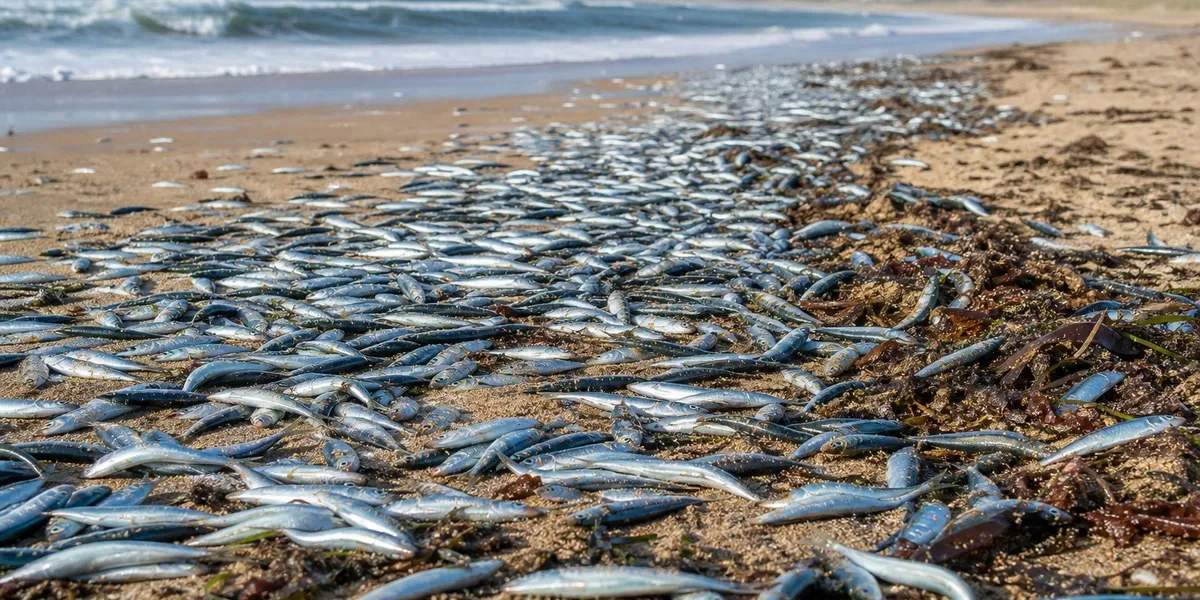
In South Africa, authorities have temporarily restricted sardine catches for all permit holders following a mass fish die-off along the coast. Until October 2, they are allowed to land no more than 25% of the unused total allowable catch for 2026, Daily Maverick reports.
Most likely cause of the die-off
The investigation began in August, when dead sardines started washing ashore on the West Coast between Saldanha and Gansbaai. Specialists later expanded the study to other areas of the southern coast, including Nelson Mandela Bay, Buffalo City and part of the Wild Coast. Samples were collected for research at each of these locations.
South Africa’s Department of Forestry, Fisheries and the Environment said laboratory tests confirmed the presence of pilchard herpesvirus (PHV) in sardines affected in the Western Cape province and the Gqeberha area. According to the department, the consistent detection of high virus levels and the nature of the fish die-off indicate that PHV is the most likely primary cause of the incident.
At the same time, specialists do not rule out that harmful algae, marine biotoxins or other environmental factors may have been additional stressors. The origin of the virus, the timing of its emergence in South African waters and its route of spread have not yet been established.
More current news is available on the UA.News Telegram channel Telegram.
Stock assessment and risks to penguins
The scientific working group on small pelagic species noted that it cannot accurately assess the scale of the die-off: it is unknown how many fish may have sunk rather than washed ashore. Available data do not indicate a population decline significant enough to require a full closure of the fishery, but the group recommended introducing a precautionary restriction.
Hydroacoustic surveys of the sardine population are planned for late October or early November. The South African Pelagic Fishing Association supported the authorities’ decision, while the World Wide Fund for Nature called for the fishery to be fully closed until the stock assessment is completed.
Conservationists in Nelson Mandela Bay also supported the limits because of risks to African penguins, for which sardines are an important food source. According to Algoa Bay Conservation, over approximately a decade, the number of breeding pairs in the area declined from more than 7,000 to around 700.


