
Peter Pavel calls on the Alliance to demonstrate strength in response to Russia
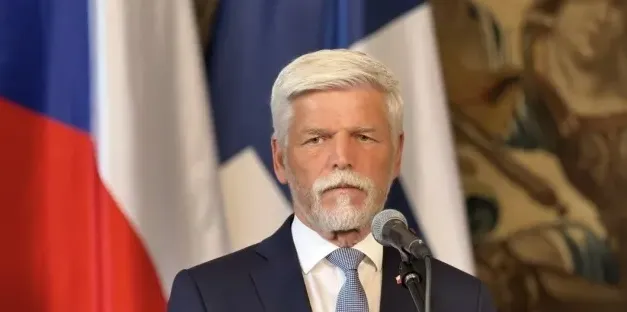
In an extensive interview with Western media, Czech President Petr Pavel sharply identified the main security challenge facing Europe, which, he said, lies not only in Russia’s actions but also in the slow and cautious response of NATO itself, which often fails to respond to provocations quickly and decisively enough, allowing Moscow to test the limits of what is acceptable with almost no consequences.
He emphasized that, in his view, Russia does not understand diplomatic language but only the language of force, and if the Alliance does not change its approach, the Kremlin will continue to exert pressure on NATO’s eastern flank, gradually increasing the level of risk but without crossing the formal threshold of open conflict, which would automatically trigger Article 5. “Russia, unfortunately, does not understand polite language. They mostly understand the language of force, which, ideally, is accompanied by action,” Pavel said, emphasizing that the Alliance’s response must be not only political but also practical.
According to the Czech president, the Russian side has already learned to operate in the “gray zone”—taking steps that provoke NATO but do not formally cross the line of a direct attack, and this, in his view, is the Kremlin’s most dangerous tactic since the annexation of Crimea in 2014, as it wears down the Alliance and creates constant pressure without direct escalation.
Separately, Pavel noted that within NATO there is a divide between countries that insist on a tough response and those who try to avoid escalation until the very last moment, but such caution, in his view, only reinforces Russia’s confidence in its own impunity.
He also stated that the Alliance should consider not only classic military countermeasures but also “asymmetric” pressure tactics, which could include restricting access to digital services or financial instruments—measures that, he said, could affect Russia no less effectively than direct military action. “If violations of NATO airspace continue, we will have to make a decision to shoot down a drone or a manned aircraft,” Pavel emphasized, adding that a lack of response to such incidents only encourages Russia to take further steps.
In his view, the main risk for the West lies not in an immediate war, but in a gradual “blurring of boundaries,” where each new provocation becomes the norm, and this is precisely what could eventually undermine NATO’s unity and its ability to make quick decisions.
Pavel concluded that Europe must act faster and more decisively; otherwise, Russia will continue to test how far it can go without a direct military confrontation with the Alliance.
The Czech Foreign Minister met with the Ukrainian ambassador and plans to speak with Sibiga.
The Czech Foreign Minister plansto meet with the Ukrainian ambassador in response to Okamura’s statements.


