
Following the U.S. strikes, tanker traffic through the Strait of Hormuz has nearly come to a halt — Reuters
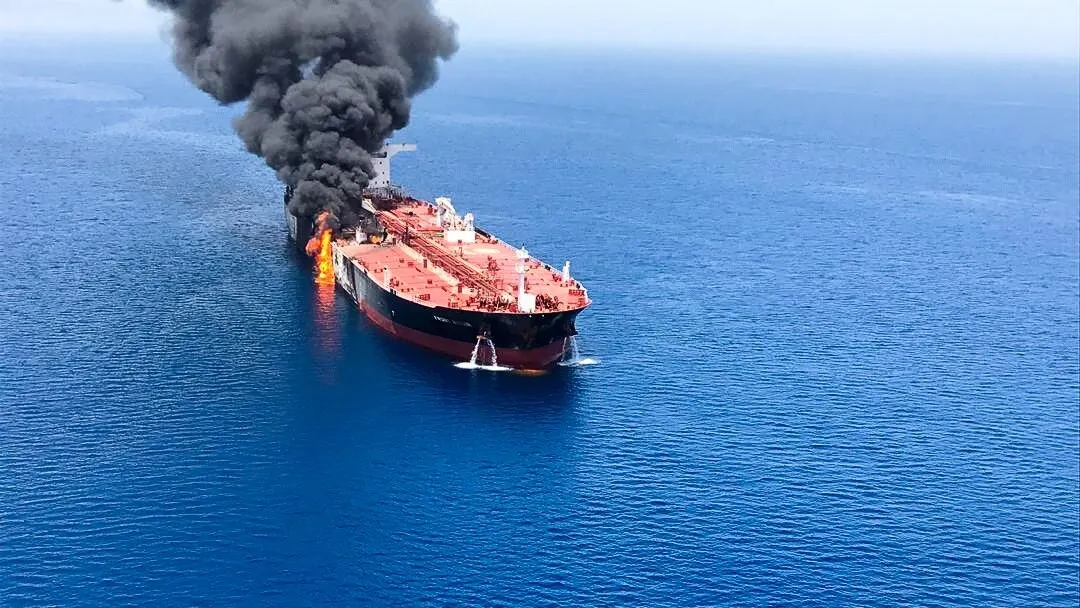
As of the evening of July 9, oil tanker traffic through the Strait of Hormuz had nearly come to a standstill. This was due to new U.S. strikes against Iran, Tehran’s response, and a sharp increase in risks to shipping in the region.
According to Reuters, only two tankers passed through one of the world’s most important maritime arteries that morning. Some insurance companies are already advising shipowners to temporarily refrain from sending vessels through the dangerous area.
The Strait of Hormuz remains one of the key routes for global oil exports. A significant portion of the tankers from the Persian Gulf countries pass through it every day. However, following the latest escalation between the U.S. and Iran, vessel traffic has dropped sharply.
According to Reuters, only two oil tankers passed through the strait in the early hours of Thursday. One of them was the supertanker Berg 1, which loaded oil on the Iranian island of Kharg. According to the analytics firm Kpler, the vessel is subject to U.S. sanctions. Experts explain that shipping companies are now closely monitoring the situation and assessing risks before each voyage.
After the resumption of U.S. airstrikes against Iran, Tehran launched retaliatory strikes, further escalating tensions in the Persian Gulf. As a result, risks to civilian shipping have risen sharply. According to Reuters, some insurance companies have already advised shipping operators to temporarily refrain from transiting the Strait of Hormuz until the situation becomes clearer.
Experts note that even without an official closure of the strait, any escalation in the region immediately affects the global energy market. A significant portion of global oil exports passes through the Strait of Hormuz, so any disruptions could affect prices and logistics. At this time, there are no official reports of a complete suspension of shipping. At the same time, the situation remains tense, and shipping companies and insurers are closely monitoring further developments, according to Reuters.
On Thursday, July 9, Iran stated that it had fired ten ballistic missiles at a U.S. military base in Jordan. Meanwhile, Jordanian authorities reported that all missiles were intercepted, and there were no reports of damage or casualties.
Despite this new round of conflict in the Middle East, Iran maintains that it has not abandoned diplomacy and is attempting to restore relations with the Gulf states. Officials in Tehran claim that the U.S. and the West have mistakenly interpreted their willingness to negotiate as a sign of weakness.
Overnight, Iran exported at least 10 million barrels of crude oil and fuel oil. According to analysts, Tehran may have acted in haste due to fears that the U.S. would soon tighten its control over shipping in the region again.
Iran reported the deaths of three Islamic Revolutionary Guard Corps soldiers following new U.S. strikes. Despite declarations of a ceasefire, the sides continue to exchange attacks, and the situation in the Middle East remains tense.
The United States has announced a large-scale military operation against Iran. Over the past two days, U.S. forces have struck more than 170 military targets located near the Strait of Hormuz. Officials in Washington say the main goal of the operation is to weaken Iran’s ability to attack international shipping.
Despite declarations of a ceasefire, the situation in the Middle East has escalated again. On Wednesday night, the U.S. and Iran exchanged new strikes, and Jordan announced that it had intercepted Iranian missiles over its territory. Meanwhile, in Iran, the funeral for former Supreme Leader Ali Khamenei continues amid ongoing hostilities.


