
Droughts and landslides drive Dalits out of Nepal’s villages — Kathmandu Post
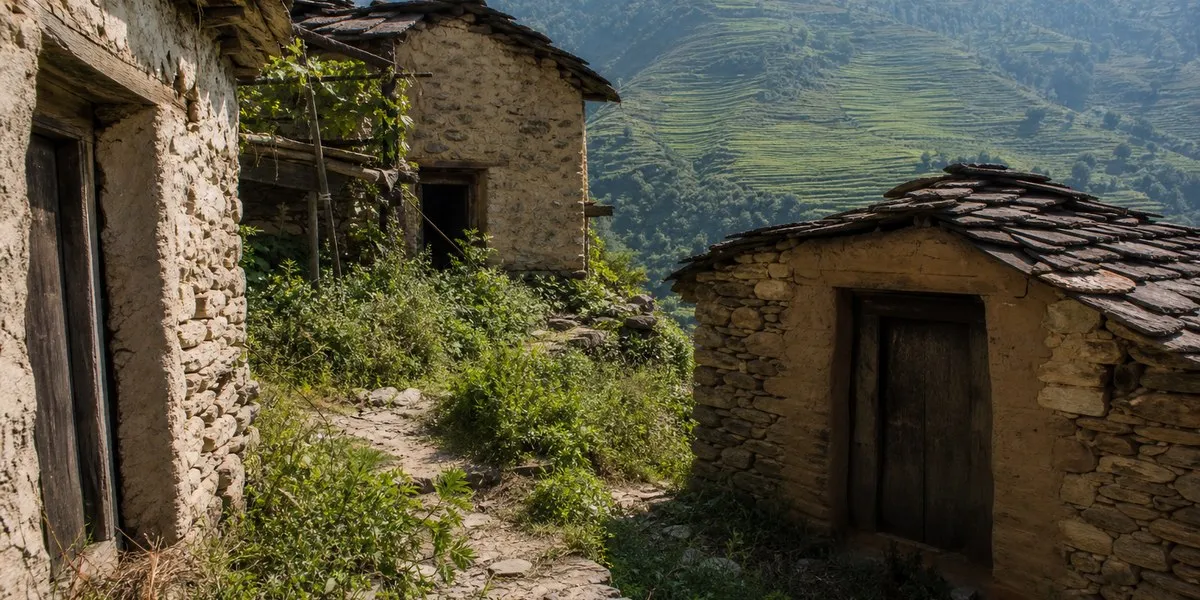
In the mountainous areas of Sudurpashchim Province in western Nepal, members of Dalit communities are leaving their villages because of crop failures, winter droughts and monsoon landslides. In Bajhang District, an increasing number of houses stand locked, while often only elderly people remain in the settlements.
As the Kathmandu Post reports, in the village of Kailas, 76-year-old Pyaru Sarki cultivates a small terraced plot and makes leather parts for agricultural tools. His family previously also received grain through the traditional khalo system — compensation for Dalit communities’ work for local farmers. Now harvests have declined so much that fellow villagers have nothing to share. Sarki’s sons, daughters-in-law and grandchildren have left for India in search of manual work.
Declining winter precipitation
Meteorologist Sudarshan Humagain of the Department of Hydrology and Meteorology said that historically, Sudurpashchim received more winter precipitation than other regions of Nepal: around 140 mm, compared with the national average of 60 mm. However, since 1991, this level has steadily declined. The region recorded a record low of 7.1 mm of precipitation in the winter of 2006, 12.9 mm in 2023 and 13.1 mm in 2024.
In mountainous areas, where irrigation infrastructure is virtually absent, agriculture depends on rain. According to Bajhang’s district profile, only 2.43% of Dalit households can provide themselves with food from their own land for the entire year, while for 73.66%, what they grow lasts less than three months.
More current news is available on the UA.News Telegram channel Telegram.
Emptied settlements and the loss of traditions
In a sample study of 31 Dalit settlements in Bajhang covering 1,870 households, 1,049 families, or nearly 57%, had permanently left their villages. Researchers found another 277 houses uninhabitable because of collapsed roofs, destroyed mud-and-stone walls and rotted wooden frames.
Relocation is also weakening traditional ties and crafts. In Bajhang, organizers of a festival at the Dhadhar Masta temple could not find performers for Bharte, a traditional performance combining singing, dance and oral storytelling, and invited artists from the neighboring Bajura district. Local activists and officials also speak of the decline of blacksmithing, leatherworking and woodworking.
The 2021 population census recorded 57,059 Dalit families in seven mountainous districts of Sudurpashchim. At the time of the census, 58,611 people from 23,920 such families were abroad — more than 35% of all migrants from the mountainous part of far-western Nepal.


